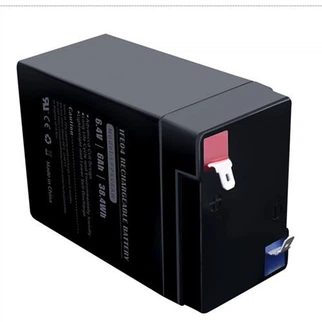
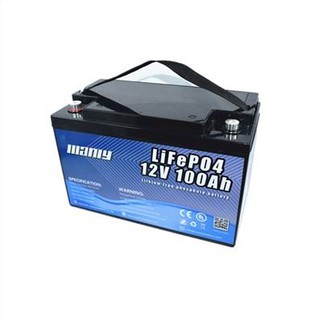
Reference News Network reported on April 3 According to a report on the website of Le Monde on February 22, the global industry, under pressure to stop the deterioration of the earth's environment, revolves around batteries, because batteries are an important factor in achieving emission-free mobility today. European countries are preparing to build battery factories to meet continued demand for electric vehicles in the coming years. At present, there is more difficulty in achieving hydrogen energy, but it has not been set aside.
Spain is joining the race, although it is unclear whether one or two battery factories can be built, as the sector has always been protected by private investment from international companies and European Next Generation Funds.
The scale of investment in battery technology between now and 2030 is difficult to quantify, the report said. Currently, lithium-ion battery projects are dominant, but there are other alternative projects in development, such as sodium-ion batteries or solid-state batteries, each with their own pros and cons.
However, although everyone is talking about the battery today, it was not born in the 21st century, but as early as the first year of the 19th century, and now it has passed more than 200 years. And, while electric vehicles are still more of the future than the present, the truth is that it comes from the past. The first electric car dates back to the end of the 19th century, when inventor Andreas Flockenhaus built the first four-wheeled electric car in Coburg (Germany).
For about the first 1/3 of the last century, most vehicles were electric, almost twice as many as ICE-powered vehicles, but ICE-powered vehicles have remained popular until now for more geopolitical and economic reasons.
lithium battery
In any case, after a century of decline, batteries are starting to gain traction again. This trend is being driven by huge investments, with research being carried out not only in electric vehicles but also in other important areas such as mobile phones or game consoles. These accumulators are heading down incredible paths.
Lithium-ion batteries using lithium cobalt oxide cathodes were commercialized in 1979 and have successfully achieved a leap in charging. Lithium-ion batteries dominate the electric vehicles being developed today, but shortages have emerged for a short period of time -- when predictions of hundreds of millions of electric vehicles become a reality -- so scientists are starting to look at more accessible and even more sustainable alternative.
sodium battery
China is currently at the forefront of power technology. CATL released the first-generation sodium-ion battery to the world last year. The main advantage of sodium-ion batteries is in the raw materials, because sodium is everywhere on the planet and is cheaper and more sustainable. It's better than lithium as a container for a lot of energy. But the disadvantages of sodium batteries are short life and fast discharge, and scientists are also looking for targeted solutions.
solid state battery
The technology that car brands are putting the most effort into in the near future may be solid-state batteries. It is cheaper than lithium batteries (which will cost 60% less to manufacture), lighter, and has significantly improved charging speed and battery life. However, they are currently difficult to mass produce and deteriorate faster.
Another Chinese manufacturer, NIO, has scheduled the technology for this year, while Toyota and Volkswagen, the world's top sellers, have delayed the introduction of solid-state battery technology in their vehicles until 2025 at the earliest. Products using the technology will be sold in the next few years. Battery energy storage systems and electric vehicles are the keys to a sustainable and environmentally friendly energy system.
The survey agreed that more than 40% of new car buyers in Europe will now choose an electric vehicle. In addition to pressure from the government, people's environmental awareness is gradually increasing. And with the addition of new software-related concepts such as bidirectional charging, the car battery can also power household electricity as if it were a power strip.
For now, Europe's goal of switching to all-electric vehicles is still a struggle, although some EU countries, including Spain, have slowed the overall pace. According to the 2021 Electric Vehicle Barometer recently published by the Spanish Association of Automobile and Truck Manufacturers (Anfac), the growth in demand for electric vehicles and charging infrastructure in Spain is lower than the European average. In fact, the study sees Spain still at the bottom of the European EV Index. The index assesses the penetration of electric vehicles and the installation of public charging infrastructure.
According to Anfac, Spain improved by 8.9 points in the index in 2021, with a total score of 27.5 out of 100; while European countries as a whole increased by 21.9 points, with an average score of 61.2. In other words, the European average is very close to the targets set internationally, but Spain is far behind. And Spain's levels are also far from the targets set in its comprehensive national energy and climate plan. "It is necessary to accelerate the development of infrastructure to ensure access," stressed Anfac.