Ternary lithium battery
Ternary lithium batteries, also known as ternary lithium polymer batteries, refer to battery technology that uses Li(NiCoMn)O2 as an anode. It is the first and most successful lithium-ion battery technology, widely used in the mobile electronics and electric vehicle industries. Typical manufacturers are Samsung, LG Chem and Panasonic. Ternary lithium batteries have a cycle life of over 3000 cycles. It has the highest energy density of any lithium battery technology at about 250kwh/m3.
Safety is the main bottleneck of ternary lithium technology. The safety risks of ternary lithium batteries have been under discussion since the first Samsung battery explosion in 2016. Due to the unstable composite structure of the anode polymer, an increase in the temperature and PH of the chemical solution in the working cell leads to the potential risk of gas generation and eventually explosion. In China, the Ministry of Industry and Information Technology halted the use of ternary lithium batteries in electric vehicles and large storage projects. A detailed investigation is under way into the safety risks of ternary lithium battery technology. The ban remains in place until the investigation is completed.
Lithium iron phosphate battery
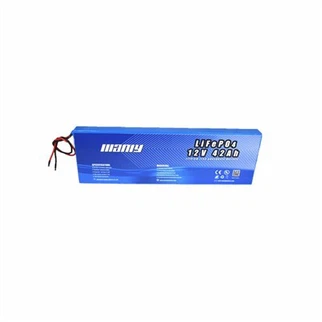
Lithium iron phosphate batteries, or LFP for short, refer to lithium battery technology that uses LiFePO4 as an anode. It has been recognized as the safest lithium battery technology since it was first created by NTT(Japan) in 1996. Typical manufacturers are Ningde Times, BYD, Yiwei and so on.
LFP has a long life of over 3500 cycles. Its longevity ranks first among all lithium-ion battery technologies. The energy density of the LFP battery is around 200kwh/m3. The LFP also shows the advantages of a fast charge/discharge response. The minimum charge time for a 100 percent discharge depth LFP battery is around 2 hours. As shown in the table below, it can maintain nearly 100% capacity during a short discharge operation. This good operational characteristics make LFP an ideal technology for fast response systems such as frequency control.
Discharge capacity new energy (%C10)
C10 C3 C1
LFP 100% 99.6% 99%
Lead carbon batteries
Lead carbon technology is a new generation of lead acid battery technology. It combines features of supercapacitors and lead-acid batteries. Typical manufacturers are Narada Power Supply, Shuangdeng and so on.
Lead carbon battery is a lead carbon composite electrode (lead carbon electrode) which combines carbon material (C) with sponge lead (Pb) negative electrode with double capacitance and battery characteristics. Lead carbon composite electrode is then matched with PbO2 positive electrode and assembled into lead carbon battery.
Lead-carbon batteries have a cycle life of 3200 cycles at 100 percent discharge depth and 2500 cycles at 80 percent discharge depth, much higher than conventional lead-acid batteries (about 1200 cycles at 80 percent discharge depth). This cycle life is close to that of ternary lithium and LFP technologies.
Another major advantage of lead-carbon batteries is their low cost for large systems. The total cost of lead-carbon batteries is less than half that of lithium-ion batteries. Given that battery investment is a critical part of a commercial BESS system, this can significantly reduce payback times. Safety is also a consideration in choosing lead carbon. Compared to lithium-ion batteries, the chemical reaction between the cathode and anode is mild and slow, making it a safer technology.
The minimum charge time for a 100% discharge depth lead-carbon battery is around five hours, more than double that of a lithium-ion battery. When rapid discharge response is required, lead carbon has a lower discharge performance than LFP, and lead-carbon is not suitable for rapid response systems such as frequency control systems. But for arbitrage systems that do not require frequent and fast operations, lead-carbon technology can meet the demand.