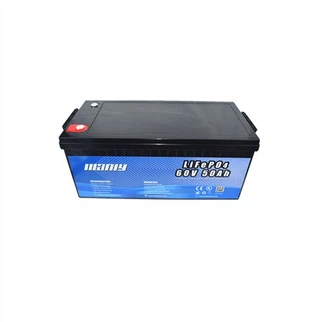
Can energy storage lithium batteries and electric vehicle lithium batteries be used interchangeably?
Batteries are used to store power. From the application point of view, they are all energy storage batteries. Therefore, it can be said that all lithium batteries are energy storage batteries. Later, in order to distinguish applications, they are divided into consumer batteries, power batteries, and energy storage batteries according to scenarios. Three kinds. Since energy storage lithium batteries and electric vehicle lithium batteries are relatively close in terms of voltage and capacity, many friends will consider whether energy storage lithium batteries and electric vehicle lithium batteries can be used interchangeably.

The replacement of lithium batteries for energy storage and lithium batteries for electric vehicles depends on the situation. Of course, it is considered impossible in most cases. We need to know that power batteries and ordinary energy storage batteries have certain differences in quality, performance standards, and raw materials, so if they are used interchangeably, there will be problems.
According to different application fields, power lithium batteries are mainly used in pure electric vehicles, electric vehicles, and other pneumatic tools, and energy storage lithium batteries are mainly used in peak and frequency modulation power auxiliary services, renewable energy grids, and microgrids. Due to different application fields, the regulations on battery performance are also different.
Energy storage lithium batteries have a higher service life than power lithium batteries. The service life of new energy cars is generally 5 to 8 years, while the service life of new energy storage technology projects is generally more than ten years. The service life of the power lithium battery cycle system reaches 1000 to 2000 times, while the energy storage lithium battery generally reaches 3,500 times.
Energy storage lithium batteries are conventional lithium batteries, which generally support stable discharge performance within a 1C rate. If it exceeds, the battery will easily heat up and be short-circuited. Below we assume that energy storage lithium batteries (non-powered) and electric vehicle lithium batteries have the same capacity, and they are both lithium iron phosphate batteries or polymer lithium batteries. Here we take lithium iron phosphate batteries as a simple explanation.
The general application scenarios of lithium iron phosphate batteries for energy storage are the power consumption of some conventional electronic equipment, such as information base stations and some 3C electronic products. Most of their discharge requirements are below 1C. In this case, The performance of the materials used in the manufacture of lithium iron phosphate batteries will be relatively poor. For example, the diaphragm, because the low-rate discharge lithium battery is not easy to generate heat, so in terms of temperature resistance, the diaphragm will be worse than the power battery, and the natural price Relatively low.
In terms of internal resistance, due to the lower discharge current of energy storage lithium iron phosphate batteries, the internal resistance is generally larger than that of power batteries, which means that although energy storage lithium batteries and power lithium batteries use battery materials same, in terms of the quality of the same material, the energy storage lithium battery is slightly worse, and the internal resistance will be higher. Therefore, in terms of the overall price, generally speaking, the energy storage lithium iron phosphate battery is cheaper than the power lithium iron phosphate battery.
So whether energy storage lithium battery and electric vehicle lithium battery can be used interchangeably, the first thing to look at is whether the types of the two batteries are the same, then whether the battery is the same in terms of capacity, and finally, it depends on the energy storage lithium battery. Whether the supported stable discharge current can support the requirements of electric vehicle lithium battery driving, and whether the maximum allowable current meets the short-term use requirements of electric vehicles.
If all of these are met, is it all right? Of course not. This requires you to know how to adjust the electric control system of the electric vehicle when changing the battery.
Extra-curricular knowledge: the difference between energy storage lithium battery and power lithium battery
1. The hardware logic structure of the energy storage management system is different
Energy storage lithium battery energy storage management system: The energy storage system is very large, and the hardware generally adopts a two-tier or three-tier model, and the larger-scale tends to be a three-tier management system.
Power lithium battery energy storage management system: The power battery system is in a high-speed electric vehicle and has higher requirements for the battery's power response speed and power characteristics, SOC estimation accuracy, and the number of state parameter calculations. There is only one layer of centralized or two-layer distribution, and there is basically no three-layer situation.
2. Different types of lithium batteries used
Energy storage lithium batteries mainly use lithium iron phosphate batteries, because lithium iron phosphate batteries are superior to other batteries in terms of safety, environmental protection, size, and weight. Lead-acid batteries and lead-carbon batteries are also used in some energy storage power stations.
Power lithium batteries The current mainstream battery types for electric vehicles are lithium iron phosphate batteries and ternary lithium batteries, which are more selective and not very stable in terms of safety.
3. Different capacity and volume requirements
Energy storage lithium batteries are mainly used for power and require high output power. The lithium battery pack is small in size and light in weight. The energy density of lithium batteries is 3 to 4 times that of lead-acid batteries, 2.5 times that of nickel-cadmium batteries, and 1.8 times that of nickel-hydrogen batteries.
Power lithium batteries are mainly used for energy storage, with large capacity requirements, long life requirements, and low self-discharge. The power tool battery has a small capacity and does not need to provide high-power output.
4. Different current usage range
Power lithium batteries are generally used in equipment that requires high current discharge (3 ~ 5C), and the damage to the battery is relatively small. Energy storage lithium batteries are used in low-current devices (generally 0.5 to 1C discharge range), where C refers to the charge-discharge rate, and the charge-discharge rate is a measure of the speed of discharge.