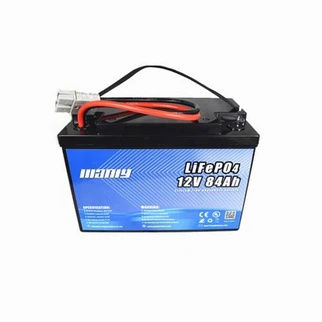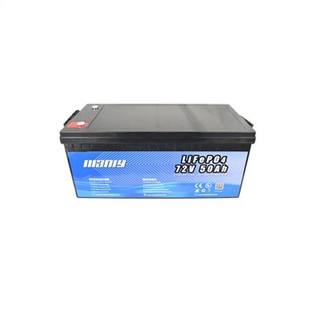
Tesla lithium iron phosphate batteries can be fully charged. It is recommended that the new standard battery life upgrade version MODEL3 equipped with lithium iron phosphate battery does not need to consider the charging limit when charging, until it is fully charged. Lithium iron is safe and fully charged, and the battery can be balanced. Ternary lithium is not suitable for full charging, which has an impact on battery life. More importantly, full charging will make the safety value reach the zero limit.
In addition, this model has cancelled the (daily use/long-distance travel) recommendation on the charging setting page, that is, the owner does not need to worry about whether it can be fully charged during daily charging.
Tesla officials also recommend that car owners fully charge at least once a week, and said that this helps to balance the voltage between the battery packs, which is conducive to keeping the vehicle accurately estimated and displaying the remaining power.
In fact, Tesla has suggested in the past that EV batteries shouldn't be charged at full capacity often, and that the technology should only be used on long trips.
According to Tesla's website "FAQ" page, the level of charging should be linked to the daily mileage driven by the owner. Its official website so far still recommends car owners to adjust the charging capacity through the "charging setting menu", and recommends setting a maximum charging capacity of 90% for daily use and 100% for long-distance travel.
Compared with the ternary lithium battery, although the energy density and low temperature discharge performance of the lithium iron phosphate battery are worse, and the charging speed does not have an advantage, but the lithium iron phosphate battery has an inherent advantage-safety.
The thermal stability of lithium iron phosphate is currently the best in lithium-ion batteries for vehicles: when the battery temperature is above 500 degrees, its internal chemical composition begins to decompose. In contrast, the ternary lithium battery is lower than 300 degrees, and the thermal runaway temperature of some high-nickel batteries is even lower than 200 degrees, so the lithium iron phosphate battery has a lower risk of spontaneous combustion during impact and rapid charging.
Secondly, the cycle life is longer. The number of charge and discharge cycles of lithium iron phosphate batteries is more than 3,500 times before it begins to decay, while the number of charge and discharge cycles of ternary lithium batteries is only 2,000 times.
In the field of automobiles, although lithium iron phosphate batteries have more advantages in safety and cycle life, they lag behind ternary lithium batteries in other performances. From the perspective of charging speed and energy density development, ternary lithium batteries are undoubtedly the best choice in the future.