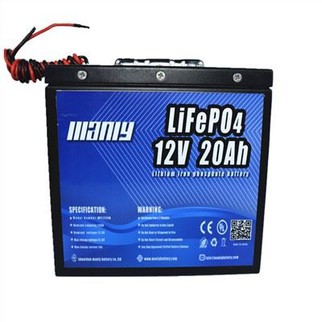
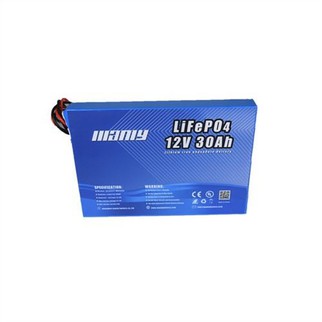
Lithium batteries are a class of batteries made of lithium metal or lithium alloy as positive/negative materials and using a non-aqueous electrolyte solution. Lithium batteries can be broadly divided into two categories: lithium metal batteries and lithium ion batteries. Lithium-ion batteries do not contain lithium in the metallic state and are rechargeable. The fifth generation of rechargeable batteries, lithium metal batteries, was born in 1996, and its safety, specific capacity, self-discharge rate and performance-to-price ratio are better than lithium ion batteries.
Lead-acid battery is a kind of battery whose electrode is mainly made of lead and its oxide, and whose electrolyte is sulfuric acid solution. In the discharged state of lead-acid battery, the main component of positive electrode is lead dioxide, and the main component of negative electrode is lead; in the charged state, the main component of both positive and negative electrodes is lead sulfate. The nominal voltage of a single-cell lead-acid battery is 2.0V, which can be discharged to 1.5V and charged to 2.4V; in application, six single-cell lead-acid batteries are often connected in series to form a nominal 12V lead-acid battery, and 24V, 36V, 48V, etc.
Lithium batteries and lead-acid batteries in the field of energy storage have a pivotal position, who can not completely replace who, but the focus of the two batteries is obviously different, lead-acid batteries are more inclined to electric bicycles, motorcycles, etc., while lithium batteries are more common in cars. So which is better, lithium batteries or lead-acid batteries? Compare the advantages and disadvantages of lithium batteries and lead-acid batteries from the following aspects.
1、Weight energy density
The current energy density of lithium battery is generally 200~260wh/g, lead-acid is generally 50~70wh/g, then the weight energy density of lithium battery is 3~5 times of lead-acid, which means that the same capacity, lead-acid battery is 3~5 times of lithium battery, so in the light weight of energy storage devices, lithium battery occupies the absolute advantage.
2、Volume energy density
The volume capacity density of lithium battery is usually about 1.5 times that of lead-acid battery, so the volume of lithium battery is about 30% smaller than that of lead-acid battery with the same capacity.
3、Use cycle
The more popular material system is ternary and lithium iron, ternary power lithium battery cycle times are usually more than 1000 times, lithium iron phosphate battery cycle times are more than 2000 times, lead-acid battery cycle times are usually only about 300 to 350 times, so the service life of lithium batteries is about 3-6 times that of lead-acid batteries.
4、Price
At present, lithium batteries are more expensive than lead-acid, about 3 times more expensive, but combined with the service life analysis, put the same cost, still the lithium battery cycle to be longer.
5、Applicability
Lithium batteries are slightly less safe than lead-acid batteries, so you need to do a variety of safety precautions in use, such as preventing damage to lithium batteries caused by external forces or accidents, which may cause a fire or explosion; the current temperature suitability of lithium batteries is also very good, so in other adaptations, lithium batteries are not inferior to lead-acid batteries.
6、National policy
Lead-acid batteries are quite serious because of the environmental hazards caused by the production chain or waste batteries, so in terms of national policy guidance, has been limiting the expansion of reinvestment in lead-acid batteries, or in some areas to limit the use of lead-acid batteries, the future trend of lithium batteries to replace lead-acid batteries will become more and more obvious, and the progress will gradually accelerate.
Therefore, whether it is lead-acid batteries compared with lithium batteries or lithium batteries of different materials, they all have their own advantages and disadvantages, and we cannot simply define them as "good" or "bad". When buying an e-bike, if you don't need to extract the battery for charging, and you don't want a lightweight vehicle, and the charging environment is complicated (such as hot in summer and cold in winter), you can choose the lead-acid battery which is safer and more cost-effective. If you want the vehicle to be light and run far at the same time, or sometimes need to extract the battery for charging (in a safe environment), you can choose the higher energy density, extractable lithium battery.