1. The future development space of my country's electrochemical energy storage can be expected
my country's energy storage types are diversified. In 2019, China has put into operation energy storage projects with a cumulative installed capacity of 180Gwh, of which pumped energy storage accounts for 93.4%, which still dominates; domestic electrochemical energy storage installed capacity is about 8.1Gwh, accounting for only domestic energy storage The total installed capacity is 4.5%. Pumped energy storage is still the most mature and economical energy storage technology at present. It is widely used in system peak shaving, frequency modulation, and backup fields. The dominant position of pumped energy storage in energy storage applications will not be shaken in the short term.
The cost of an electrochemical energy storage unit is relatively high and the economy is insufficient, but compared with physical energy storage, it has higher efficiency, flexible configuration, and faster response. With the rapid decline in cost in recent years and the gradual maturity of commercial applications, electrochemical energy storage The advantages are becoming more and more obvious, and it has gradually become the mainstream of new energy storage installations, and there is still a large room for cost reduction in the future, and the development prospects are broad.
In 2020, with the domestic grid-side reform and policy support, while maintaining steady development, domestic electrochemical energy storage will also implement some projects planned in 2019 that have not been constructed due to policy impacts. The expected increase will be significant and the cumulative installed capacity will be significant. The scale will reach 15Gwh.
2. It is imperative for lithium batteries to replace lead-acid batteries
my country's lead-acid battery technology is mature, and it is also the world's largest lead-acid battery producer and lead-acid battery consumer. Battery materials have a wide range of sources and low cost. The shortcomings are fewer cycles, short service life, and improper handling in production and recycling links, which can easily cause environmental pollution.
Due to the high early cost of electrochemical energy storage, China’s domestic energy storage projects were mostly government projects, and lead-acid batteries were used in the early stages. However, as domestic lithium battery technology continues to mature, lithium-ion batteries are due to their high energy density and service life. The characteristics of long, wide applicable temperature range, etc., gradually replace lead-acid batteries for energy storage. According to statistics from Xin Lu Information, in 2019, the cumulative installed capacity of electrochemical energy storage in China was 8.1 Gwh, a year-on-year increase of 55.7%, continuing to maintain rapid growth momentum. Among them, lithium-ion batteries accounted for 81% of electrochemical energy storage, and lead-acid batteries dropped to 18%.
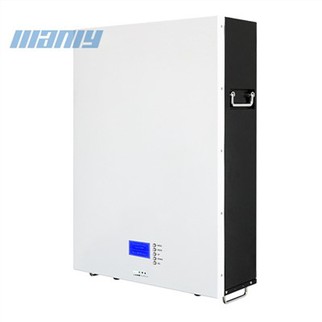
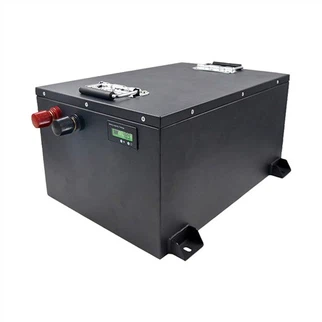
Compared with the electrochemical energy storage of different technical routes, lithium battery energy storage technology has the advantages of large-scale, high efficiency, long life, low cost, and pollution-free, and it is the most feasible technical route at present.
Compared with other battery energy storage, the lithium battery has the longest cycle life and the highest cycle efficiency. With the continuous improvement of lithium battery technology, the battery life continues to improve, which makes the application potential of lithium batteries in the field of energy storage continue to increase.
Lithium batteries have good rate performance and are relatively easy to prepare. In the future, improvements in high-temperature performance and poor safety performance are more conducive to the application in the field of energy storage.
Compared with lead-acid and lead-carbon batteries, the pollution-free nature of lithium batteries is more in line with environmental protection requirements, and the high price of flow batteries makes lithium batteries a more suitable clean energy source.
In addition, the global lithium battery energy storage system technically accounts for a much higher proportion than other battery energy storage systems, which also lays a good foundation for lithium-ion batteries to become the mainstream of energy storage in the future.
3. The cost of lithium batteries has dropped and the advantages are prominent
As the price of lithium batteries continues to fall, entering 2020, new domestic bidding for base station energy storage and wind power projects have made it clear that they will no longer use lead-acid batteries. It is expected that the proportion of lithium batteries will continue to rise close to 100% in the next few years.
From the perspective of the cost structure of energy storage systems, battery system costs account for as much as 53%. Taking the most widely used lithium-ion battery as an example, most of the current energy storage projects use lithium iron phosphate batteries. Compared with the mainstream ternary lithium batteries used in vehicles, lithium iron phosphate batteries have the advantages of lower cost and longer life and are more suitable for being mounted on energy storage systems.
At present, the domestic mainstream lithium iron phosphate battery PACK price is around 0.6-0.7 yuan/Wh. Regardless of the PACK cost of about 0.1 yuan/wh, the actual gross profit rate of energy storage lithium battery products can still be maintained at 20-30%.
The cost of domestic flow batteries is generally twice that of lithium batteries, mainly due to the high price of raw material vanadium pentoxide. The current domestic price of vanadium pentoxide is as high as 120,000 yuan/ton, and the historically highest price has reached 600,000 yuan/ton.
The mainstream price of lead-acid batteries is 0.4-0.5 yuan/wh, although it is slightly lower than LEP batteries, from the performance point of view, the cycle life of lead-acid batteries is only 1000-1200 times, and the cycle life of lithium iron phosphate batteries is 1000-10000 times. (Attenuation to 70%). Based on the calculation of 7000 cycles, the lead-acid battery needs to be replaced about 6 times, while the lithium iron phosphate battery does not need to be replaced.
After testing, each new 5G base station's new iron-lithium battery can perform complete peak-level-valley switching twice a day, which can save 10,400 yuan/year in electricity bills, which is 2554 yuan/year more than lead-acid batteries.
4. Lithium iron phosphate battery-the king of my country's lithium battery energy storage market
From the perspective of the layout of lithium energy storage, the current demand for energy storage projects in overseas markets is mostly on the user side. At the same time, European and American countries pay more attention to environmental protection and are extremely repulsive of lead-acid batteries. This has led to overseas companies such as Samsung SDI, LG Chem, and Panasonic. For the large-scale application of batteries in the field of energy storage, these overseas companies have not yet deployed lithium iron phosphate battery projects, and currently, all use ternary batteries. Almost all energy storage batteries used in the domestic market are lithium iron phosphate batteries, mainly because ternary batteries are more expensive and less safe than lithium iron phosphate batteries.
In the first half of 2020, despite the downturn in the new energy market, the lithium battery energy storage market performed well. China Railway Tower and China Mobile successively tendered for lithium iron phosphate backup energy storage batteries totaling 4Gwh. Huawei base stations and Gansu, Inner Mongolia, and other places built The grid-side energy storage and integrated solar energy storage lithium battery energy storage project scale is 2.5Gwh. These projects all use lithium iron phosphate batteries, which has promoted a significant increase in the domestic market for lithium iron phosphate batteries.
According to Xinli Information, in the first half of 2020, the energy storage orders of Yiwei, Ruipu, Nandu, Haistar, and other companies have increased significantly; Guoxuan High-tech has a full production of lithium iron phosphate batteries, driven by Huawei base stations and wind power energy storage orders. , May-June lithium iron phosphate material output hit a record high; at the same time, boosted by China Mobile and China Railway Tower’s energy storage bidding projects, domestic dry-process diaphragm companies have increased orders significantly; domestic anode material market demand growth is also concentrated in energy storage And a small dynamic venue.
In the long run, lithium batteries have obvious advantages in electrochemical energy storage, while lithium iron phosphate batteries have obvious advantages in cost and cycle performance compared with ternary batteries. Regardless of the current application and development trends, the main energy storage market in the future The growth lies in lithium iron phosphate batteries, which are expected to become the king of the domestic lithium energy storage market.