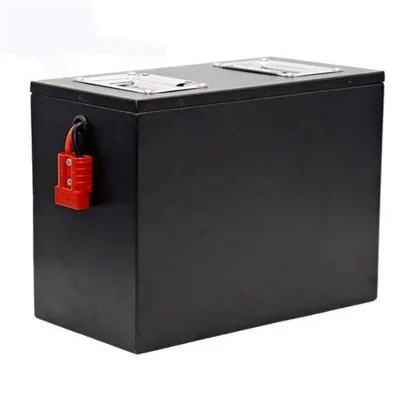
According to the British "Financial Times" (FT) news on May 13th, on the 12th, Glencore CEO Ivan Glasenberg, the world's largest cobalt producer, stated that China controls the supply of cobalt, a key metal for manufacturing batteries, and Western companies cannot "take it lightly" .
Glasenberg pointed out that if its cobalt supply cannot be guaranteed, the US and European auto industries are likely to be far behind by China. He warned that Western companies are too "naive" to rely too much on China. "What if (China) does not export batteries someday?"
"Relying on China to provide batteries for its electric cars, Western companies are too naive"
On the 12th local time, Glasenberg attended the "FT Future of the Car Summit" (FT Future of the Car Summit) of the British "Financial Times". At the meeting, he expressed his views on the relationship between the supply of cobalt metal and the global automobile manufacturing industry.
Cobalt is a key metal for manufacturing lithium batteries for smart electric vehicles. Glasenberg warned that it would be "naive" if Western automakers believed that they could always rely on China to provide batteries for their electric cars.
Glasenberg said that Chinese companies have long been aware of the vulnerabilities of the cobalt supply chain and have taken the lead in establishing a “bundled” partnership with Congo (DRC), the main source of cobalt.
Glasenberg said that Western companies have no long-term plans for cobalt supply. "They either don't believe this (cobalt supply) is a problem, or they believe that they can definitely buy batteries from China." He "warned" and said, "But if things go against their expectations-the Chinese say,'We don't export batteries, we will only 'Exporting electric cars', what should I do? Where do the batteries come from?"
"Competition for the supply of cobalt ore, China's'high-tech'"
"Financial Times" reported that Glasenberg issued the above "warning" at a time when the global automotive manufacturing supply chain is attracting attention due to the shortage of chips.
As an important raw material, cobalt has also come to the center of the market and public opinion. The price of cobalt has risen by 50% in the past six months.
The article emphasizes that more than 60% of the global annual production of 130,000 tons of cobalt comes from Congo (DRC). The Chinese company controls 40% of the Congo (DRC) cobalt ore output and has established a long-term supply relationship with the cobalt producer Glencore. In addition, China has established a leading position in the field of cobalt processing and has also launched direct investment in mines.
The article specifically mentioned that in April this year, Chinese battery manufacturer CATL (CATL) and Luoyang Luanchuan Molybdenum Industry (CMOC) launched cooperation. Hong Kong Bangpu Times New Energy Co., Ltd., a subsidiary of CATL, spent US$137.5 million (approximately 900 million yuan) to acquire a 25% stake in Hong Kong KFM Holdings Co., Ltd., a subsidiary of Luoyang Molybdenum.
It is worth mentioning that the core asset of KFM Holdings is a 95% stake in the Kisanfu copper-cobalt mine. This copper-cobalt mine in Congo (DRC) contains more than 6.2 million tons of copper metal and more than 3.1 million tons of cobalt metal. It is one of the world's highest-grade copper-cobalt mines to be developed.
The "precautionary" and advanced deployment of cobalt ore supply by Chinese companies in the Congo (DRC) and other places has aroused the attention of the American industry.
Cobalt ore is widely used in commercial, industrial, and military fields, involving products such as smartphones, electric vehicles, and aircraft engines. As early as 2018, the U.S. government listed cobalt as a mineral of "strategic and critical" importance to U.S. national security.
According to information from the Ministry of Commerce, Congo (DRC) is rich in non-ferrous metal resources, of which cobalt reserves are 4.5 million tons, accounting for 50% of the world. It is one of the most important cobalt producers in the world.
Today, China is the world's largest producer and a major consumer of refined cobalt, as well as Congo's most important export partner. In 2018, nearly 90% of China's cobalt raw materials were imported locally.
“A lot of cobalt ore is shipped to China as soon as it leaves Congo for further processing.” According to Neda Nassar, head of the material flow analysis department of the National Mineral Information Center under the United States Geological Survey (USGS), the Chinese company owns Congo (Golden) cobalt ore production. China also undertakes about 2/3 of the world’s cobalt ore refining.
This status quo has aroused concerns among American media, think tanks, and companies.
In December last year, the US "politician" news website commented that China's long-term and "state-directed" policy is superior in the strategic resource competition between China and the United States for the acquisition of cobalt ore. Over the past two decades, China has been willing to sacrifice short-term benefits for long-term goals and has so far "dominated" the global cobalt supply chain; the United States has "fallen down" because of the "laissez-faire" route. Face the risk of supply shortage or interruption.
Sharon Booker, a former Pentagon official and researcher at the New American Think Tank, once said, “The Chinese people’s vision is commendable. They want vertical production, not only ensuring the supply of raw materials, but also manufacturing batteries and so on. Therefore, they have adopted a strategic approach. We (the United States) rely on a group of private companies with different principles to lead the (supply chain)."
Bryce Klock, CEO of Jervis Mining Corporation of the United States, reminded that the supply of cobalt ore will change the business situation of global competition in the coming decades. In his view, "China's processed cobalt ore is not for exporting to the United States to support the electric car revolution. They will build cheaper cars themselves, and you can only expect them to export cheap cars."
Now, this "worry" is prompting some Western companies to "act".
Glencore was founded in 1974 and is headquartered in Baar, Switzerland. It is a global commodity trading giant and one of the world's largest commodity trading companies. Including cobalt, its business scope now covers metals, minerals, crude oil, petroleum products, coal, natural gas and agricultural products, etc.
Glasenberg said that Glencore's cobalt output this year is 35,000 tons. If the company decides to develop its mineral sources in the Democratic Republic of the Congo, the cobalt output is expected to increase by 25,000 to 30,000 tons.
At the conference on the 12th of this month, Glasenberg reiterated the significance of Western companies' mastery of the cobalt supply chain. "In my personal opinion, this would be a great idea. If you look back at history, Henry Ford (the founder of Ford Motors in the United States) did just that. He has a firm grasp of his supply chain, whether it's rubber planting. The park is still Brazil’s iron ore."
Glasenberg revealed that Glencore will consider selling its stake in a mine in the Democratic Republic of the Congo to a Western car manufacturer, but has not received any contact yet.