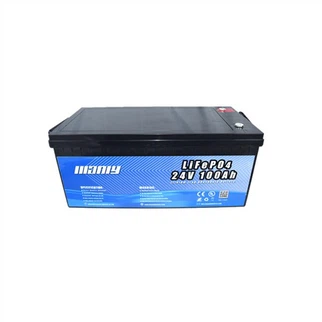
Large battery arrays can be used as backup and continuous power supply energy storage system, this use is gaining more and more attention, Tesla Motors recently launched the home and commercial Powerwall system proved this. The batteries in such systems are continuously charged by the grid or other energy sources, and then supplied to the user via a DC/AC inverter for alternating current (AC) power.
The use of batteries as backup power is not new, there are already many kinds of battery backup power system, such as the basic 120/240V AC and hundreds of watts of power desktop PC short-term backup power system, ships, hybrid cars or fully electric type cars using several kilowatts of special vehicle backup power system, telecommunications systems and data centers using grid-level hundreds of kilowatts of backup power system (see Figure 1)...etc. While advances in the field of battery chemistry and battery technology have attracted a great deal of attention, there is an equally critical component to a viable and battery-based backup system, and that is the battery management system (BMS).
According to the battery backup power is ideal for fixed and mobile use from a few kilowatts to hundreds of kW power, can be used for a variety of uses reliable and efficient power.
There are many challenges in completing a battery management system for energy storage use, and the solution is by no means a simple "extension" of the management system from a small, lower capacity battery pack. Instead, new, more complex strategies and critical support components are required.
The starting point of the challenge is to require high accuracy and confidence in the measurement values of many critical battery parameters. In addition, the planning of the subsystem must be modular, in order to be able to use the specific needs of the configuration to customize, but also to consider the possible expansion requirements, the overall management issues and the necessary maintenance.
The operating environment of larger storage arrays also presents other significant challenges. In the case of high inverter voltage/current and therefore current spikes, the BMS must also be in a very noisy electrical environment and often very high temperature environment to supply accurate, common data. In addition, the BMS must also supply a wide range of "fine" data for the internal module and system temperature measurements, rather than a limited number of rough aggregate data, because these data are critical for charging, monitoring and discharging.
Because of the important role of these power systems, their reliability of operation is inherently critical. To make the above easily stated goal a reality, the BMS must ensure data accuracy and integrity as well as continuous health assessment so that the BMS can continue to take the required action. To accomplish solid planning and reliable security is a multi-level process, the BMS must anticipate possible problems for all subsystems, perform self-testing and supply fault detection, and then select the appropriate action in standby and working modes. The last requirement is that because of the high voltage, high current and high power, the BMS must meet many stringent regulatory standards.
System planning transforms concepts into real-world results
While overseeing a rechargeable battery is conceptually simple, simply placing voltage and current measurement circuits at the battery terminals, the reality of a BMS is very different and much more complex.
Robust planning begins with the comprehensive supervision of each battery section, which imitates the function of the circuit has made some important requirements. The BMS must evaluate the validity of each measurement because it needs to maximize data integrity, and the BMS must also identify erroneous or problematic readings. the BMS cannot ignore unusual readings because such readings may indicate potential problems, but at the same time, the BMS cannot act on erroneous data. The BMS cannot act on data that is incorrect.