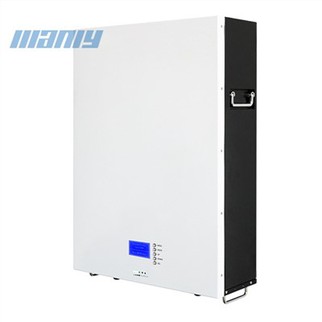
As the range of new energy vehicles is limited, how to improve the range affects the whole market. In the battery industry, ternary lithium battery has rapidly occupied the 3C, automobile, and other markets with many advantages, and gradually replaced the traditional lead-acid battery. For traditional batteries, three lithium batteries have a long life, energy-saving, environmental protection, no pollution, low maintenance cost, complete charge and discharge, lightweight, and so on. In some publicity materials, some people think that three lithium batteries have a long life, is it really the case? How many times does it have a life cycle? Let's uncover the truth.

What are ternary lithium batteries?
In nature, lithium is the lightest metal with the smallest atomic mass. Lithium has active chemical properties, easily loses electrons, and is oxidized to Li+. The standard electrode potential is -3.045V and the electrochemical equivalent is 0.26g/Ah. Ternary lithium battery refers to lithium secondary battery with ni, Co, and Mn transition metal oxides as cathode materials. It fully integrated the nickel-cobalt acid lithium good cycle performance, high capacity of acid lithium and lithium manganese acid of high security and low cost, etc., using molecular hybrid, doping, coating, and surface modification methods such as synthesis of nickel cobalt manganese compound lithium oxide, multielement synergy is currently widely research and application of a lithium-ion rechargeable battery.
The theoretical life span is only middling
The life of a ternary lithium battery is calculated by the proportion of capacity decay degree after it is used to a certain extent and terminates directly when the capacity life reaches zero. The algorithm in the industry is generally three yuan lithium battery discharge once after full charge, which is called cycle life. During the use of lithium batteries, irreversible chemical reactions within the battery will cause the capacity of the battery to decline, such as improper use, or use at extremely high or low temperatures. For example, the decomposition of electrolytes, the inactivation of active materials, and the collapse of positive and negative electrode structures lead to the reduction of the number of lithium ions embedded and unembedded. Experiments show that a higher discharge rate will lead to faster capacity decay, if the discharge current is low, the battery voltage will be close to equilibrium voltage, can release more energy.
Theory of ternary lithium battery life expectancy of 1200 fully charge and discharge, which completely cycle life, according to the use frequency, once three days fully charge and discharge, fully charge and discharge of 120 times a year, the ternary lithium battery service life to 10 years, even if in use process loss or the number of days to charge and discharge reduction, also can achieve eight years, note that said here is that the capacity of life, After eight years ternary lithium-ion batteries will still have more than 60 percent capacity, which is standard.
The theoretical life of ternary lithium battery is medium in commercial rechargeable lithium battery. Lithium iron phosphate is about 2,000 cycles, while lithium titanate is said to reach 10,000 cycles. At present, the mainstream battery manufacturers in its production of three core specifications committed more than 500 times (under standard conditions of charge and discharge), but the core in the battery pack, due to consistency problems, mainly voltage and internal resistance can not be exactly the same, its cycle life is about 400 times. The manufacturer recommends that the SOC use window be 10%~90%. It is not recommended to carry out deep charge and discharge, otherwise, it will cause irreversible damage to the positive and negative electrode structure of the battery. If calculated by shallow charge and shallow discharge, the cycle life will be at least 1000 times. In addition, if lithium-ion batteries are frequently charged at high power rates and high temperatures, their battery life drops to less than 200 times.