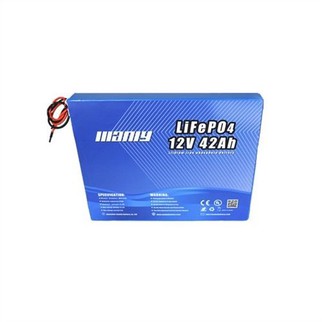
The so-called lithium battery life refers to the battery after a period of time, the capacity decay to 70% of the nominal capacity (room temperature 25 ℃, standard atmospheric pressure, and 0.2C discharge battery capacity), can be considered the end of life. The industry generally calculates the cycle life by the number of cycles of lithium battery full and full discharge.
The theoretical life of ternary lithium batteries is about 800 cycles, which is medium among the commercial rechargeable lithium batteries. Lithium iron phosphate is about 2,000 cycles, while lithium titanate is said to reach 10,000 cycles. At present, the mainstream battery manufacturers in their production of ternary cells in the specification book promised greater than 500 times (standard conditions charge and discharge), but the cells in the group made into a battery pack, due to consistency issues, mainly the voltage and internal resistance is not exactly the same, its cycle life of about 400 times. In addition, if the lithium battery is often discharged at a high rate and high temperature, the battery life will drop significantly to less than 200 times.
The key to improving energy density lies in the cathode material, which determines the main performance of lithium-ion batteries. Among them, the ternary material refers to the cathode material containing three elements of nickel cobalt manganese or nickel cobalt aluminum, namely lithium nickel cobalt manganate (hereinafter referred to as "NCM") or lithium nickel cobalt aluminum acid (hereinafter referred to as "NCA").
According to the different content of nickel, cobalt and manganese elements in the ternary materials, NCM materials can be divided into NCM523, NCM622, NCM811, etc. NCM523 means the chemical composition of the ternary materials is Li(Ni0.5Co0.2Mn0.3)O2, while NCA is made of aluminum instead of manganese elements. The technical advantage of ternary materials is to combine the advantages of LiCoO2, LiNiO2, LiMnO2 or LiAlO2, so that Ni, Co, Mn or Al can play a synergistic effect. The main function of Mn is to reduce the cost and improve the structural stability and safety of the material. Different element ratios can obtain different electrode properties.