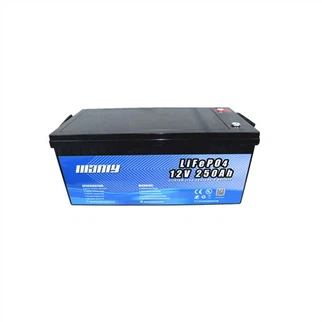
Lithium-ion battery charging is not complicated, compared to nickel and lead-acid batteries, lithium-ion battery charging is a very simple process, but charging lithium-ion batteries or some special attention to matters, in order to make lithium-ion batteries to get a reasonable and adequate use, must be reasonable to charge lithium-ion batteries.
Precaution 1: Prevent high temperature during charging
If the charging temperature is higher than the specified operating temperature (35 ℃), the lithium-ion battery power will continue to reduce, that is, the power supply time under full charge shortened, will cause damage to the quality of the battery, reducing battery life.
Note 2: Prevent the temperature from getting too low when charging
If charging in a low temperature environment (below 4 ℃), the battery power will also continue to reduce, and even the situation of charging, but the situation is different from the high temperature environment, and not permanently damaged, when the temperature rises to the appropriate, the battery power will be restored to its previous state.
Note 3: Reasonable deep discharge deep charge
Frequent use will make the lithium-ion battery electrons are always in a state of flow, which is conducive to the extension of its life. If not often used, remember to complete a monthly charging cycle for lithium-ion batteries, that is, deep discharge deep charge once.
Lithium-ion battery charging process
The most suitable charging process for Li-ion batteries can be divided into four stages: trickle charging, constant current charging, constant voltage charging, and charging termination. Refer to Figure 1.
Lithium-ion battery charging method_Lithium-ion battery charging process
Stage 1: Trickle Charge Trickle charge is used to first pre-charge (recovery charge) a completely discharged battery cell. When the battery voltage is below about 3V, the battery is first charged with a constant current of 0.1C max.
Stage 2: Constant-current charging When the battery voltage rises above the trickle charge threshold, the charging current is increased for constant-current charging. The current for constant current charging is between 0.2C and 1.0C. The current during constant current charging does not require great precision; quasi-constant current is fine. In linear charger designs, the current often rises as the battery voltage rises to minimize heat dissipation problems on the transfer transistor.
Charging at a constant current greater than 1C does not shorten the overall charge cycle time, so this practice is not desirable. When charging at higher currents, the battery voltage rises more rapidly due to overvoltage of the electrode response and the rise in voltage across the internal impedance of the battery. The constant current charging stage will become shorter, but the total charge cycle time will not be shortened because the following constant voltage charging stage will be added accordingly.
Phase 3: Constant Voltage Charging When the battery voltage rises to 4.2V, constant current charging ends and the constant voltage charging phase begins. For optimal performance, the regulated voltage tolerance should be better than +1%.
Stage 4: Charge termination Unlike nickel batteries, continuous trickle charging of Li-ion batteries is not recommended. Continuous trickle charging can cause a plate plating effect on lithium metal. This can make the battery unstable and may lead to sudden and rapid automatic disintegration.
There are two typical methods of charge termination: using a minimum charge current judgment or using an hourly timer (or a combination of both). The minimum current method monitors the charge current during the constant voltage charging phase and terminates charging when the charge current decreases to the 0.02C to 0.07C range. The second method times the charging process from the beginning of the constant voltage charging phase and terminates it after two hours of continuous charging.
Welcome to visit our company website: www.manlybattery.com, If you have requests or queries on batteries, please feel free to contact info@manlybattery.com. Thank you.