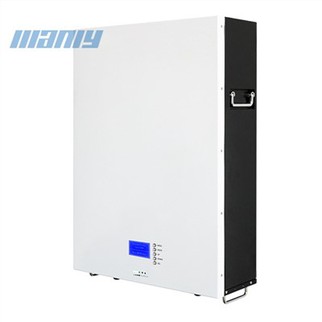
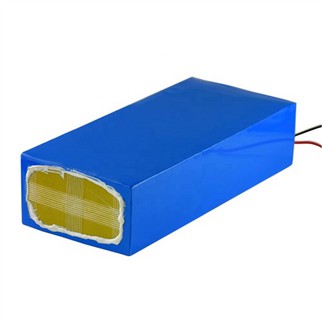
Although the cost of lithium-ion energy storage devices is more than twice that of lead-acid batteries, this is not the reason why lithium ions are left behind. Different places of use have different requirements on the output power and volume of energy storage technology, and various energy storage is its main purpose.
Lithium-ion batteries were invented in the second half of the 1990s. Like many other inventions, this rechargeable battery took two years to get better. This kind of chemical material is very stable, but in general, the internal resistance is too large. Everyone uses high-purity graphite bags and other good-conducting chemical materials to reduce the internal resistance.
This kind of rechargeable battery has many advantages. For wireless communication, the greater advantage is that the charging and discharging working voltage is more stable. The working voltage of the traditional rechargeable battery is very high after being fully charged, and the working voltage gradually decreases with the whole process of charging and discharging. The operating voltage of the lithium phosphate battery does not change much with the charge and discharge process. What are the benefits?
For high specific heat
The maximum heating value of Li-li battery is 350c-500c, while Li-mno2 and Licoo2 only go up and down at 200c. Wide operating temperature range (-20c-75c), the maximum heating value of lithium iron phosphate battery is 350c-500c, and lithium manganese and lithium cobalt oxide are only 200c.
Large space and light weight
Rechargeable batteries are usually charged online, and the volume is faster than the short-circuit capacity (ie, memory). For example, the ni-h and ni-cd batteries have memory, and the lithium phosphate rechargeable battery does not exist. No matter where the battery is, it can be used to charge it without using up the battery. The charging capacity of a lithium phosphate battery of the same size is 2/3 of that of a lead-acid battery, and the net weight is 1/3 of that of a lead-acid battery.
Improve service life
The cycle life of lead-acid batteries is reduced to 300 times, and the maximum is 500 times, while the cycle life of lithium phosphate batteries power lithium batteries is more than 2000 times, and the application of standard charging (5 hours rate) can be reduced to 2000 times.