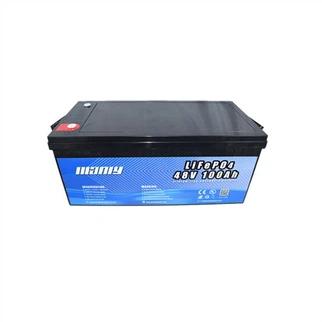
With the increase in the intelligence of portable medical devices, the battery capacity requirements are getting higher and higher, how to cope with the rapid charging of large-capacity lithium-ion batteries? How to achieve the safety of fast charging is the current technology to overcome the difficulties and focus. Next lithium battery manufacturers briefly about how high-capacity lithium-ion batteries high-power charging use.
Demand background
One of the important trends in patient care is the increasing use of remote monitoring systems in patients' homes. The reason for this trend is obvious; the cost of keeping patients in the hospital is prohibitively high. As a result, many of these portable electronic monitoring systems incorporate RF transceivers so that data can be sent directly to a monitoring system in the hospital for physician study and analysis. Obviously, such systems are usually powered by AC power, batteries, or both. This redundancy is necessary to ensure that the system will continue to work when used in locations other than the hospital. In addition, many new advances have been made in the field of portable medical diagnostic devices, such as those carried everywhere by doctors and nurses, that use batteries as the primary power source or use batteries as a backup power source in case the AC power source is interrupted. Such systems want high efficiency battery charging circuits.
In addition to medical applications, portable industrial banking terminals, rugged tablet computers, inventory control and bar code scanning equipment, etc. want single-cell high-capacity batteries to reduce the form factor and weight. Batteries based on lithium materials have been the most popular choice. However, charging such batteries quickly, accurately and safely is no non-trivial matter. In addition, new, lithium-based chemical anode/cathode combinations have been developed, and these combinations are being pushed into the mainstream. One example of this trend is that lithium iron phosphate (LiFepO4) batteries have emerged in many applications, supplying higher safety and longer battery life than cobalt-based Li-ion/Li-polymer batteries. This chemical composition also offers many of the other advantages of cobalt-based Li-ion batteries, including lower self-discharge rates and relatively lighter weight. In contrast, in addition to improved safety (due to resistance to thermal runaway) and extended battery cycle life, lithium iron phosphate ion batteries have higher peak power ratings and less environmental impact. Typically medical and industrial applications are willing to accept the lower energy density per volume of LiFePO4 batteries in exchange for higher safety and longer cycle life. Back-up applications want longer cycle life and the ability to discharge at high currents.
How about getting more power
The power architecture of many handheld industrial or medical devices is often similar to the power architecture of a large display smartphone. Typically, 3.7V (4.2V final charge or float) lithium-ion batteries have been used as the primary power source because of their high energy density per weight (Wh/kg) and energy density per volume (Wh/m3). In the past, many high-power devices used two 7.4V (8.4V floating voltage) Li-ion batteries to meet power requirements, but due to the availability of inexpensive 5V power management ICs, more and more handheld devices are adopting lower voltage architectures, which allow the use of single Li-ion batteries. A typical portable medical or industrial device has many features and a very large (in terms of portable devices) display. When powered by a 3.7V battery, its capacity must be measured in thousands of milliwatt hours. In order to use a few hours to charge such a large capacity battery, it is necessary to a few amps of charging current.
However, even to such a large charging current, in the absence of a high-current AC adapter available, users still want to use the USB port to charge their high-power devices. To meet this requirement, the battery charger must be able to charge at high current ("2A") when an AC adapter is available, but still efficiently utilize the 2.5W to 4.5W of power that the USB port can supply. In addition, the IC product must protect sensitive downstream low-voltage components from overvoltage events that could be caused by damage, and efficiently direct high current from the USB input, AC adapter, or battery to the load to minimize power loss in the form of heat. At the same time, the IC must safely manage the battery charging algorithm and monitor critical system parameters.
The low 3.6V float voltage of LiFePO4 batteries makes it impossible to use a standard Li-ion battery charger. If charged improperly, there is a risk of irreparable damage to this battery. Accurate float voltage charging will extend the life of the battery. The advantages of LiFepO4 batteries over cobalt-based Li-ion batteries include higher volumetric energy density (capacity per unit volume) and less susceptibility to premature failure (if a new battery is deep cycled prematurely).
Important design constraints are summarized as follows.
. Large capacity batteries require high charging current and high efficiency
. Many portable applications, including industrial and medical equipment, require the convenience provided by USB-compatible charging
. Li-iron phosphate ion batteries have special charging requirements, i.e., lower float voltage, which has some welcome advantages over Li-ion batteries
Any IC solution to meet these design constraints discussed above must be compact and monolithic, able to cope with fast, efficient charging of a single high-capacity battery, and compatible with new chemical compositions such as lithium iron phosphate. Such a device would be a catalyst to increase the adoption rate of portable industrial and medical products using high-capacity batteries worldwide.
Addressing the power challenges of portable devices with single-cell batteries
While the above requirements may seem impossible to meet with a single IC, take a look at the LTC4156, which follows in the footsteps of the popular, lithium-based LTC4155, a high-power, I2C-controlled, high-efficiency powerpath manager, ideal diode controller, and lithium iron phosphate (LiFepO4) battery charger for for portable applications using single-cell batteries, such as portable medical and industrial equipment, backup devices, and high power density battery-powered applications. The IC is designed to deliver up to 15W of power efficiently from a variety of power sources while minimizing power consumption and mitigating thermal budget constraints. the LTC4156's switching power path topology seamlessly manages power distribution from two input sources, such as the AC adapter and USB port, to the device's rechargeable lithium iron phosphate ion battery, while prioritizing power to the system loads when input power is limited. See Figure 1.
TOSYSTEMLOAD: To System Load
Because of the power savings, the LTC4156 allows the output load current to exceed the current drawn from the input power supply, thus maximizing the available power to charge the battery without exceeding the input power supply specifications. For example, when powered by a 5V/2A AC adapter with 10W of available power, the IC's switching regulator can efficiently deliver more than 85% of the available power, supplying up to ~2.4A of charging current and charging more quickly. Unlike ordinary switching battery chargers, the LTC4156 has an instant-on capability to ensure that the system can be powered as soon as it is plugged in, even when the battery is deeply discharged. Since it supports USBOTG (On-the-Go), it does not require any additional components to in turn supply a 5V power source to the USB port.
The LTC4156's autonomous full-featured single-cell LiFePO4 battery charger can supply up to 3.5A of charging current with 15 user-selectable charging current settings. The charger includes automatic recharge, bad cell detection, programmable safety timer, thermistor-controlled temperature-qualified charging, programmable end-of-charge indication/termination, and programmable interrupt. the LTC4156 is available in a flat (0.75mm) 28-pin 4mmx5mm QFN package with guaranteed operation over the -40°C to 125°C temperature range.
High Efficiency Internal Switching Regulator
The LTC4156's switching regulator operates like a transformer, allowing the load current at VOUT to exceed the current drawn by the input power supply, and the ability to fully utilize the available power to charge the battery is greatly improved compared to typical linear mode chargers. The aforementioned example illustrates how the LTC4156 can charge efficiently at currents up to 3.5A, resulting in faster charging speeds. Unlike ordinary switching battery chargers, the LTC4156 has an instant-on capability to ensure that power can be supplied to the system as soon as it is plugged in, even when the battery is dead or already deeply discharged.
EFFICIENCY: Efficiency
SwitchingRegulatorEfficiency: Switching regulator efficiency
LOADCURRENT: Load current
Safer for the battery
When charging batteries quickly, it is important to monitor the safety of the battery. When the battery temperature drops below 0°C or rises above 60°C (as measured by an external negative temperature coefficient NTC thermistor), the LTC4156 will automatically stop charging. In addition to this autonomous feature, the LTC4156 supplies an extended scale 7-bit analog-to-digital converter (ADC) to monitor the battery temperature with a resolution of approximately 1°C (see Figure 3). This ADC, combined with the four available float voltage settings and 15 battery charge current settings, can be used to build custom charging algorithms based on battery temperature.
ADCCode: ADC Code
The results of the NTCADC can be read via a simple two-wire I2C interface, allowing adjustments to be made to the charge current and voltage settings. This communication bus allows the LTC4156 to indicate additional status information such as input power status, charger status and fault status. Since USBOn-The-Go is supported, a 5V power supply can be supplied to the USB port in turn without any additional components.
For many portable applications such as tablet PCs or industrial barcode scanners, managing two inputs (e.g., USB and AC adapter) is sufficient. However, portable device designers are constantly looking for ways to charge the battery with any available power source. the LTC4156's dual-input, prioritized multiplexer autonomously selects the most appropriate input (AC adapter or USB) based on a user-imposed priority (the default priority is the adapter input). The overvoltage protection (OVp) circuit protects both inputs simultaneously from damage caused by accidentally added high voltage or reverse voltage. the LTC4156's ideal diode controller ensures that sufficient power can always be supplied to VOUT even if the input power is insufficient or non-existent. To minimize battery leakage when the device is connected to a USB port in suspend mode, an LDO is placed between VBUS and VOUT to supply allowable USB suspend current to the application. To eliminate battery leakage during the manufacturing and distribution phases, shipping and storage features further reduce the already low battery backup current to nearly zero.
Finally, the LTC4156 is fully pin and component compatible with the LTC4155 Li-ion version, allowing for flexible and easy last minute replacement of batteries with different chemical compositions without the need for extensive board rearrangement.
Conclusion
With regard to new portable industrial and medical devices, designers have a challenging job, especially when it comes to power. Companies are demanding features that increasingly require more power, and the result is larger batteries. At the same time, people want convenience and want to be able to charge these batteries from any power source. Due to the inherent safety, low float voltage, longer cycle life, lower self-discharge rate and relatively light weight, lithium iron phosphate ion batteries are becoming the dominant choice. But like any rechargeable battery, lithium-ion iron phosphate batteries must be treated with care. While these trends in portable device power supplies have become a design challenge, the LTC4156 makes things much easier. In a low-voltage system, the LTC4156 efficiently supplies up to 3.5A of charging current while supplying high performance and safety features.
Welcome to visit our company website: www.manlybattery.com, If you have requests or queries on batteries, please feel free to contact info@manlybattery.com. Thank you.