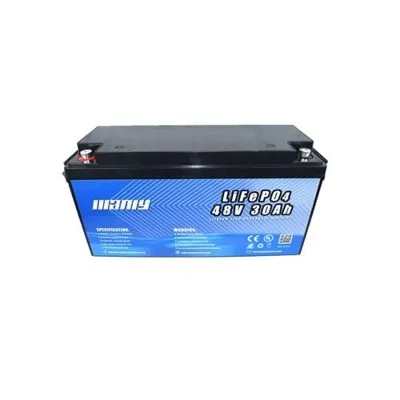
It is understood that the lithium iron phosphate power battery products of many domestic marine battery manufacturers have passed experimental tests and obtained the certificate of approval by the China Classification Society.
Some foresighted battery companies have begun to target the promising electric ship market. However, the electric ship industry and the market are still in their infancy, requiring continuous efforts from the majority of practitioners in the industry.
As the battle for the new energy vehicle market is in full swing, some foresighted battery companies have begun to target the promising electric ship market.
Recently, the construction of the first pure electric port tugboat in Lianyungang was officially started. In the main power system, the ship uses Yiwei Lithium’s lithium iron phosphate power battery pack instead of conventional diesel generators as the main propulsion power. The whole ship is designed with multiple battery packs as backups for each other, and the safety factor is high, which solves the traditional oil pollution and carbon emission problems of diesel engine propulsion. In the charging mode and device, the ship can use two modes of fast charging and slow charging. The fast charge can be fully charged in 2 hours, and the slow charge can be fully charged in 6-8 hours.
It is reported that according to the current average utilization rate and fuel consumption of tugboats in Hong Kong, although the cost of pure electric tugboats is higher than that of conventional diesel tugboats, it can save about 300 tons of energy consumption each year. From the analysis of full life cycle benefits, when the service life of a pure electric tugboat reaches 30 years, the cost of a conventional tugboat can be basically saved, and the economy is very considerable. The use of pure electric tugboats can reduce emissions by about 900 tons of carbon oxides and 12 tons of sulfides per year, which is equivalent to the emissions reduction of more than 300 cars, and the environmental benefits are huge.
Coincidentally. Not long ago, the first electric high-end inland river cruise ship "Minjiang Star" in Fujian Province successfully made its maiden voyage at Taijiang Wharf in Fuzhou. The ship’s power battery system uses Ningde era large-capacity and high-safety lithium iron phosphate batteries, equipped with 936kWh of electricity, sailing at a speed of 13km/h, and can run continuously for 8 hours.
It is understood that this power battery system meets the latest and most stringent specifications of the China Classification Society. Each battery cell is equipped with two independent temperature sensors, which can monitor the battery cell status in real-time and accurately, effectively ensuring the safety of the ship. It is estimated that the use of "Minjiang Star" electric cruise ships to replace traditional cruise ships will reduce carbon monoxide emissions by about 1.5 tons and nitrogen oxides by about 1.7 tons per year.
“At present, more than 99% of waterborne ships use diesel as the power of the propulsion system, and hybrid and pure electric ships are ushering in huge development opportunities.” At the China Hubei Green New Energy Ship Industry Development Seminar, Vice President of China Classification Society Wuhan Branch Manager Tang Jian said that vigorously developing green shipping can not only reduce overall costs but also have important practical significance for economic development.
The general trend of ship electrification
In recent years, the transition to new energy in the global transportation sector has become a general trend, and the shipping industry is gradually turning green development toward electric ships. Traditional ships equipped with diesel engine power systems have low technology levels. Large amounts of oily water, harmful gases, and particulate matter are generated during navigation and entering ports, and noise pollution are serious, which has a serious impact on the ecological environment of the waters. Therefore, electric ships with low energy consumption, zero emissions, low noise, and pollution-free are an important path to realize energy saving and emission reduction and the transformation and upgrading of ship systems.
According to the International Maritime Organization's environmental regulations, starting from 2020, the sulfur content of marine fuels must be less than 0.5% on the high seas and less than 0.1% in the offshore areas. Environmental protection laws and regulations related to air pollution from ships are being intensively promulgated in various countries. Ports in many countries have implemented strict ship emission standards, which has forced the transformation of shipbuilding.
Since 2015, the 500-ton and 2000-ton pure electric cargo ships developed by my country have successfully operated in the waters of the Yangtze River and the Pearl River, filling the gap in the world’s inland river pure electric bulk carriers of the same tonnage, and marking the start of electric drive for domestic river water transportation. In the new era, it has become a model of green water operation in the industry. In November 2017, the world's first 2,000-ton pure electric bulk carrier was hoisted and launched at Guangzhou Longxue Shipbuilding Base, filling the world's market gap for inland water-powered bulk carriers of the same tonnage.
In December 2018, the country's first 1,000-ton pure electric transport ship cooperation agreement on the Beijing-Hangzhou Canal was signed in Changzhou, Jiangsu. In this project, the power system as the core component of the electric cargo ship uses a combination of high specific power supercapacitors and high specific energy lithium batteries for power supply and has passed authoritative certifications such as the National Development and Reform Commission, the Ministry of Industry and Information Technology, and China Classification Society CCS.
In order to promote purely electric ships, relevant state departments are improving ship inspection regulations and construction specifications, accelerating the transformation of ship-shore power receiving facilities, and ships using shore power incentive mechanisms. Among them, the China Classification Society has established a standard system for LNG water application standards covering all aspects of LNG (liquefied natural gas) transportation, bunkering, and utilization.
Lithium iron phosphate is the best choice
"Lithium iron phosphate battery has become the best choice for ship power batteries at this stage due to its high safety, long life, low cost, balanced performance, and other advantages," said Wu Kai, vice president of CATL. Based on safety and economy, lithium iron phosphate power batteries and BMS battery management systems have developed rapidly in recent years. The increase in charging and discharging rates has made ships start acceleration and power handling better, and they have already possessed the technical conditions for promotion and application on ships.
It is understood that the lithium iron phosphate power battery products of many domestic marine battery manufacturers have passed experimental tests and obtained the certificate of approval by the China Classification Society. The lithium iron phosphate battery currently used in electric ships has a single energy density of 160Wh/kg. Moreover, the price of lithium iron phosphate batteries has dropped to 0.6 yuan/Wh, which is economical in the field of marine applications. However, although the lithium iron phosphate batteries used in ships are almost the same as those used in new energy vehicles, the requirements of the ship's lithium battery system are higher, and the requirements for safety and fire protection systems are higher than those for vehicles.
According to the "2015-2024 Global Market Report on Electric Ships, Small Submarines and Autonomous Underwater Vessels" issued by international market research institutions, the electric boat market is experiencing rapid growth due to factors such as good performance, affordable costs, and legal prohibitions. By 2024, the global electric ship market will reach 7.3 billion U.S. dollars, and the market prospect is very broad. The demand for lithium batteries brought about by the electrification of ships will grow rapidly. The industry predicts that the demand for batteries will exceed 6GWh by 2025.
However, it is worth noting that despite the huge potential of the electric ship market, the electric ship industry and market are still in their infancy. The current large-scale promotion and application of electric ships is still subject to lack of relevant standards, imperfect charging facilities, limited power supply capacity of the power grid, and commercial Problems such as unclear model; still need the continuous efforts of the majority of practitioners in the industry.