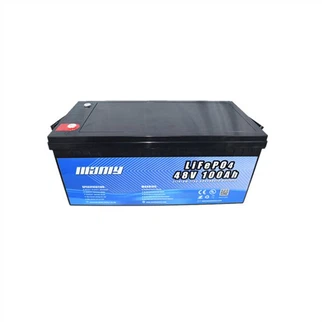
Currently, on new energy cars, there are two mainstream battery technology route, lithium iron phosphate batteries, and ternary lithium batteries, although the two batteries compete in many application areas, competition in the field of new energy vehicles as the mainline, the battery price comparison by the price of the car can be carried out, and from the performance comparing ternary lithium battery and lithium iron phosphate batteries which good, is by setting the conditions, it is concluded that the actual data of the two kinds of battery, and clear. To this end, we take representative parameters for comparison.
1. BYD for buses and Tesla for cars. That's the difference in volume. From the point of view of current technology, the energy density of ternary lithium battery is generally 200Wh/kg, and may reach 300Wh/kg in the future; The lithium iron phosphate battery is basically hovering at 100~110Wh/kg, the individual can reach 130~150Wh/kg, but it is difficult to break through 200Wh/kg. Thus, ternary power batteries can provide twice as much space as lithium iron phosphate, which is important for space-constrained cars. Tesla produces ternary lithium battery, BYD produces lithium iron phosphate battery, so there is a "bus BYD, car Tesla" said.
2. Similarly, due to the high energy density and much smaller weight, the lightweight and small space occupation determine that ternary lithium battery new energy vehicles consume less power, thus have faster speed and better endurance. Therefore, the use of ternary lithium battery in cars can run farther, and lithium iron phosphate new energy vehicles are basically still used in city buses, because endurance is not far, need to have a charging pile within a short distance to charge.
3. Of course, the more core reason for the use of lithium-iron-phosphate batteries in passenger buses is safety. There has been more than one fire accident in Tesla cars. The reason is that the battery pack of Tesla consists of about 7,000 18,650 ternary lithium batteries. If there is an internal short circuit in these batteries or the whole battery pack, an open fire will occur. The lithium iron phosphate material encountered short circuit will not burn, high-temperature performance than ternary lithium battery superior.
4. Although lithium iron phosphate battery high temperature resistant, but the ternary lithium battery low-temperature resistant performance is better, is a major technical route, the manufacture of lithium-ion batteries at low temperature at minus 20 ° C, the ternary lithium battery can release 70.14% of capacity, and lithium iron phosphate batteries can only release the 54.94% capacity, and due to the low-temperature condition, the ternary lithium battery discharge platform is much higher than the lithium iron phosphate battery voltage platform startup faster.
5. Charging efficiency, the ternary lithium battery is higher. Lithium-ion battery charging is to use the current limit voltage limit method, that is, in the first stage to do constant current charging, this time the current is large, with high efficiency. After constant current charging reaches a certain voltage, it enters the second stage of constant voltage charging. At this time, the current is small and the efficiency is low. Therefore, the charging efficiency of the two is measured by the ratio of the constant current charging quantity to the total capacity of the battery, known as the constant current ratio. The experimental data show that there is little difference between the two charging conditions below 10C, but more than 10C will open the distance, at 20C charging, the constant-current ratio of ternary lithium battery is 52.75%, the constant-current ratio of lithium iron phosphate battery is 10.08%, the former is 5 times the latter.
6. In terms of cycle life, the lithium iron phosphate battery is better than the ternary lithium battery. The theoretical life of the ternary lithium battery is 2000 times, but basically, the capacity decays to 60% when it reaches 1000 cycles. Even the best brand in the industry, Tesla, can only maintain 70% of its battery capacity after 3,000 cycles, while the lithium-iron-phosphate battery has 80% of its capacity after the same cycle.
The comparison of the above six aspects can be roughly concluded that the relative advantages of the two help to answer the question of the ternary lithium battery and lithium iron phosphate battery which is good: lithium iron phosphate battery safety, long life, high-temperature resistance; The ternary lithium battery has the advantages of a lightweight, high charging efficiency and low-temperature resistance. Therefore, the adaptability of the two different batteries at different times and places is the reason why they coexist.