Lithium-ion batteries have revolutionized our lives in this day and age, and they are everywhere, from cell phones to laptops and electric cars. As the Nobel Prize award this year, the Nobel Prize in Chemistry was awarded to the inventor of the lithium battery.
Although lithium batteries have made great contributions to free mankind from fossil fuel dependence and move the automotive industry towards electrification, the bottleneck of lithium battery technology has been gradually exposed as the demand for lithium batteries has increased. Even John Goodenough, one of the inventors of lithium batteries, is not optimistic about the future of lithium batteries.
▲ A single cell of the battery pack in an electric car
The shortcoming of lithium battery is still the energy density. According to the current technical conditions, the energy density of automobile fuel is 10 times that of lithium battery under the same conditions. In other words, to achieve the same energy of a fuel car 60-liter tank, it takes almost about 400 kg of lithium batteries.
This is also an important reason why all-electric aircraft have been delayed, because the battery to take up more space in the aircraft, like the Boeing 737 such a large aircraft, the required battery weight even heavier than the fuselage, which is obviously unrealistic.
If you want to improve the energy density of lithium batteries, one of the costs is to reduce the cycle life, the general life of the lithium battery for cell phones is about 3 years, can be charged / discharged more than 500 times, but the kind of life will pull down the cost of electric vehicles, the need to change the electrode material to extend the life.
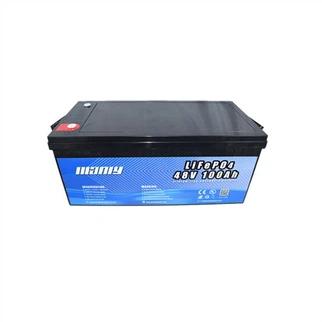
Some electric vehicles are now beginning to life longer lithium iron phosphate batteries, it is reported that BYD revealed that next year will be launched using lithium iron phosphate electric vehicles, life can reach 8 years 1.2 million kilometers, but the disadvantage of this battery is the lower energy density, low temperature environment performance, as well as higher costs.
In addition, with the widespread use of lithium batteries, lithium carbonate production may soon not be able to meet the expanding market demand. According to market research agency Adroit Market Research, lithium consumption will quadruple by 2025, and the global lithium battery market size is estimated to exceed $100 billion.
Some organizations have calculated that just considering electric vehicles, one-third of the lithium on land will be consumed by 2050, and lithium resources on land will be completely depleted by 2080. Although there are 230 billion tons of lithium reserves in the ocean, there is no extraction technology available for large-scale commercial use.
The shortage of lithium resources will cause the cost of lithium batteries to rise, eventually becoming another kind of "oil". There is a view that the automotive industry has shifted from oil to lithium batteries, but from a limited resource to another limited resource.
But lithium batteries and oil is different, lithium can be recycled, it is said that up to 95% of the recycling rate. If you can achieve efficient recycling of lithium metal, it can effectively alleviate the problem of lithium resource shortage, but the current recovery rate of lithium batteries is not high, and the cost of recycling is not low, even higher than the mining of lithium.
And the traditional impression that electric cars are more environmentally friendly than fuel cars is actually not very accurate. It is true that carbon emissions during consumer driving of electric cars are much lower than fuel cars, but this does not mean that electric cars are more environmentally friendly; they simply move the pollution forward to the production process.
Some studies have shown that manufacturing an electric car produces 15 to 70 percent more carbon emissions than a fuel car when you consider the production of electric car batteries. And that's not even counting the environmental pollution caused by mining lithium and improper recycling of lithium batteries, such as in some areas of Chile, where 65% of water is used for lithium production, which can easily pollute water resources.
Obviously, the current lithium battery still has many shortcomings, and in the past 20 years there has not been much breakthrough in commercially available battery technology, but the surge in market demand has forced mankind to find a better battery solution as soon as possible, and the journal Nature predicted in 2018 that "we are only 10 years away from the lithium-electric battery revolution.
In fact, scientists have not stopped developing new battery technology, IBM Research's Battery Lab is developing the technology of extracting substances from seawater to make cobalt-free electric car batteries, which can be charged to 80% in 5 minutes and are better than the current lithium batteries in terms of cost and energy density.
Mercedes-Benz, Japanese battery electrolyte supplier Central Glass and other manufacturers have reached cooperation with IBM to promote the commercialization of this battery technology, but it is unknown when it will be launched on the market.
The future of lithium batteries, not necessarily replaced by new materials, but also may make greater breakthroughs. John Goodenough, the 97-year-old father of lithium-ion batteries, is still engaged in the research and development of all-solid-state batteries, hoping to bring lithium batteries to a new level, and has already achieved some research results.
In any case, the revolution of lithium batteries may not be far from us.
Welcome to visit our company website: www.manlybattery.com. If you have any interests in batteries, please feel free to contact us: info@manlybattery.com