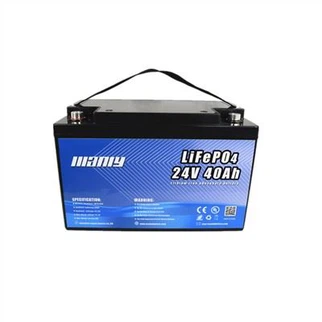
Lithium battery manufacturers believe that the importance of cycle performance for lithium-ion batteries need not be said, macroscopically speaking, longer life means less resource consumption, therefore, all the factors of lithium-ion battery cycle performance, is the focus of the industry practitioners have to pay attention to.
Next, the lithium battery manufacturer briefly explain the 7 factors that affect the cycle life of lithium batteries.
1, moisture
Excessive moisture will occur with the positive and negative active material side reactions, damage its structure and thus affect the cycle, while too much moisture is also not conducive to the formation of SEI film, but the trace of water is difficult to remove at the same time, the trace of water can also ensure the performance of the cell to a certain extent.
2、Positive and negative compaction
Although high positive and negative compaction can improve the energy density of the cell, it will also reduce the cycling performance of the material to a certain extent, from the theoretical analysis, the greater the compaction, the greater the damage to the structure of the material, which is the basis for ensuring that the lithium-ion battery can be recycled; in addition, the higher positive and negative compaction of the cell is difficult to ensure a higher amount of liquid retention, which is the basis for the cell to complete the normal cycle or more More cycles of the basis.
3、Objective conditions of the test
Test process of charge/discharge multiplier, cut-off voltage, charge cut-off current, test overcharge and overdischarge, test room temperature, test process of sudden interruption, test point and core contact resistance and other external factors, will more or less affect the cycle performance test results, in addition, different materials to the above objective factors vary in sensitivity, unified test standards and understand the common and important material characteristics Should be enough for daily work.
4、Overdose of negative electrode
For lithium cobaltate plus graphite system, it is common that the negative graphite becomes the "short board" in the cycle process, if the negative excess is not enough, the core may not precipitate lithium before the cycle, but after several hundred cycles, the positive structure changes little but the negative structure is The negative electrode structure is severely damaged and cannot fully receive the lithium ions provided by the positive electrode, thus precipitating lithium, resulting in a premature drop in capacity.
5、Coating film density
It is almost an impossible task to consider the effect of film density on the cycle in a single variable, the inconsistency of film density either brings the difference of capacity or the difference of the number of layers of core winding or stacking. Considering that a thinner film density can increase the multiplier performance of the cell, and the baking and water removal of the electrode and bare cell will be easier, of course, the error in the coating of a too thin film density may be more difficult to control, and the large particles in the active material may also negatively affect the coating and rolling, more layers means more foil and diaphragm, which in turn means higher cost and lower energy density, so a balanced consideration is needed in the evaluation.
6、Material type
The choice of material is the first element that affects the performance of lithium-ion batteries. If you choose a material with poor cycle performance, the process is reasonable and perfect, and the cycle of the cell is not guaranteed; if you choose a better material, even if there are some problems with the subsequent manufacture, the cycle performance may not be too bad, from the material point of view, the cycle performance of a full battery is composed of the cycle performance of the cathode matched with the electrolyte, the cycle performance of the cathode matched with the electrolyte, and the cycle performance of the cathode matched with the electrolyte. From the material point of view, the cycle performance of a full battery is determined by the cycle performance of the cathode after matching with the electrolyte and the cycle performance of the cathode after matching with the electrolyte, the worse of the two. This may lead to premature consumption of the electrolyte due to the inability of the active material and the corresponding electrolyte to produce a dense and uniform SEI film. In the design of the cell, if one pole confirms the choice of materials with poor circulation performance, the other pole does not need to choose materials with better circulation performance and waste.
7、The amount of electrolyte
There are three main reasons for insufficient electrolyte volume to affect the cycle, one is insufficient liquid injection, the second is that although the liquid injection is sufficient but the aging time is not enough or the positive and negative poles are not sufficiently dipped due to high compaction, the third is that with the cycle of the core internal electrolyte is consumed. The third point is that the microscopic manifestation of the matching between positive and negative electrodes, especially negative electrodes and electrolyte, is the formation of dense and stable SEI, while the visible manifestation of the right eye is the consumption rate of electrolyte during the cycling process. film and thus consume the reversible lithium source and electrolyte. If the electrolyte is sufficient before cycling and has been consumed after cycling, it is likely that the cycling performance can be improved to a certain extent by increasing the electrolyte retention if the electrolyte is sufficient before cycling and has been consumed after cycling.
Welcome to visit our company website: www.manlybattery.com. If you have any interests in batteries, please feel free to contact us: info@manlybattery.com