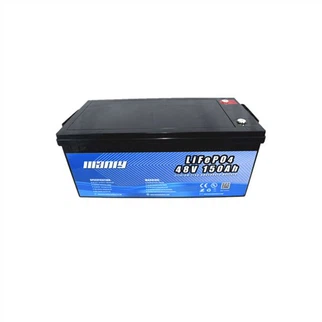
Lithium battery manufacturers talk about the advantages of all-solid-state secondary lithium batteries and materials research. As the most promising electrochemical energy storage device, all-solid-state lithium batteries have received wide attention in recent years. With the cycle, safety and other comprehensive technical indicators, solid-state secondary lithium battery application market will gradually expand, all-solid-state lithium battery is expected to become the next generation of power lithium battery manufacturers dominant technology route.
Advantages of all-solid-state secondary lithium battery
In recent years, along with the rise of electric vehicles and the urgent demand for large-scale energy storage devices for renewable energy generation, the research of lithium batteries has been heating up again, and the development of safe, high-capacity, high-power and long-life secondary lithium batteries has become the focus. As a new form of lithium battery, solid-state secondary lithium battery fundamentally has the advantage of high energy density of lithium battery. In addition, the all-solid-state secondary lithium battery also has the following advantages:

(1) High safety performance
Because the liquid electrolyte contains flammable organic solvents, the internal short circuit when the temperature rises easily cause combustion, or even explosion, the need to install the temperature rise and anti-short circuit safety device structure, which will increase the cost, but still can not completely solve the safety problem. Tesla, which claims to have the best BMS in the world, has had two serious fires in the ModelS in China alone this year. Thus, the all-solid-state lithium secondary battery based on inorganic solid electrolyte is expected to have high safety characteristics.
(2) High energy density
Currently, the energy density of lithium-ion battery cells used in the market is up to 260Wh/kg, and the energy density of lithium-ion batteries under development can reach 300-320Wh/kg. For all-solid-state lithium batteries, if lithium metal is used for the negative electrode, the battery energy density is expected to reach 300-400Wh/kg, or even higher. Higher power density is expected for all-solid-state secondary batteries. The solid state electrolyte uses lithium ion as a single carrier, and there is no concentration difference polarization, thus it can work in high current conditions and increase the power density of the battery.
(3) Long cycle life
Solid electrolyte is expected to avoid the problem of continuous formation and growth of solid electrolyte interface film and lithium dendrite piercing the diaphragm during charging and discharging of liquid electrolyte, which has the potential to greatly improve the cycleability and service life of lithium metal batteries.
(4) Wide operating temperature range
All-solid-state lithium batteries are expected to increase the maximum operating temperature to 300°C or even higher if all inorganic solid electrolytes are used. At present, the low-temperature performance of large-capacity all-solid-state lithium batteries needs to be improved. The operating temperature range of the specific battery is mainly related to the high and low temperature characteristics of the electrolyte and the interface resistance.
(5) Wide electrochemical window
The electrochemical stability window of all-solid-state secondary lithium batteries is wide, potentially reaching 5V, which is adapted to high-voltage electrode materials and is conducive to further improvement of energy density. The current thin film lithium battery based on lithium nitride phosphate can work at 4.8V.
(6) With the advantage of flexibility
Solid-state secondary lithium batteries also have a compact structure, adjustable size and design flexibility. Solid-state batteries can be designed as thin-film batteries with a thickness of only a few microns for driving microelectronic devices, or as macroscopic body-type batteries for driving electric vehicles, grid energy storage and other fields, and in these applications, the shape of the battery can also be designed according to specific needs.
Research on key materials for all-solid-state lithium batteries
Polymer solid-state electrolytes
Polymer solid-state electrolytes (SPE), consisting of polymer matrix (such as polyester, polyase and polyamine) and lithium salts (such as LiClO4, LiAsF4, LiPF6, LiBF4, etc.), have received a lot of attention because of their lighter mass, good viscoelasticity and excellent mechanical processing properties.
●Oxide-based solid-state electrolytes
Oxide solid electrolytes can be divided into crystalline and glassy (amorphous) electrolytes according to the material structure, among which crystalline electrolytes include chalcogenide, NASICON, LISICON, and garnet, etc. The hot research topic for glassy oxide electrolytes is LiPON electrolytes used in thin film batteries.
Oxide crystalline solid electrolytes
Oxide crystalline solid electrolytes are chemically stable and can exist stably in atmospheric environment, which is conducive to the large-scale production of all-solid-state batteries. The current methods to improve the conductivity are mainly element replacement and doping of heterovalent elements. In addition, the compatibility with the electrode is also an important issue that restricts its application.
In summary; solid-state lithium batteries are the extremely promising development direction of future lithium batteries, the future market potential of all-solid-state lithium batteries is huge, and from a comprehensive point of view, solid-state batteries with high safety and high capacity density potential are bound to be the development direction of next-generation batteries, and all-solid-state lithium-ion batteries are expected to make a breakthrough between 2025-2030.
If you have any demands in batteries, please feel free to contact info@manlybattery.com