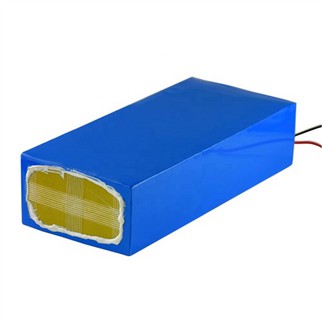
Lithium battery manufacturers to analyze the working principle, structure and application of lithium batteries. Lithium battery is a rechargeable battery, which mainly relies on lithium ions moving between the positive and negative electrodes to work. Lithium batteries have high energy density, small footprint, long cycle life and other advantages of lead-acid batteries are widely used in life. Lithium batteries play an increasingly important role in modern life, this article will answer the working principle, structure and application of lithium batteries.
Lithium battery principle of operation
Lithium battery is a rechargeable battery, which mainly relies on the movement of lithium ions between the positive and negative electrodes to work. In the process of charging and discharging, Li+ is embedded and de-embedded back and forth between the two electrodes: when charging the battery, Li+ is de-embedded from the positive electrode and embedded in the negative electrode through the electrolyte, and the negative electrode is in a lithium-rich state; the opposite is true when discharging. Batteries that generally use materials containing lithium as electrodes are representatives of modern high-performance batteries.
The working principle of lithium-ion battery refers to its charging and discharging principle. When discharging a lithium battery, both electrons and Li+ act simultaneously, in the same direction but on different paths, with electrons running from the negative electrode to the positive electrode through an external circuit; lithium ion Li+ "jumps" into the electrolyte from the negative electrode, "crawls" through the curved holes in the diaphragm, and "swims" to the positive electrode. "swimming" to the positive electrode, combined with the electrons that have long run over.
In the charging and discharging process of lithium batteries, lithium ions are in a state of motion from the positive pole → negative pole → positive pole. If we compare the lithium-ion battery to a rocking chair, the two ends of the rocking chair for the two poles of the battery, and lithium ions are like good sportsman, running back and forth in the two ends of the rocking chair. Therefore, experts have given the lithium-ion battery a lovely name rocking chair battery.

The structural composition of lithium batteries
Lithium battery in the structure of the main five blocks: positive electrode, negative electrode, electrolyte, diaphragm, shell and electrode leads. The structure of lithium batteries is mainly divided into two categories: coiled and laminated. Liquid lithium batteries use a coiled structure, while polymer lithium batteries have both.
Anode materials: active material, conductive agent, solvent, adhesive, and substrate. The cathode material has the largest market capacity and high added value in lithium batteries, accounting for about 30% of the cost of lithium batteries, with a low gross margin of 15% and a high gross margin of 70% or more. At present, the cathode materials used in lithium batteries are lithium cobaltate, lithium manganate, lithium nickelate, lithium cobalt-nickel-manganate and lithium iron phosphate.
Negative materials: active materials (graphite, MCMB, CMS), binders, solvents, substrates. Anode materials account for a low proportion of the cost of lithium, mainly carbon anode materials and non-carbon anode materials.
Diaphragm: The diaphragm is placed between the two poles, as a device to isolate the electrodes, in order to avoid direct contact between the active materials on the two poles and cause a short circuit inside the lithium battery. However, the diaphragm still needs to be able to allow charged ions to pass through to form a pathway. The main lithium battery diaphragm material products are single-layer PP, single-layer PE, PP + ceramic coating, PE + ceramic coating, double-layer PP/PE, double-layer PP/PP and triple-layer PP/PE/PP, etc.
Electrolyte: shell hardware (steel shell, aluminum shell, cover, pole lug, insulating sheet, insulating tape) electrolyte is better LiPF6, but expensive; others are LiAsF6, but with great toxicity; LiClQ, with strong oxidation; organic solvents are DEC, DMC, DME, etc.
Battery shell: divided into steel shell (square type is rarely used), aluminum shell, nickel-plated iron shell (used in cylindrical batteries), aluminum-plastic film (soft packaging), etc., and the battery's cap, but also the positive and negative lead ends of the battery.
The application range of lithium battery
From the development of China's lithium battery application market, lithium batteries will be more and better to replace or dance with NiCd and NiMH batteries; in the IT field, the rapid growth of notebook computers, the average annual replacement rate of cell phones is not less than 15%; the steady growth of sales of digital products will drive the increase in shipments of lithium batteries. In addition to these portable lithium battery applications, power tools, backup power and automotive power show the broad prospects for future lithium battery applications. Moreover, lithium batteries are also beginning to be put into the military industry.
Now, lithium-ion batteries are used in large numbers in cell phones, notebook computers, power tools, electric vehicles, street light backup power, navigation lights, small household appliances, which can be said to be the largest application group. Lithium battery application areas batteries are mainly used in consumer products, digital products, power products, medical and security, etc.
Lithium batteries are widely used in commercial applications, from the battery performance, high environmental adaptability and green factors, where the battery performance is reflected in the high energy storage density, about six times the lead-acid battery, but its weight is only one sixth of the lead-acid battery, and the battery cycle life of more than 6 years.
The high environmental adaptability of lithium batteries is reflected in the high power tolerance, low temperature resistance and low self-discharge probability, which greatly extends the range of battery use and use of the field; its green environmental protection is reflected in the production and use of lithium batteries in the end-of-life process, does not contain or produce any lead, mercury, cadmium and other harmful metal elements and substances.
If you have any demands in batteries, please feel free to contact info@manlybattery.com