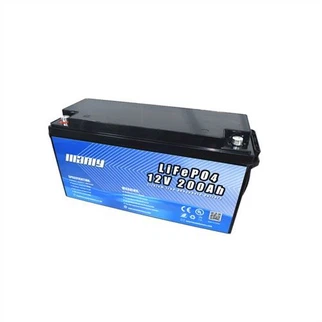
What are the advantages of using lithium batteries for medical devices? Medical devices have become an important area of modern healthcare, and lithium batteries have many advantages over other traditional technologies for portable medical device applications. These include higher energy density, lighter weight, longer cycle life, better battery capacity retention characteristics, and a wider temperature range.
What are the advantages of using lithium batteries for medical instruments?
1, good safety performance, medical instrument lithium battery in the structure of the aluminum-plastic flexible packaging, as opposed to the liquid lithium battery metal shell, once the security risks, liquid batteries are prone to explosion, while the medical instrument battery will at most only gas drum.
2, the thickness of small, can be thinner. Liquid lithium-ion battery thickness of 3.6mm or less is a technical bottleneck, medical instrument batteries do not have this problem, the thickness can be achieved below 1mm.
3, light weight, medical instrument lithium battery weight is 40% lighter than the same capacity specifications of steel-cased lithium, 20% lighter than aluminum-cased batteries.
4, shape can be customized, medical instrument lithium battery can increase or reduce the thickness of the battery according to customer needs, change the shape, flexible and fast.
5, large capacity, medical instrument battery capacity is 10-15% higher than the same size specifications of steel-cased batteries, 5-10% higher than aluminum-cased batteries.
6, small internal resistance, through special design, can greatly reduce the impedance of the lithium battery, significantly improve the performance of lithium battery high current discharge.

Application of lithium battery for medical equipment
Patient mobility is also becoming increasingly important. Today's patients may be moved from the radiology department to the intensive care unit, from ambulance to emergency room, or from one hospital to another by ambulance. Likewise, the proliferation of portable home instruments and mobile monitoring devices allows patients to stay where they like, and not necessarily in a medical facility. Portable medical devices must truly be fully
portable to provide the best service to patients. The demand for smaller and lighter medical devices has increased significantly as a result, which has greatly stimulated interest in higher energy density, smaller lithium batteries.
An energy storage lithium battery for medical instruments in emergency vehicles, comprising: a battery body; said battery body is provided with a base, a battery box, a battery cover and a lithium battery pack, said battery cover is provided with a portable handle at the upper end, said portable handle is provided with a storage drawer at the middle end, said battery box is provided with a plurality of terminals on one side, said battery box is provided with a charging port on the other side, said charging The external end of the port is set with a photovoltaic module, and the bottom end of the base is set with a bracket.
The utility model structure is simple and reasonable, easy to use, the lithium battery is compact, easy to carry, convenient charging, large energy storage, better power supply for medical equipment to meet the needs of medical care rescue, to protect the lives of patients.
Today, the application of lithium batteries for medical equipment has resulted in a large number of monitoring instruments, ultrasound equipment and infusion pumps that can be used in locations far from the hospital - even in the battlefield. Portable devices are increasingly easy to move. It is due to the application of technologies such as lithium batteries that bulky defibrillators weighing up to 50 pounds can be replaced by lighter, more compact, user-friendly devices that do not cause muscle strain on healthcare workers.
Because of the many categories, functions and precision of various medical instruments in modern clinical departments, it is important to ensure the correct and safe use of all types of instruments. Therefore, effective maintenance and repair of wearable parts such as lithium batteries in instruments is beneficial, not only to extend the service life of lithium batteries, and can reduce the cost of equipment maintenance, significantly improve the use rate and integrity of hospital medical equipment.
Conclusion; with the maturity of lithium battery research and development technology, and portable medical equipment on mobile work requirements, lithium batteries with its high voltage, high energy, long life and other absolute advantages gradually occupy the dominant position in the medical instrument industry.
If you have any demands in batteries, please feel free to contact info@manlybattery.com