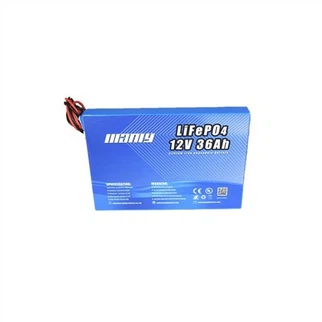
Lithium-ion battery is a rechargeable battery, which mainly relies on the movement of lithium ions between the positive and negative electrodes to work. During the charging and discharging process, Li+ is embedded and de-embedded back and forth between the two electrodes: when charging the battery, Li+ is de-embedded from the positive electrode and embedded in the negative electrode through the electrolyte, and the negative electrode is in a lithium-rich state; the opposite is true when discharging. Batteries that generally use materials containing lithium as electrodes are representatives of modern high-performance batteries.
Compared with other electrochemical currents, lithium-ion batteries have many advantages of their own, namely, light weight, high energy storage capacity, high power, no pollution, long life, small self-discharge coefficient, wide temperature adaptation range, etc. Lithium-ion batteries can be used in power quality, reliability control, backup power, peak shaving, energy management, renewable energy storage, etc.
5.1, the types of lithium batteries
Usually we say that lithium batteries refer to lithium-ion batteries, according to the use of lithium batteries are generally divided into lithium storage and power batteries. Energy storage lithium batteries for photovoltaic or UPS, the internal resistance is relatively large, the charge and discharge speed is slow, generally 0.5-1C, power batteries are generally used in electric vehicles, internal resistance is small, fast charge and discharge speed, generally up to 3-5C, the price is about 1.5 times more expensive than energy storage batteries. According to the material points mainly lithium iron phosphate batteries and ternary lithium batteries (lithium nickel cobalt manganate LiNiCoMn). Comparison of the two types of batteries.
5.2, lithium battery pack management
Lithium battery management system, Battery Management System, BMS is a device composed of microcomputer technology, detection technology, its function is not only to charge and discharge the battery protection, but also accurate measurement of the remaining battery power, single battery equalization charging and other important functions.
(1) Safeguard the safety of the battery: During the charging and discharging process of the battery, the terminal voltage and temperature of each battery in the battery pack, the charging and discharging current and the total voltage of the battery pack are collected in real time to prevent the battery from overcharging or over discharging.
(2) Accurately estimate the remaining battery power of the battery pack, and forecast at any time how much energy is left in the hybrid vehicle storage battery or the state of charge of the storage battery. Battery power and voltage have a certain relationship, but not a linear relationship, can not rely on the voltage to convert the remaining power, you need to calculate through the BMS.
(3) equalization between the single battery: that is, the equalization of the single battery charge, so that each battery in the battery pack to achieve a balanced and consistent state.
5.3, the selection and design of lithium battery
The lithium battery system includes the battery cell and BMS battery management system, which is uniformly provided by the manufacturer. The following points should be noted when designing.
1) Energy storage lithium battery pack needs to communicate with the inverter or bidirectional energy storage converter PCS, to choose the device with lithium battery function and corresponding communication interface function.
2) Energy storage lithium batteries and lead-acid batteries, compared to the charge and discharge current is relatively small.
3) If the system requires multiple battery packs, a battery pack needs to be equipped with a BMS system.