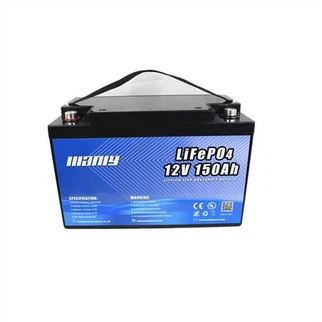
Nickel metal hydride battery and lithium ion battery are widely used in the market. They are pollution-free and environmentally friendly batteries, which are important fields of new energy development. So which one is better, nimH battery or lithium ion battery?
The difference between lithium ion batteries and nickel metal hydride batteries
Structurally, the nickel-metal hydride battery has a positive electrode of Ni (OH) and a negative electrode of metal hydride, and its electrolyte is 6mol/L potassium hydroxide solution. The lithium ion battery is the lithium ion embedded in petroleum coke and graphite to form a negative electrode, the cathode material is commonly used LixCoO2, LixNiO2 or LixMnO4, electrolyte composition is more complex, LiPF6+ diethylene carbonate + dimethyl carbonate in accordance with the proportion of mixed.
Nickel metal hydride battery is an important choice for hybrid electric vehicle (HEV) due to its mature technology and good safety, but it is difficult to meet the demand of higher electrification degree. Nickel-metal hydride powered lithium battery is currently dominant because the battery energy of existing hybrid cars is only 1 to 2kWh, which cannot be operated by pure electric power or can last less than 3km by pure electric power.
In the long run, nimH cannot be applied to PHEV and EV. Mainly because the specific energy and energy density of nickel metal hydride can not meet the requirements of PHEV and EV; Raw material Ni (OH), the price is higher, manufacturing high energy battery cost will be higher; Nickel metal hydride battery technology development is basically mature, battery performance improvement and cost reduction space is very limited.
Nickel-metal hydride batteries have the same memory effect as nickel-cadmium batteries, but it is much smaller than nickel-cadmium batteries. So there's no need to discharge every charge (because improper handling can damage the battery), just fully charge and discharge once every three months to mitigate the memory effect.
Nickel-metal hydride batteries are 25-35% (month), and lithium-ion batteries are 2-5% (month). Nickel-metal hydride battery has a high self-discharge rate, while lithium ion battery has a very low discharge rate.
At present, the general nickel-metal hydride battery capacity can be up to 2900mAh (mAh - hour, China's mainland good called mAh r mAh), long-term not use will leak out of all slightly corrosive and harmful liquid (will be harmful to human body or damage the device using the battery), and lithium ion battery when not in use, there is a chance to burn or explode. Nickel-metal hydride batteries are relatively safe.
Nickel-metal hydride battery voltage is 1.2V, lithium ion battery voltage is 3.7V, lithium ion battery has better discharge discharge performance.
Nickel-metal hydride batteries have low pollution to the environment. The most important thing is some acid and alkali waste gas, and the most harmful thing is HCI. There should be no problem with environmental protection measures in place.
Compared with ni-MH battery, lithium ion battery has the following advantages:
1. High specific energy and energy density, about twice as high as ni-MH battery, which can greatly improve the endurance of electric vehicles. · Higher power, small self-discharge and no memory effect, all these characteristics can improve the convenience of electric vehicles;
2. Low cost of raw materials;
3, large space for technology improvement, large space for cost reduction.
4. Volume: Rechargeable lithium ion battery is widely used in many new mobile devices because it has the advantages of small volume (relatively), light weight, low self-discharge rate and no memory effect compared with ordinary nickel-cadmium/nickel-hydrogen batteries. The batteries of mobile phones, laptops, PDAs and other mobile devices have been gradually replaced by lithium ion batteries.
The memory effect of nimH batteries is not very significant, a little bit. When it is urgent to use, it is not necessary to recharge after radiation. It is best to recharge after radiation when it is used at ordinary times.
5, power: lithium ion battery energy is large, small battery; The voltage of a single lithium-ion battery is three times that of a nickel-metal hydride battery; No memory effect, can be used as you like. But also can not be used to charge, so that the number of charge and discharge is too many, it will affect the life of the battery. Lithium ion batteries should not be stored for a long time, because they will permanently lose part of their capacity. It is best to store it in the refrigerator after charging it by 40%.
6, charging method: lithium ion battery charging requirements and nickel-cadmium/nickel-metal hydride battery, rechargeable lithium ion battery single voltage is 3.6V (some battery blocks may be called lithium battery). The charging of lithium ion battery is generally limited by voltage and current limit method. If a friend wants to charge lithium ion battery independently, it should be noted that its charging method is different from the constant current charging method used by nickel-cadmium/nickel-metal hydride battery, and the charger of ordinary nickel-cadmium/nickel-metal hydride battery can not be used.
Although nickel-metal hydride battery and lithium ion battery are different, but they are the new era of energy battery, the progress of human life has played an irreplaceable use! Objective evaluation, when weight becomes a key factor affecting product performance and timely battery maintenance, the use of lithium ion battery is a natural method, and when the high power, good safety, high reliability and economic and practical, nickel-metal hydride battery will be more advantageous.