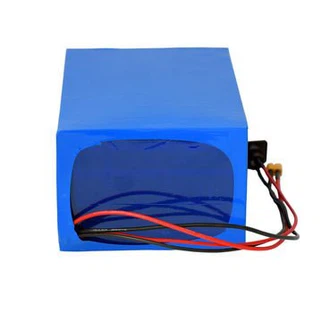
This is an era of data explosion. Clouds and pipelines carry data and bring people into the era of big data. The main equipment continues to evolve, and the network energy equipment is also developing rapidly, and the backup power supply that guarantees the uninterrupted power supply of the communication equipment also needs to speed up the pace to contribute to the era of big data.
The lead-acid battery technology is finalized, and it is difficult to solve the pollution, low life, and low energy density.
Lead-acid batteries have been developed for more than 150 years. Because of their low cost, mature technology, and convenient maintenance, they have always been the most widely used energy storage batteries in current communication power supplies. However, lead-acid batteries are subject to theoretical characteristics and Product characteristics, it is difficult to have obvious improvement in the future.
The first is the short cycle life. Even lead-acid batteries with relatively good cycle performance can only maintain a life of one year in areas with poor grid quality and frequent deep cycle use. In addition, the life of a lead-acid battery greatly depends on its operating temperature. When the temperature increases, the corrosion of the electrode plate and the loss of water will be accelerated, and the life of the battery will also become shorter.
The second is low energy density. Occupying a large area, heavy weight, and high requirements for floor load-bearing, these problems are becoming more and more prominent with the continuous increase of the data transmission volume of communication equipment.
Again, it is easy to be stolen. Lead-acid batteries can be used in many situations after being stolen, and the lead content is high and easy to recycle. These are the reasons for the theft of lead-acid batteries.
Finally, there is the issue of environmental protection. "Lead pollution mainly occurs in the manufacturing and recycling process of lead storage batteries. One of the processes is to melt the lead. The melting and recycling process is prone to pollution." said Perry Gottesfeld, president of the International Association of Professional Knowledge. In fact, for the lead-acid battery industry, the recycling process is more likely to cause pollution than the production process.
Therefore, there is an urgent need to replace traditional lead-acid batteries with excellent performance without increasing the overall cost of energy storage. At this time, lithium-ion batteries have come into people’s sight.
Lithium-ion batteries have suddenly emerged, with huge potential to enter the backup power supply
Lithium-ion batteries have not only appeared in recent years. They have been commercially used in the field of mobile phones for more than 20 years, but lithium-ion batteries are an out-and-out new army as a backup power source at communication sites. At this stage, most of the lithium batteries used in the field of communication backup power are lithium iron phosphate batteries, and a small part are ternary lithium batteries.
Considering environmental protection, lithium batteries have natural advantages. The materials used in lithium batteries do not contain polluting metals, such as cadmium, lead, mercury and other harmful heavy metal substances. There are no pollutants generated during the production and use of lithium batteries, which protects human health. During the recycling process of waste batteries Will not bring water and soil pollution.
In terms of electrical performance, lithium batteries surpass lead-acid batteries in an all-round way. The cycle life, high temperature characteristics, charge-discharge rate performance and energy density of lithium batteries are all excellent, far superior to lead-acid batteries. For example, the volume and weight of lithium batteries with the same capacity are one-half to one-third of lead-acid batteries, and they can be connected and placed arbitrarily. There are no special requirements for building space, load-bearing, etc., which greatly reduces the cost of venue rental. . In addition, the excellent high temperature characteristics of lithium batteries can reduce the air conditioning configuration and power consumption of the base station. After the lithium battery is stolen, the recycling value is of little value. Due to the existence of the battery management system, it cannot be used directly, which reduces the risk of theft of the backup power supply.
The characteristics of the same lithium-ion battery, the ternary lithium battery and the lithium iron phosphate battery are somewhat different. The cycle life of a ternary lithium battery is between that of a lead-acid battery and a lithium iron phosphate battery, but the floating charge life is much better than that of a lithium iron phosphate battery, and the energy density is more than 50% higher than that of a lithium iron phosphate battery, and the cost is also Lower than lithium iron phosphate batteries. The flexible choice of lithium iron phosphate batteries and ternary lithium batteries will make the lithium battery backup power supply more widely used in the communications industry.
At present, the one-time cost of lithium batteries is still high, but from the perspective of total ownership cost (TCO), lithium batteries are not higher than lead-acid batteries. Although the price is two to four times higher than that of ordinary lead-acid batteries, the TCO during the life cycle of lithium batteries is even lower than that of lead-acid batteries due to the advantages of long life and low maintenance and replacement costs. In the future, with the development of electric vehicles and energy storage industries, the application of lithium batteries will continue to scale, the prices will become lower and lower, and they will become more and more competitive.
The use of differentiated scenarios makes the advantages of lithium batteries more prominent
The poor grid area is used as a cyclic backup power, taking advantage of its long cycle life. Lead-acid batteries are characterized by long floating charge life and short cycle life. In short, the less used the better. However, the grid environment in many countries and regions is not good. The daily power outage lasts more than 2 hours. Frequent recycling will cause the life of lead-acid batteries to decline rapidly. Lithium batteries with high cycle life are suitable for use in such environments.
Used in wall-mounted power supplies and pole-mounted power supplies, highlighting its high energy density characteristics. Lead-acid batteries have the disadvantages of occupying a large area, heavy weight, and high load-bearing requirements, making it increasingly difficult to meet the requirements of small space scenes. The energy density of lithium batteries is 2 to 4 times that of lead-acid batteries, and is particularly suitable for use in the above-mentioned environment.
It is used in UPS or communication power supply with short-term backup power, and it takes full advantage of its good discharge rate. In some scenarios that use diesel engine emergency power supply, the backup power supply of UPS or communication power supply needs to have 5-10 minutes of backup power in order to back up data and switch to diesel engine emergency power supply. In this case, only battery power between 5-10 minutes is required. Guarantee a certain output power within minutes. Lithium batteries can output more than 90% of the rated capacity within 10 minutes, while lead-acid batteries can discharge up to 30% of the rated capacity within 10 minutes. Lithium batteries can be equipped with much less capacity than lead-acid batteries to meet short-term requirements. The requirement of backup power saves space and cost.
High-performance lithium batteries need to cooperate with an excellent battery management system
Lithium batteries for communication energy storage need to cooperate with an excellent battery management system to be truly safe and stable. The theoretical characteristics of lithium batteries determine that they are more sensitive to overcharge and overdischarge. Due to the short development time, the industry has not done in-depth research on its consistency, stability, large-scale series-parallel connection, temperature control and other issues, so it needs to be focused Only with the development of battery management system can lithium batteries be used more effectively and safely.
The general battery management system can only guarantee the basic safety of the lithium battery pack. A good battery management system can extend the service life of the lithium battery pack, find hidden dangers in safety and performance, and reduce the failure rate. Huawei's network energy product line and the 2012 laboratory have conducted in-depth research on the SOH (state of health) and fault warning settings of lithium battery packs through big data mining and adaptive state assessment of lithium battery systems, and rely on power supply and The advantages of management software in network management and the design of a battery management system with core competitiveness have been applied in many communication products.