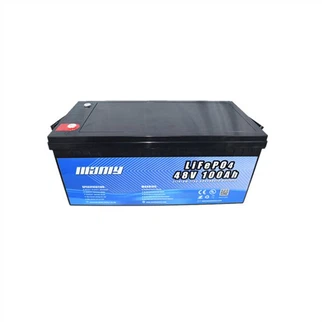
China Mobile recently issued a 2020 bid announcement for the centralized procurement of lithium iron phosphate battery products for communications. It plans to purchase a total of 610.2 million Ah (3.2V) of lithium iron phosphate batteries for communications. The procurement requirements will be met for one year. The maximum bid price limit is 2.508 billion yuan (not including tax).
It is understood that lithium iron phosphate batteries mainly have the following applications in the communications industry: outdoor base stations; non-air-conditioned base stations such as village communications; indoor macro base stations with tight space; indoor coverage/distributed source stations with DC power supply; none Solar photovoltaic base stations in mains or three or four types of mains areas; WLAN sites for DC power supply solutions, etc.
On June 6, 2019, the Ministry of Industry and Information Technology issued 5G commercial licenses to China Mobile, China Radio and Television, and the 5G era officially arrived. The upgrade of 5G communications, whether the operator upgrades the original base station or builds a new base station, is a huge business opportunity for lithium battery companies. The outdoor environment of the communication base station is harsh and is greatly affected by temperature and humidity. Especially as a special attribute of the base station power supply, the performance of the energy storage lithium battery plays a vital role in the stability of the network signal.
Communication base station side: Lithium batteries have an obvious trend to replace lead-acid batteries
According to the classification, the demand for lithium batteries in the communications market can be divided into: the original 4G base station lithium battery replaces lead-acid, the newly built 5G base station and the backup power supply for the computer room, and the core scenario of the lithium battery application in the communications market is the base station backup power supply. In 2018, a total of 120,000 towers will be replaced by lead-acid batteries, using about 1.5GWh of lithium batteries, 300,000 towers will be replaced in 2019, and 4-5GWh of lithium batteries will be used, and 600-700,000 towers are expected to be replaced in 2020. It is expected that 8GWh will be used for all towers. The replacement is about 25GWh, and the space is huge.
It was pointed out that the lead-acid replacement process of the iron tower system for lithium batteries has already started. As of the end of June 2019, China Tower has received 65,000 5G base station construction needs, and it is expected to receive 100,000 5G base station construction needs throughout this year. 5G base stations are mainly divided into macro base stations and micro base stations, and micro base stations can be subdivided into: micro base stations, pico base stations, and femto base stations. Among them, the energy storage battery equipment is needed for the macro base station, while the micro base station generally adopts the direct power supply from the mains, and does not have the power storage equipment.
Compared with traditional lead-acid energy storage batteries, lithium-ion batteries have excellent performance such as low pollution and long cycle life. As their costs continue to decline, the economics of lithium-ion batteries have begun to become prominent. New battery energy storage uses more and more lithium ion batteries, and gradually replaces lead-acid batteries, and is more and more widely used in the energy storage market. Energy storage batteries do not require high energy density, and pay more attention to battery cost, cycle performance, life cycle cost, etc. Lithium iron phosphate batteries have low production costs and high cycle times.
In the past, the relative price of lithium iron phosphate was relatively high, and the economics of making energy storage batteries were not outstanding. The price drop promoted the gradual realization of the possibility of substitution. In the past, the price of iron-lithium batteries was higher, and the cycle life was not much different from that of lead-acid batteries. At present, the price of lithium iron phosphate batteries has fallen more, the cycle life has increased, and the price of lead-acid has risen, and environmental protection requirements have become more stringent. The substitution trend is obvious.
Behind it is a larger energy storage market
The essence of energy storage is to smooth the contradiction between power supply and demand, and the development of new energy creates new energy storage demand. The global penetration rate of new energy is accelerating as the general trend, and in this process, the imbalance between the continuity of power production and the discontinuous demand for electricity will continue to exist. It is pointed out that electric energy itself is not easy to store. If electric energy is compared to "industrial food", the power grid is "industrial granary + canal", and energy storage can be called the "bowl of industrial society". The importance of developing energy storage is not mentioned. Yu.
According to GGII data, global energy storage battery shipments in 2019 were 18.8GWh, a year-on-year increase of 39.8%, of which China's energy storage battery shipments were 9.54GWh, a year-on-year increase of 83.5%, accounting for 45.4% of the global energy storage market share. In the future, as the speed of global 5G commercialization further increases, the rise of the energy Internet drives the demand for energy storage, and the implementation of policies in the field of energy storage such as wind storage, solar storage, UPS energy storage, etc., the energy storage market will welcome in the future. Come to the rapid development stage. Benefiting from the rapid development of the energy storage market, GGII predicts that energy storage battery shipments will reach 67.5GWh in 2025, and the compound annual growth rate will reach 30% in the next six years.