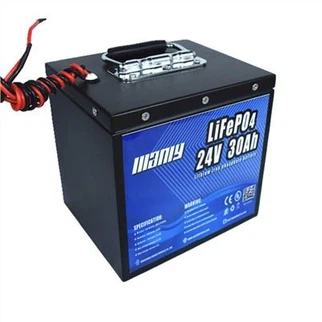
To meet the goal of reaching net-zero carbon emissions by 2050, people are more reliant than ever on the grid. It is of great significance that stationary energy storage systems can provide electricity from renewable energy sources anytime and anywhere when there are fluctuations in the grid.
In order to fully reduce costs and dependence on the grid, future energy-efficient buildings will gradually shift to integral behind-the-meter energy storage system designs. Such systems can integrate electric vehicle charging, photovoltaic power generation and building needs, using controlled loads to generate on-site power and energy storage.
Researchers at the National Renewable Energy Laboratory (NREL) are leading the development of new lithium-ion battery designs to meet the specific requirements of stationary energy storage as part of the U.S. Department of Energy's Electric Meter Back-End Systems Consortium (BTMS Consortium),media reported. . Project leader Yeyoung Ha said: "Everyone is familiar with lithium-ion batteries, but various applications have different requirements for batteries. This research focuses on how to use the research progress in electric vehicle batteries to develop new applications for stationary energy storage."
Compared to typical electric vehicles, BTMS systems have different charging and discharging modes. To meet these unique requirements, a variety of lithium-ion battery materials are required. In Li-ion battery design, designs using Li4Ti5O12 (LTO) anode and LiMn2O4 (LMO) cathode are promising candidates for critical-material-free batteries that can provide the safety and reliability required for BTMS systems. Long service life. Cells in traditional designs have relatively low energy density. In this new study, NREL delves into the promise and limitations of using LTO/LMO battery cells in stationary energy storage applications.
This project evaluates the temperature dependence of LTO/LMO cells under different electrode loads. The researchers found that using thicker electrodes in battery designs could improve cell performance and energy density while reducing overall cell cost. However, with thicker electrodes, the ions need to take a longer path, limiting the use of electrodes. Adjusting the temperature can alleviate the negative effects, but other problems may also arise. The trick is to design a battery that provides the best balance for stationary applications. "This study aims to find a 'sweet spot' to fully enhance the performance of LTO/LMO battery cells by taking advantage of electrode loading and temperature increase," the researchers said. A well-known electrochemical conversion to energy cells."
The team further validated their findings through electrochemical modeling, simulating the reactions that occur at different temperatures and electrode thicknesses. The model is consistent with the experimental results, emphasizing the effects of transport limitations, and aims to find strategies to improve cell performance. Allowing the battery to rest intermittently during discharge, rather than fully discharging as in an electric vehicle, can significantly improve electrode utilization. The researchers found that this pulsed discharge method is very suitable for BTMS stationary applications. Such applications use the battery only for intermittent needs and then transition to a rest phase.
These optimized LTO/LMO battery cells offer many advantages. However, the team is also exploring cathode options that better meet the needs of the BTMS system. NREL combines its expertise in materials development with the cutting-edge electrochemical modeling used in this project to simplify the research process and gain insights into experimental battery design in areas such as new materials and stationary energy storage.