The working principle of solar panel in off-grid system, the working principle of crystalline silicon n/p solar cell: When the p-type semiconductor and the n-type semiconductor are closely joined together, a p-n junction is formed at the intersection of the two. When the photovoltaic cell is irradiated by sunlight, positive and negative charges accumulate on both sides of the p-n junction, resulting in a photogenerated voltage and a built-in electric field, which is the "photogenerated volt effect". Theoretically speaking, at this time, if the electrodes are led on both sides of the built-in electric field and connected to an appropriate load, a current will be formed and the load will receive power.
A solar module is a solid device that uses the electronic properties of semiconductor materials to achieve P-V conversion. Off-grid PV systems generally consist of PV arrays composed of solar cell modules, solar charge and discharge controllers, battery banks, off-grid inverters, DC loads and AC loads. The solar cell module is the main part of the solar power system and is also the most valuable component of the solar power system.
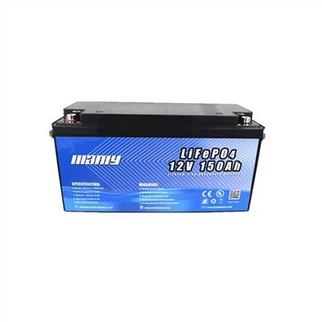
The solar charge/discharge controller, also known as the "PV controller", regulates and controls the electrical energy generated by the solar cell module, maximizes the charging of the battery, and protects the battery from over-charging and over-discharging. In places with large temperature differences, the PV controller should have the function of temperature compensation. The main task of the battery bank is to store energy so as to ensure the load power at night or in rainy days.
Off-grid inverter is the core component of off-grid power generation system, responsible for converting DC power into AC power for AC load. 1, solar energy is inexhaustible, the earth's surface receives solar radiation energy, able to meet the global energy demand 10,000 times. As long as the installation of solar photovoltaic systems on 4% of the world's deserts, the electricity generated will be able to meet the needs of the world. Solar power is safe and reliable, and will not suffer the impact of an energy crisis or unstable fuel markets.
Solar energy is available everywhere and can be supplied nearby without having to be transmitted over long distances, avoiding the loss of long-distance transmission lines.
solar power does not use fuel and has very low operating costs.
Solar power generation has no moving parts, is not easily damaged by use, is simple to maintain, and is particularly suitable for use in unattended situations.
Solar power generation does not produce any waste, no pollution, noise and other public hazards, no adverse impact on the environment, and is an ideal clean energy source.
Solar power generation system has a short construction period, convenient and flexible, and it can add or reduce the capacity of solar square at will according to the increase or decrease of load to avoid waste.