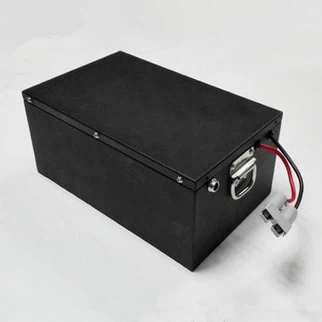
Can overcharging a battery really cause an explosion? In theory, it is indeed possible, but in actual use, battery manufacturers have taken precautions inside the battery, so there is generally no explosion.

Lithium-ion batteries have high energy density and high voltage (the voltage generated by individual lithium-ion battery cells can reach 4.2V, while ordinary nickel-based rechargeable batteries are 1.2V), and low voltage class batteries, compared to the lithium-ion battery charging electrode redox reaction is very violent, so the use of lithium-ion batteries must be strictly limited conditions, overcharging, excessive discharge, short circuit, high temperature, etc. can cause Battery damage, and even fire and explosion.
However, the actual use of lithium-ion batteries is a number of cells together with a set of safety protection circuit and a variety of safety devices packaged into a battery plate. These safety designs can ensure that the circuitry of the battery is automatically cut off when overcharging, over-discharging and short-circuiting; high pressure inside the battery will also trigger the exhaust device to reduce pressure; high battery temperature will trigger the thermal fusion protection device, blocking the movement of lithium ions to stop the electrochemical reaction of the battery. Therefore, the phone is fully charged without timely unplugging will not cause the battery to explode.
Reduce the number of charges, can extend the battery life?
As we all know, cell phone batteries also have a life span, which is generally calculated by the number of times of charging and discharging. So frequent charging will not affect the battery life? Is not plugging and unplugging the charger once even if a charge and discharge times? I believe and many people will have such doubts, the following will give you a detailed answer.
General lithium-ion battery life can reach several hundred charge and discharge cycles, the battery and equipment instructions often see such expressions. Here 1 charge and discharge cycle refers to the process of using up the battery power and then filling it up again, rather than plugging in the charger and then unplugging even if 1 time. Continuous deep charge and discharge of lithium-ion batteries, the life of the lithium-ion battery is affected, the above data of several hundred times is also measured under such conditions, but in the daily shallow charge and discharge conditions, lithium-ion battery life is actually quite long.
In addition, lithium-ion batteries will naturally lose capacity when left unused, and the main influencing factors are voltage and temperature. Studies have shown that lithium ions stored for long periods of time in a fully charged state will experience significant capacity loss. Similarly, the higher the temperature, the faster the capacity loss of Li-ion batteries, and this loss is irreversible, meaning that the capacity of the battery becomes permanently smaller. In a 0 degree environment, a lithium-ion battery with 40% of its charge remaining will lose 2% of its capacity after one year of storage; while a fully charged lithium-ion battery in a 40 degree environment will lose up to 35% of its capacity after one year of storage.
So what is the correct approach?
First of all, frequent shallow charging and discharging will help extend the life of the battery than deep charging and discharging. Never think that charging more often will damage the battery, this statement does not apply to lithium-ion batteries. So, a good habit is to plug in and charge when you get the chance, and unplug when you're almost done - small amounts, but don't overdo it. Secondly, you should try to minimize the amount of time the battery is fully charged. Not unplugging after a full charge will keep the battery fully charged, and although it will not explode, it will speed up the rate of loss of battery capacity
However, if you use not the original battery, but the quality is not guaranteed cottage batteries, it is difficult to ensure the safety of the battery. Because most of them will not be produced in accordance with the required standards. Problems are inevitable. So it is better to choose the original battery or quality assurance of the big brand battery.
If you have any demands in batteries, please feel free to contact info@manlybattery.com