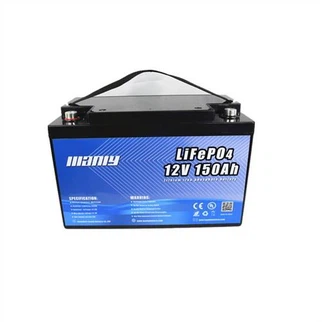
When the industrialization of lithium batteries was not mature enough, there was no economically viable alternative to VRLA batteries, so their shortcomings had to be endured. However, the industrial application of lithium batteries has been increasing in recent years. Until now, a reasonable balance between price, power, capacity, safety and reliability has not been reached, and thus the uninterruptible power supply system for data centers is not feasible to use. However, because of the technological improvement of electric vehicles, this problem has been solved. The first uninterruptible power supply system powered by lithium batteries was launched in 2016. According to policy requirements, major manufacturers are now using lithium batteries, and in addition, this direction has been recognized as the most promising choice. According to Bloomberg New Energy Finance, lithium battery solutions will account for 40% of the UPS market for data center applications by 2025.
Valve Regulated Lead Acid (VRLA) batteries are commonly used as a three-phase source for Uninterruptible Power Supply (UPS) systems. VRLA batteries have a short cycle life and need to be replaced regularly, which is a major cause of increased operating costs.
Advantages and disadvantages of lithium batteries
Consumer electronics companies typically use lithium-cobalt batteries, which can have capacities of multiple amp-hours, and these UPS systems are equipped with rectangular lithium-manganese batteries. These uninterruptible power systems are equipped with rectangular lithium-manganese batteries, which have a capacity of 60 amp-hours and have a longer life and multiple fail-safes. Sometimes a single module, or even a single battery, is required to monitor important functional parameters such as temperature, voltage and current. Sometimes the power supply cabinet or even the entire system can serve as the monitoring process. The implementation of monitoring is in complete control of the charging and discharging process, preventing critical heating and irreversible chemical reactions. Lithium batteries also have higher energy density (Wh/kg) and higher output power density (W/kg). With similar energy storage capacity as lead-acid batteries, and less than one-third the weight of lead-acid batteries, this advantage helps reduce the total mass of the system by 60-80%.
In recent years, data centers have been aiming to increase their power density due to space constraints and the need for higher power operation. More power in the available space is one of the most important tasks for data centers. Compact lithium batteries can reduce the footprint of an uninterruptible power supply system by 50-80%. These batteries take less time to recharge and have a lower self-discharge rate, which can play an important role when there are frequent interruptions in operation. When left unattended, lithium batteries lose about 1-2% of their charge per month. The most important advantage is their long service life. Lead-acid batteries have a very short life span of 3 to 6 years. Lithium batteries, on the other hand, can continue to be used for about 10 years. Under certain circumstances, Li-ion batteries can be recharged up to 3,000 lifecycles without maintenance, while the uniform charging power of lead-acid batteries is only 300 lifecycles.
Lithium batteries have an overall cost life of 10 years (the average life of a data center UPS), compared to 39% less for lead-acid batteries. Although this is an optimistic estimate, at least a 10% savings is guaranteed. The only serious drawback of Li-ion batteries is that the initial investment is significantly higher than that of lead-acid batteries. This is why large data centers have long been the precursor to introducing new processing solutions. The more important purpose of the Li-ion battery alternative is to reduce long-term cost of ownership rather than short-term profitability, and even in this case the savings can still be significant. In addition, the benefits of smaller batteries can be more useful in the use of space, while reliable monitoring systems can also ensure better safety and stable performance. Lithium batteries can operate at higher temperatures than VRLA without loss of capacity, and can reduce the load on the cooling system. Of course, there are even single-phase UPS with Li-ion batteries, and the models start with the largest data centers, followed by industrial applications, and end with small server rooms or individual racks.
Easy replacement
The life expectancy of a typical UPS system in a data center is typically 10-15 years. Lead acid batteries last 3-6 years, while lithium batteries can last up to 10 years or more. At the beginning of a UPS system's life (less than 5 years), a large number of lead-acid battery replacements can prove useful. However, when switching to lithium batteries, it is highly likely that the lithium batteries will still be available at the end of the UPS system's service life. If your UPS system is near the middle of its life, the battery life may be longer, so in most cases it makes no sense at all to replace the batteries. At the end of its useful life, consider replacing your complete UPS system with a new lithium battery solution. However, even for older UPS systems, it is still easy to install expensive batteries. You should consider their decreasing price and the ratio of maintenance costs to complete replacement costs for older systems.
The final and most important question customers ask themselves is: Is now the right time to upgrade to Li-ion batteries for their UPS systems? To answer this question, the first thing to consider is the availability of technical capacity. New batteries will not be available for all UPS models and may require significant hardware and embedded software upgrades. Even at the same nominal voltage, the charging and discharging characteristics of the battery will be different.
Projections and Outlook
While UPS systems powered by Li-ion batteries continue to reduce the overall cost of ownership, most customers are still using the relatively stable VRLA treatment that is currently available. This is because the initial cost of lithium batteries is still relatively high. In any case, the portion of customers' investments in innovation continues to grow each year and only goes up, not down. For large data centers, the savings can be enormous, so Li-ion powered systems will gradually increase in the enterprise segment. Lithium-ion chemistry also continues to move forward. New processing solutions and skills will be presented over time, and the price of lithium batteries will fall further.
Welcome to visit our company website: www.manlybattery.com. If you have any interests in batteries, please feel free to contact us: info@manlybattery.com