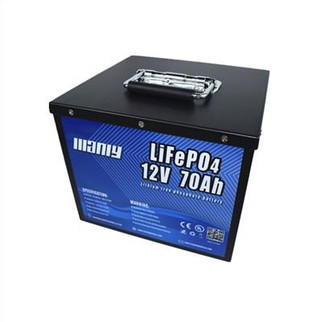
Although electric vehicles have become the mainstream development direction of automobiles, whether to use ternary lithium batteries or lithium iron phosphate (Lifepo4) batteries has been a hot topic of technical debate in the industry in the past decade.
Due to the different needs of the new energy vehicle industry and policies at different times, these two "characters" of power batteries are very different, and their fate is also ups and downs.
The technical route battle between ternary lithium and lithium iron phosphate (Lifepo4) battery
In 1997, lithium iron phosphate (Lifepo4) battery material came out. The characteristics of lithium iron phosphate (Lifepo4) battery are strong safety, low cost, but low energy density. The advent of ternary lithium battery materials is roughly the same as that of lithium iron phosphate (Lifepo4) battery materials. From 1997 to 2000, ternary materials such as nickel-cobalt-manganese and nickel-cobalt-aluminum came out one after another.
The characteristics of the ternary lithium battery are just the opposite of that of the lithium iron phosphate (Lifepo4) battery. It has high energy density and strong endurance, but it is expensive, has low safety, and is prone to burning or even explosion in a high temperature environment.
In 2004, lithium iron phosphate battery materials were introduced into China. By 2007, China's new energy giant BYD released its latest lithium iron phosphate battery, officially announcing its entry into the field of new energy vehicles. In the following years, lithium iron phosphate batteries led by BYD have dominated China's new energy vehicle market.
With the rapid expansion of the transformation of new energy vehicles, the coverage of electric vehicles has expanded from the commercial vehicle field, which has high safety requirements but low endurance requirements, to the passenger vehicle field. At this time, lithium iron phosphate battery energy The disadvantages of low density begin to show.
In 2016, the country for the first time included the energy density of the battery system into the subsidy standard for new energy vehicles. So far, high energy density and long cruising range have become the key assessment items for new energy vehicle companies to obtain state subsidies, and the market share of ternary lithium batteries with inherent advantages in energy density is taking advantage of this year.
In 2018, the overall installed capacity of ternary lithium batteries surpassed that of lithium iron phosphate (Lifepo4) battery for the first time, and CATL also completed the counterattack challenge to China's new energy giant BYD, which occupied the power with its ternary lithium batteries. Half of the battery field.
Cobalt-free, high nickel is the development trend of ternary lithium battery
The battle between ternary lithium battery and lithium iron phosphate (Lifepo4) battery has been protracted for a long time. At present, lithium iron phosphate battery has the upper hand due to its cost advantage. From the perspective of the material side, the upstream materials of lithium iron phosphate batteries are mainly lithium carbonate and iron phosphate (Lifepo4) batteries, which have strong supply stability and low cost.
Although the lithium iron phosphate battery has benefited from the breakthrough in CTP technology in the past two years, its energy density has been greatly improved, but compared with the ternary lithium battery, the energy density is still its short board. Therefore, in Xiaolei's view, the expensive ternary lithium battery is still a technical route that cannot be abandoned. Xiaolei believes that under the general environment of rising battery raw materials, cobalt-free and high nickel will become the main development route of ternary lithium batteries.
Nickel, cobalt, and manganese are important components of the positive electrode of ternary lithium batteries. Among them, cobalt, a veritable rare metal, is expensive and fluctuates greatly. Data show that as of January 2022, the total global LME cobalt inventory level is only 2.5 million tons. Since September, the price of cobalt has continued to rise, and as of February 5, 2022, the price of cobalt has risen to 502,400/ton.
Compared with cobalt, which fluctuates greatly in price and has a high price center and high output, nickel ore resources are abundant, and the price is relatively stable. According to data from the United States Geological Survey, the global nickel resource reserves in 2020 are about 89 million tons. Based on the global nickel mine production of 2.5 million tons in 2020, the global nickel mine mining life will reach 35 years.
For the status quo of the raw material side, power battery manufacturers must know best. In order to ease supply pressure and reduce costs, power battery manufacturers have started their research and development of low-cobalt and high-nickel power batteries several years ago. The ratio of nickel, cobalt, and manganese in ternary lithium batteries has evolved from the original 111 era to 433, 532, 622, and 811 (the numbers represent the ratio of nickel, cobalt, and manganese, respectively).
Today, leading power battery manufacturers such as CATL, Panasonic, LG New Energy, Samsung SDI, and MANLY BATTERY have mass-produced 811 ternary lithium batteries, and some power battery manufacturers have even begun to deploy cobalt-free batteries. Among them, Honeycomb Energy started mass production of its cobalt-free batteries as early as last July.
After more than 20 years of development of ternary lithium batteries, adjusting the ratio of raw materials for the positive electrode of the battery can at best allow power battery manufacturers to reduce the cost of power battery manufacturing, but not allow them to form core competitiveness. At a time when the price of battery raw materials has risen sharply, purchasing battery raw materials is no longer the best choice for power battery manufacturers.
Raw materials are a must for power battery manufacturers
Adjusting the ratio of cathode materials is only a compromise for power battery manufacturers in the process of rising raw material prices. Direct control of power battery raw materials and competition at the raw material side may be the final battle for power battery manufacturers. You must know that the price increase caused by the shortage of raw materials has become the biggest variable in the development of new energy vehicles. Only by controlling the source can power battery manufacturers further control production capacity and costs.
In order to compete in the field of raw materials, Canada Times, a subsidiary of CATL, spent 15 million Canadian dollars to acquire a 25.38% stake in North American Nickel as early as April 2018. In September, CATL invested 1.85 billion yuan through a joint venture with GEM and Tsingshan Holdings to build an annual output of 50,000 tons of high-nickel precursor materials for power ternary materials in Indonesia, and 20,000 tons of ternary cathode materials.
With the entry of the world's number one power battery giant CATL, BYD and Guoxuan Hi-Tech also joined hands with China Minmetals and Tangshan Caofeidian Investment Group in December 2018 to jointly launch the MCC new material project. In May 2021, Yiwei Asia, a subsidiary of Yiwei Lithium Energy, established a joint venture company to develop high-nickel ternary cathode materials with Betri and SKI. MANLY BATTERY is accelerating the layout of the supply chain.
From the moment when CATL extended its hand into the field of power battery raw materials, the war between power battery suppliers has spread to the top industrial chain of new energy vehicle power batteries. However, it is not easy for power battery suppliers to enter the mining field. For battery raw material suppliers, the entry of power battery suppliers will directly affect their interests. In order to defend their turf, they are also actively deploying raw material mining projects.
For example, in October 2018, Huaqing Company, a subsidiary of Huayou Cobalt, signed a cooperation agreement with Qingchuang International, IMIP, Woyuan Holdings, and LONGSINCERE. They will build a laterite nickel ore smelting with an annual output of 60,000 tons in Indonesia. Project; In March 2021, Huayou Cobalt stated on the interactive platform that it would invest in the construction of a high nickel matte project with an annual output of 45,000 tons of nickel metal in Indonesia.