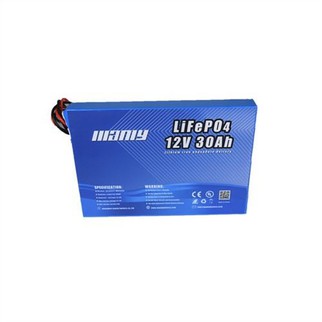
In the future, the power battery technology will never stay at the level of the existing lithium-ion batteries, when the demand for battery energy is expanded, can not avoid the pollution of the environment by waste batteries, how the future development of power battery technology is bound to be more efficient clean and environmentally friendly, according to the current known technology, in theory to solve the problem of high cost of batteries and environmental pollution once and for all is feasible, but through technology to achieve full commercialization has a long way to go.
The emergence of power lithium batteries, new energy clean energy for the trend, battery technology is developing in the direction of new materials and clean energy, also made a major breakthrough, but in commercial applications are few, the important reason is that it can not fulfill the promise of low-cost and multi-capacity, therefore, the current battery research for electric vehicles is still focused on lithium-ion batteries, followed by lead-acid batteries, nickel-hydrogen batteries and sodium batteries, in The number of patent applications for batteries for electric vehicles and their management systems are in the top two.
In particular, the close cooperation between Tesla and Panasonic does not deliberately change the material of the battery, that is, the use of still lithium-ion batteries, simply by enhancing the efficiency and improving production, it can be optimized according to the needs of the car battery, which shows that the close integration of manufacturing and engineering technology is an available way to commercialize the application of battery technology. But the progress of lithium-ion battery space is limited, the production costs are also very high, the use of lithium-ion batteries and recycling will bring environmental pollution, coupled with the uneven distribution of lithium ore, such as electric vehicles are using lithium-ion batteries, will continue to be subject to the situation of lithium-producing countries, which is the same as the status of fuel vehicles.
After entering the 21st century, many countries have begun to develop medium- and long-term solar energy development plans, such as the national photovoltaic program, Japan's Sunshine Program, as well as China's western provinces and regions without electricity township access to electricity plan, solar energy application technology will be from monocrystalline silicon and devices, thin-film photovoltaic technology, PVMaT, photovoltaic modules and system performance and engineering, photovoltaic applications and market development and other five areas gradually.
To this end, solar cell technology has also made great progress, its one now silicon solar cell progress, it is divided into monocrystalline silicon solar cells, polycrystalline silicon thin film solar cells and amorphous silicon thin film solar cells three, the current monocrystalline silicon solar technology is mature, but due to the high cost and price of monocrystalline silicon, will gradually be replaced by polycrystalline silicon thin film solar cells, but promising or amorphous silicon thin film solar cells Second, nanocrystalline solar cells are gradually coming into view, it is very low production costs and simple process, but can harvest stable performance, its production cost is only 1/5 to 1/10 of the silicon solar cells. life can reach more than 20 years.
Therefore, according to the industry, the future of electric vehicles with batteries or to new materials and clean energy direction, such as solar, wind, water, silicon materials, nanocrystals, etc., is a good way to solve the high cost of batteries, environmental pollution and energy crisis once and for all.
Welcome to visit our company website: www.manlybattery.com, If you have requests or queries on batteries, please feel free to contact info@manlybattery.com. Thank you.