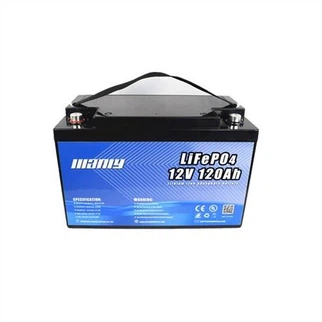
Lithium-ion battery is a secondary battery that uses a compound containing lithium as the positive electrode and is charged and discharged through the round-trip release and embedding of lithium ions between the positive and negative electrodes of the battery during the charging and discharging process. Lithium-ion battery is mainly composed of positive electrode, negative electrode, electrolyte and diaphragm.
Lithium-ion battery mainly relies on the movement of lithium ions between the positive and negative electrodes to work. During charging and discharging, Li+ is embedded and de-embedded back and forth between the two electrodes: when charging, Li+ is de-embedded from the positive electrode and embedded in the negative electrode through the electrolyte, and the negative electrode is in a lithium-rich state; when discharging, the opposite is true.
Lithium-ion battery has many remarkable features, and its advantages are mainly shown as follows
1, high voltage: the working voltage of a single battery up to 3.7-3.8V (lithium iron phosphate is 3.2V, is Ni-Cd, Ni-MH batteries 3 times.
2, large specific energy: can achieve the actual specific energy of 555Wh/kg or so, that is, the material can reach more than 150mAh/g specific capacity (3-4 times than Ni-Cd, 2-3 times than Ni-MH, has been close to its theoretical value of about 88%.
3, long cycle life: generally can reach more than 500 times, or even more than 1000 times, lithium iron phosphate can reach 8000 times. For small current discharge appliances, the battery life, will multiply the competitiveness of the appliance.
4, good safety performance: no pollution, no memory effect. Li-ion as the predecessor of lithium batteries, due to the formation of lithium metal dendrites prone to short circuit, reducing its application areas: Li-ion does not contain cadmium, lead, mercury and other elements of environmental pollution; part of the process (such as sintered, Ni-Cd batteries have a major drawback for the "memory effect", a serious constraint on the use of batteries, but Li-ion does not exist in this regard. But Li-ion does not have this problem at all.
5、Small self-discharge: The self-discharge rate of a fully charged Li-ion battery is about 2% after 1 month of storage at room temperature, which is much lower than the 25-30% of Ni-Cd and 30-35% of Ni-MH.
6, fast charging: 1C charging 30 minutes capacity can reach more than 80% of the nominal capacity, phosphorus-iron batteries can reach 10 minutes charging to 90% of the nominal capacity.
7, operating temperature: the operating temperature of -25 ~ 45 ° C, with the electrolyte and cathode improvement, expect to expand to -40 ~ 70 ° C.
Lithium-ion batteries also have some shortcomings, mainly in the following areas.
1, aging: unlike other rechargeable batteries, the capacity of lithium-ion batteries will slowly decline, related to the number of uses, but also related to the temperature. This phenomenon of decline can be expressed in terms of capacity reduction, can also be expressed in terms of increased internal resistance. Because it is temperature dependent, it is more likely to manifest itself in electronics with high operating currents. Replacing graphite with lithium titanate seems to extend the life.
2, recycling rate: about 1% of new factory products need to be recycled for various reasons.
3, intolerance to overcharge: overcharge, excessive embedded lithium ions will be permanently fixed in the lattice, can not be released again, can lead to short battery life.
4, intolerant to over-discharge: when over-discharged, the electrode deembeds too many lithium ions, which can lead to lattice collapse, thus shortening the life.
In recent years, the application of lithium-ion batteries is becoming more and more widespread, and lithium batteries are widely used in energy storage power systems such as hydro, thermal, wind and solar power plants, as well as power tools, electric bicycles, electric motorcycles, electric vehicles, military equipment, aerospace and many other fields. At present, lithium batteries have gradually expanded to electric bicycles and electric vehicles.