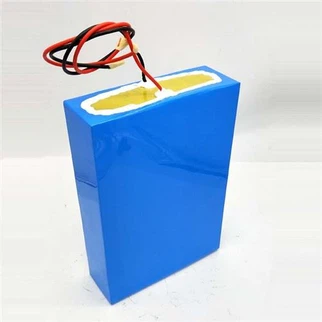
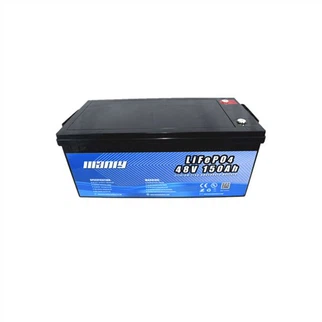
With the advantages of high energy density, long cycle life, small self-discharge rate, no memory effect and green environment protection, lithium-ion batteries have a broad application prospect in the field of energy storage. At present, lithium-ion battery technology is important lithium cobalt acid, lithium manganate, lithium iron phosphate, lithium titanate and other different types. From the perspective of market application prospects and technology maturity, lithium iron phosphate ion batteries are recommended as the first choice in the field of energy storage.
The development and application of lithium-ion battery technology can be described as hot, market demand continues to increase, as one of its important applications, battery energy storage systems have emerged, including small-scale home energy storage, large-scale industrial and commercial energy storage, as well as ultra-large energy storage power plants. Large-scale energy storage systems are an important part of future new energy systems and smart grids, and energy storage batteries are the key to large-scale energy storage systems.
Electric energy storage systems are equivalent to batteries, and energy storage has many applications, such as power systems for power stations, backup power for communication base stations and data rooms. Backup power technology and power battery technology for communication base stations and data rooms are DC technology, which is lower than power battery technology. Energy storage technology is much broader and includes converter technology, grid access technology and grid dispatch control technology in addition to DC technology.
At present, the energy storage industry does not have a clear meaning of what is electrical energy storage, but the energy storage system should have two characteristics.
1, the energy storage system can participate in grid dispatch (or the energy in the storage system can be fed back to the main grid).
2, compared with power lithium batteries, the performance requirements of lithium-ion batteries for energy storage are lower.
At present, domestic lithium-ion battery companies generally do not establish an independent energy storage R & D team. Energy storage R & D is generally carried out by the power lithium battery team in the spare time of the power lithium battery project. Even if there is an independent energy storage R&D team, the energy storage team will be smaller than the power team. Compared with the power lithium battery, the technical characteristics of the energy storage system are high voltage (generally designed according to 1Vdc requirements) and multiple series and parallel connection of single cells. Therefore, the electrical safety and battery status monitoring of energy storage systems are more complex and require specialized personnel to research and solve.