Today's electric vehicles have undergone generational technological changes of lead-acid batteries, nickel-cadmium batteries and nickel-metal hydride batteries, and most of today's mainstream electric vehicles have switched to lithium-ion batteries.
In order of energy efficiency, the lithium-ion battery types currently used in mainstream electric vehicles are lithium-ion cobalt oxide, lithium manganate, and lithium iron phosphate.
Lithium-ion cobalt oxide batteries have high technical efficiency, high discharge current, high charging speed and light weight. therefore.
Lithium manganate batteries have better low temperature performance and are more suitable for use in cold areas. However, the high temperature stability is not good enough, it is easy to swell, and the cycle life decays quickly. Therefore, the actual capacity of the battery of an electric vehicle is often much larger than the theoretical capacity calculated according to the rated power and cruising range. The larger redundancy space is to allow the electric vehicle to maintain the nominal cruising condition in the middle and later stages of the life cycle.
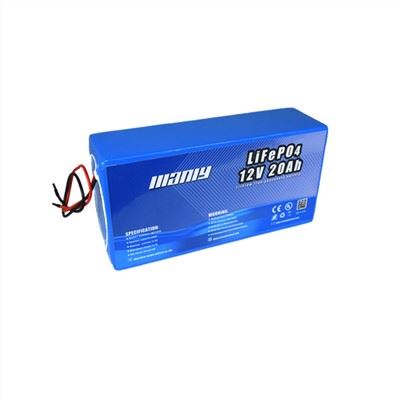
Lithium iron phosphate batteries are known as the safest vehicle battery technology because of the stability of lithium iron phosphate batteries, especially at high temperatures, compared to lithium cobaltate batteries and lithium manganate batteries. Sex is much more stable, and there is less chance of an accident such as a fire in the event of an accident
At present, there are three main packaging forms of mainstream lithium-ion batteries, namely cylindrical, square and soft pack. The outer packaging of cylindrical and square batteries is mostly steel or aluminum. In the market, the aluminum-plastic film package is used to be called a soft pack, and some people call the soft pack battery a polymer lithium-ion battery.
The outer packaging of the soft pack is aluminum-plastic film. In fact, the soft pack is also a kind of square. In the market, the aluminum-plastic film packaging is used to be called a soft pack, and some people call the soft pack battery a polymer battery. Different package structures imply different characteristics, and they each have their own advantages and disadvantages.
In terms of square lithium-ion batteries, the casings are mostly made of aluminum alloy, stainless steel and other materials, and the internal use of winding or lamination technology, the protection of the battery is better than that of aluminum-plastic film batteries (ie soft-pack batteries). Compared with cylindrical batteries, the safety has also been greatly improved.