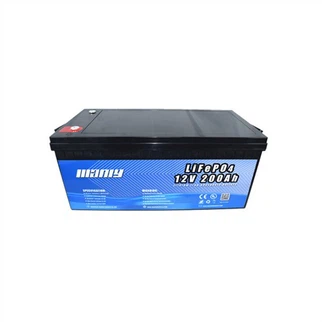
Features of lithium battery
1, with a higher energy-to-weight ratio and energy-to-volume ratio.
2, high voltage, single lithium battery voltage of 3.6V, equal to the series voltage of three NiCd or NiMH rechargeable batteries.
3, small self-discharge can be stored for a long time, which is the most outstanding superiority of the battery.
4, no recall effect. Lithium batteries do not have the so-called recall effect of nickel-cadmium batteries, so lithium batteries do not need to be discharged before charging.
5, long life. Under normal working conditions, the number of charge/discharge cycles of lithium batteries is much greater than 500 times.
6, can be quickly charged. Lithium batteries can generally be used to charge 0.5 to 1 times the capacity of the current, so that the charging time is shortened to 1 to 2 hours.
7, can be used in parallel at will.
8, because the battery does not contain cadmium, lead, mercury and other heavy metal elements, no pollution to the environment, is the most advanced green battery.
Lithium-ion batteries have the following advantages.
1) High voltage, the working voltage of a single battery is as high as 3.6-3.9V, which is three times higher than that of Ni-Cd and Ni-H batteries
2) Large specific energy, the actual specific energy now can reach 100-125Wh/kg and 240-300Wh/L (2 times than Ni-Cd, 1.5 times than Ni-MH), the future with the development of technology, the specific energy can be as high as 150Wh/kg and 400 Wh/L
3) Long cycle life, generally can reach more than 500 times, or even more than 1000 times. For appliances with low current discharge, the life span of the battery will multiply the competitiveness of the appliance.
4) Good safety function, no pollution, no memory effect. Li-ion battery, the predecessor of Li-ion, is prone to short-circuiting due to the formation of dendrites, reducing its application area: Li-ion does not contain cadmium, lead, mercury and other elements that pollute the environment: some processes (such as sintering) of Ni-Cd batteries have a major drawback of "recall effect", which seriously limits the use of batteries. But Li-ion does not have this problem at all.
5) Small self-discharge, the self-discharge rate of Li-ion is about 10% after 1 month of fully charged storage at room temperature, which is much lower than the 25-30% of Ni-Cd and 30-35% of Ni, MH.
6) Fast charging and discharging, 1C charging is able to reach more than 80% of the nominal capacity.
7) High working temperature scale, working temperature is -25~45°C, with the improvement of electrolyte and cathode, it is hoped that it can be widened to -40~70°C.
Lithium-ion batteries also have certain disadvantages, such as.
1) The battery cost is high. The main manifestation is the high price of cathode material LiCoO2 (less resources of Co), electrolyte system purification difficulties.
2) Cannot be discharged at high current. Due to the organic electrolyte system, the internal resistance of the battery is relatively large compared to other types of batteries. Therefore, a smaller discharge current density is required, and the general discharge current is below 0.5C, which is only suitable for the use of small and medium current appliances.
3) Demand for maintenance line control.
A. Overcharge maintenance: overcharge of the battery will destroy the positive structure and affect the function and life; at the same time, overcharge makes the electrolyte decomposition, internal pressure is too high and lead to leakage and other problems; so it must be charged at a constant voltage of 4.1V-4.2V.
B. Over-discharge maintenance: over-discharge will lead to difficulties in the recovery of the active material, so it also needs to have maintenance line control.
Abstract: Reviewed the development trend of lithium-ion batteries, briefly described the theoretical research status of the charging and discharging mechanism of lithium-ion batteries, summarized the existing preparation theory and recent developments of positive and negative electrode materials of lithium batteries as the core technology, reviewed the various preparation methods and development prospects of positive and negative electrode materials, focusing on the current problems and improving the development status of the field. The cost of Li-ion battery is high. Compared with other rechargeable batteries, lithium batteries are more expensive.
If you have requests or queries on batteries, please feel free to contact info@manlybattery.com