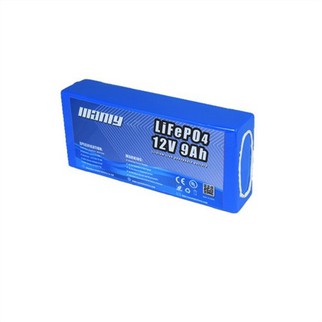
Which is better, lithium titanate or lithium iron phosphate pack? In terms of power batteries, at present, ternary lithium batteries and lithium iron phosphate packs and lithium titanate batteries are used in the field of electric vehicles. Lithium iron phosphate battery, due to the advantages of stable safety performance, high temperature performance, light weight, etc., more and more active in the electric bus market. So, which is better lithium titanate and lithium iron phosphate packs? This article has compiled some information for your reading.

Comparison of lithium titanate and lithium iron phosphate packs.
Lithium titanate batteries.
Lithium titanate is used as a lithium-ion battery negative electrode material - lithium titanate, can be used with lithium manganate, ternary materials or lithium iron phosphate and other positive materials to form a 2.4V or 1.9V lithium-ion secondary battery. In addition, it can also be used as the positive electrode, and lithium metal or lithium alloy negative electrode to form a 1.5V lithium secondary battery. Ordinary lithium titanate batteries are prone to flatulence, resulting in bulging cells and a significant drop in electrical performance, which greatly reduces the theoretical cycle life of lithium titanate batteries.
Advantages of lithium titanate battery.
1、Good safety and stability
The potential of lithium titanate is higher than that of pure lithium metal, which is less likely to produce lithium crystal branches, and the discharge voltage is smooth, and, therefore, improves the safety performance of lithium batteries. Lithium titanate battery testing found that in the pinprick, extrusion, short circuit and other harsh tests, no smoke, no fire, no explosion, safety is much higher than other lithium batteries.
2、Excellent fast charging performance
Compared with carbon cathode material, lithium titanate battery has a higher lithium ion diffusion coefficient and can be charged and discharged at a high rate. While greatly reducing the charging time, the impact on the cycle life is smaller, and the thermal stability is also stronger. Lithium titanate battery can be fully charged in about ten minutes.
3、Long cycle life
Lithium titanate batteries can be fully charged and discharged for more than 30,000 cycles, and after 10 years of use as a power battery, it may also be used as an energy storage battery for 20 years. Users do not need to replace the battery in actual use, almost no increase in late cost.
4、Good performance of wide temperature resistance
The general electric car will have problems when charging and discharging at -10℃, lithium titanate battery has good performance of wide temperature resistance and durability, and can be charged and discharged normally at -50℃ to -60℃, whether in the frozen north or in the hot south, the vehicle will not be affected by the battery "shock", eliminating the user's The user's worries.
In summary, the advantages of lithium titanate battery, can significantly save the construction of charging stations and staffing costs, more suitable for the promotion and application of public transport.
Disadvantages of lithium titanate batteries.
1. Lithium titanate battery negative electrode using lithium titanate, compared to the negative electrode with graphite mainstream lithium batteries, the market share is very niche.
2. Low energy density and high cost. Especially low energy density is because the principle performance of the negative electrode material lithium titanate decision, it is difficult to have a large breakthrough space.
3. As for the long service life claimed by lithium titanate battery, it is more difficult to be certified. Battery life is also affected by the cathode material, electrolyte, diaphragm, the use of temperature and other comprehensive impact.
Lithium iron phosphate packs.
Lithium iron phosphate battery pack is a lithium-ion battery with lithium iron phosphate as the cathode material. Its characteristics are no cobalt and other precious elements, low raw material prices and phosphorus, iron present in the earth's abundant resources, there will be no supply problems. Its moderate operating voltage (3.2V), high capacity per unit weight (170mAh/g), high discharge power, fast charging and long cycle life, and high stability in high temperature and high heat environments.
Advantages of LiFePO4 battery pack.
1. Small size, light weight, the volume of lithium battery pack is 2/3 of the volume of lead-acid battery, light weight, only 1/3 to 1/4 of the lead-acid battery.
2. Long cycle life, lithium iron phosphate battery pack cycle life of 1200 to 2000 times, but the traditional lead-acid battery is only 500 to 900 times.
3. Charge and discharge characteristics are good, lithium battery pack charge and discharge electrical energy conversion efficiency can be greater than 97%, lead-acid battery charge and discharge electrical energy conversion efficiency of about 80%.
4. Safety and environmental protection, lithium iron phosphate materials do not contain any heavy metals and rare metals, non-toxic, both in production and use are pollution-free, in line with European RoHS regulations, for green battery lithium batteries. In the puncture, extrusion, overcharge, short circuit and other experiments, no explosion, no fire.
5. No memory effect, the battery can be charged and discharged at any time.
6. Wide operating temperature range, lithium iron phosphate battery pack thermal peak up to 350 ℃ -500 ℃, while the lead-acid batteries only at about 200 ℃.
Disadvantages of lithium iron phosphate pack.
Lithium iron phosphate batteries have some performance defects, such as low vibrational density and compaction density, resulting in a low energy density of lithium-ion batteries; high cost of material preparation and battery manufacturing costs, low battery yield, poor consistency; poor product consistency; intellectual property issues.
Which is better, lithium titanate or lithium iron phosphate battery pack?
In the field of pure electric vehicles, the battery is mostly lithium iron phosphate pack or ternary lithium batteries, and recently GREE wants to acquire the Yinlong bus, its core competitiveness is another way lithium titanate batteries. Domestic automakers are more applications or ternary lithium batteries, lithium iron phosphate packs. Lithium titanate battery has not yet been scaled up. And the high price of lithium titanate batteries (high production costs, high humidity control requirements), about 9 yuan per watt-hour, and lithium iron phosphate, ternary lithium batteries per watt-hour gap of about 2 yuan is also large.
Lithium titanate battery future market space will be very limited. Lithium titanate do less companies, will lead to less overall industry investment in research and development, from the current battery business R & D investment and planning input, and few companies will focus on the development of lithium titanate. In the future, the speed of technological progress of lithium iron phosphate pack will exceed that of lithium titanate. Generally speaking, electric vehicles are best with lithium iron phosphate packs, safety first.
Summary: lithium titanate and lithium iron phosphate pack which are two different lithium batteries, the materials used are different, the characteristics are not the same, each has its advantages and disadvantages. I think lithium iron phosphate is better, said the lithium polymer batteries do not explode, but a short time ago there were accidents, but the lithium iron phosphate market cycle longer, more stable.
If you have any demands in batteries, please feel free to contact info@manlybattery.com