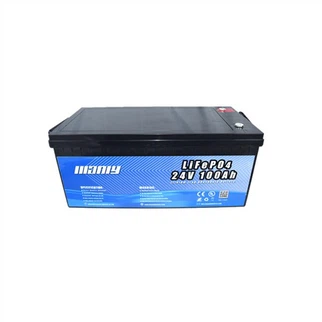
Lithium batteries generally have a full charge voltage of 4.2-4.35v, a nominal voltage of 3.6-3.8v, and a lithium iron phosphate full charge voltage of 3.65v, and a nominal voltage of 3.2v, so there is no lithium battery pack with a nominal voltage of 12v.

12V is actually the rated voltage of six lead-acid batteries. For example, the 12V battery of a car is made up of 6 cells connected in series with matching capacity, while the 36V, 48V, etc. of electric bicycles are made of 12V. The batteries are connected in series. In other words, it is a fait accompli, de facto standard, and path dependence. A lead-acid battery is nominally 2V, and the actual voltage is possible from 1.9V to 2.35V, and 6 strings are 11.4V to 14.1V. The 48V battery car is roughly 45.6V to 56.4V, the nominal voltage of the lithium battery is 3.6 or 3.7V (the latest also has 3.85V), and the actual voltage is 3.0V-4.2V.
For the use of lithium batteries instead of lead-acid batteries for 48V battery cars, as long as the lithium batteries are connected in series to approximate the voltage range, then the original motor and controller can be used (path-dependent), the most common is 13 strings of lithium batteries 39.0V to 54.6V, as long as the battery and charger are replaced, the other basics do not need to be changed (circuits such as lamps, speakers, anti-theft devices, etc.)