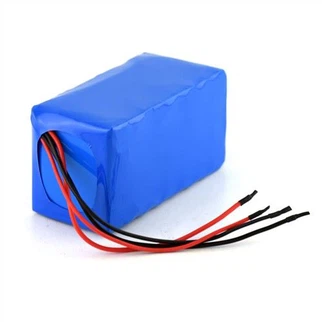
Whether it's an electric car or an energy storage power plant, a key device - the battery - is inseparable. Almost all electric vehicles and more than 70% of chemical energy storage power plants apply lithium-ion batteries, the same kind of batteries used in our cell phones and laptops.
The lithium-ion battery has fueled the development of our information age due to its remarkable portability of electric energy. As a result, three scientists who contributed most to the development of lithium-ion battery technology were awarded the Nobel Prize in Chemistry.
Thanks to the development of lithium-ion batteries, their use scenarios are very close to us, we need it for our cell phones, cameras and Bluetooth headsets, but why are there so many accidents with lithium-ion batteries when applied to electric vehicles?
This is actually a matter of probability. For example, a certain imported battery used in an imported electric car claims that the accident probability is only one in 10 million, but a car to install 8000 such batteries, equivalent to 10 million batteries can be installed in 1250 electric cars. That is, theoretically 1250 electric cars, there is a car in a certain battery may be an accident. If this accident belongs to the battery burning or explosion level, it may trigger the chain reaction of the surrounding batteries, which will cause the big accident of burning electric cars.
The same is true for accidents in energy storage power plants. Compared to an electric car that can store roughly 50 to 100 degrees of electricity, a container body of energy storage batteries can generally store 1000 degrees of electricity, and a medium to large energy storage power plant is often a collection of dozens of such storage battery containers. As you can imagine, with such a large battery usage, it is normal for accidents to occur occasionally. On the other hand, electric vehicles and energy storage power plants, the consequences of combustion and explosion accidents are obviously too much more serious than cell phone batteries, and the current fire-fighting measures can do almost nothing about it. Of course, we can not ignore the news spread so quickly and widely in this era, those who sometimes cause casualties of serious incidents, it is easier to cause greater social impact.
Why lithium-ion batteries can burn or even explode?
Lithium-ion battery is an energy-containing component, which is mainly composed of positive electrode, negative electrode, electrolyte and diaphragm. After charging, the positive electrode is generally a transition metal oxide, which has a strong oxidizing property; the negative electrode is a graphite with a large amount of lithium embedded inside, which has a strong reducing property. Electrolyte is generally organic esters, with a low melting point, combustible and other characteristics.
Special attention should be paid to the firecrackers in our lives is also a kind of energy-containing devices, many people know that the composition of its internal gunpowder for a sulfur (sulfur, chemical formula S) two nitrate (stone, chemical formula KNO3) three charcoal, of which nitrate is a strong oxidizing agent, sulfur and charcoal as a reducing agent, when the outside world gives a stimulus of more than 120 degrees, firecrackers within the redox reaction occurs violently, releasing a large amount of gas and heat, gunpowder combustion, firecracker explosion.
This shows that theoretically lithium-ion battery intrinsic may occur high exothermic redox reaction, and the combustible electrolyte contained in it will also contribute to this reaction, bringing the consequences of combustion or even explosion. How powerful is the lithium-ion battery burning or exploding? Just from the perspective of its storage of electrical energy, 150Wh/kg energy density of ordinary lithium-ion battery electricity is about 1/10 of the energy density of the heat generated by the explosion of TNT.
Recent studies have conclusively proven that the positive and negative electrodes in a lithium-ion battery accident can directly undergo a violent redox reaction under special circumstances, and even aluminum and copper collectors can directly participate in the reaction as reductants, generating significantly more heat than the energy corresponding to battery storage. Generally speaking, in the confined space of lithium-ion batteries in a safety accident, the maximum temperature can reach more than 800 ℃, and a 43.4g heavy lithium-ion batteries explode when the burst of heat equivalent to 5.45g TNT, reaching the TNT equivalent of 1 / 8 .
The reason why lithium-ion batteries are not violent redox reactions but electrochemical reactions to its internal chemical energy into electricity in a controlled and continuous manner, because the diaphragm will be effective physical isolation of the positive and negative electrodes and electron conduction insulation (as well as the presence of ion conductive electrolyte). However, when the diaphragm fails due to various internal or external causes, and the positive and negative electrodes come into direct contact, this internal short circuit will result in the instantaneous release of electrical energy, generating a lot of heat and high temperature, instantly destabilizing the internal chemical system of the battery, resulting in redox reactions involving the negative electrolyte, the positive electrolyte, the negative electrode and the positive electrode, and even the collector fluid, instantly exothermic and heating up, resulting in the instantaneous vaporization of the electrolyte and thus This process is called thermal runaway (TR for short), which causes the electrolyte to instantly vaporize and then spray out of the battery shell with the powder of positive and negative electrode active substances, bringing the bad result of combustion or even explosion.
According to the statistics of electric vehicle accident scenarios in recent years, most of the accidents are due to "spontaneous combustion", including when sitting (no battery charging and discharging), when driving (battery discharging) and when charging. A small number of accidents occur when there is an external heat source, collision and control circuit failure.
"Spontaneous combustion" is spontaneous thermal runaway, which is collectively referred to as thermal runaway under various abuse conditions (thermal abuse, mechanical abuse, electrical abuse). Although the final mechanism of thermal runaway in both scenarios is similar in terms of heating and combustion, there is a great difference in the ease of conducting research on them. At present, thermal runaway under abuse conditions has made great progress in recent years because the excitation conditions are controllable, and it is basically possible to quantitatively describe the mechanism of thermal runaway and the subsequent harm situation under various abuse conditions. However, the spontaneous thermal runaway is difficult to predict due to its complex causative factors, and it is difficult to recover the microscopic conditions before thermal runaway when the battery is completely destroyed after thermal runaway.
Why is it difficult to predict the thermal runaway of Li-ion battery?
Spontaneous thermal runaway is currently the biggest safety anxiety of electric vehicles. Why is it difficult to prevent? It all starts with the manufacturing of the battery.
If every battery is 100.000000000% identical from the microscopic electrode material particles and diaphragm to the macroscopic pole piece and case package, then a battery pack made with thousands or hundreds of thousands of these cells will definitely have better safety characteristics. You may notice that the expression of 100 percent is a little different here, followed by ten or so zeros, which represents a desirable expectation - high consistency of the full scale of the battery.
As we all know, the consequences of battery inconsistency is that the deteriorating performance of the battery will be faster decay, some passivation deactivation, direct failure; there are also some to another very different path - internal short circuit and thus thermal runaway, combustion, explosion.
Then this most dangerous spontaneous internal short circuit why can not predict it?
The main reason is that the decay to internal short circuit process is very slow and the external voltage signal is not obvious, and the second is that the battery in question is directly into the destructive thermal runaway within a few minutes, the battery is completely destroyed, the evidence can not be retraced, which also makes the research progress in this area slow.
Really accurate simulation of the process of spontaneous internal short circuit is still a challenge. In addition, batteries are similar to a black box, and although we can use some electrochemical spectroscopy and in situ CT techniques to monitor the electrochemical reactions and internal microstructural changes of individual batteries from the outside, we cannot predict which of the tens of millions of batteries will "suddenly die" in a few months or years and study their full life cycle evolution in detail. We cannot predict which of the tens of millions of batteries will "die" in a few months or years and study their full life cycle evolution in detail. Each battery has almost no risk of spontaneous thermal runaway when it first leaves the factory, but which one will "suddenly die" and cause a massive combustion accident six months later or three years later on a summer night or winter morning? It's hard to predict right now.
Is this like our bodies?
Battery raw material parameters and manufacturing process is similar to our genes, battery charging and discharging system is like our diet, battery use environment temperature changes as the growth environment. As we grow, there will always be people who develop long-term inflammation or more severe vascular disease in their bodies, which may develop into cancer or cause strokes in the short term, similar to a short circuit in a battery and subsequent thermal runaway.
If we had the ability to monitor the 24-hour health status of every person on the planet in real time, we would be able to detect and treat abnormalities early and reduce the risk of cancer and stroke, but this is clearly not practical. Likewise, it is difficult to afford the most comprehensive real-time monitoring of every battery, and we are now roughly able to assemble devices to monitor voltage and overall temperature for a module of dozens of batteries, which is clearly far from what is needed to study and prevent spontaneous thermal runaway of individual batteries.
One thing that can be determined is that improving the consistent performance of the cells improves the safety and reliability of the battery pack. However, perfect uniformity is impossible to achieve, and the difference in the shape, surface state, defects, and other characteristics of each of the particles of the positive and negative active materials of the battery alone can be seen by putting them under a device with high enough resolution. In addition to raw materials, battery preparation also involves dozens of complex processes, trying to keep the battery consistent is very difficult. Although the power battery industry now invests hundreds of millions of dollars in order to obtain higher processing accuracy, the many raw materials and complex preparation processes of lithium-ion batteries make the improvement of consistency a never-ending task.
Electric vehicles will of course continue to develop, and China will continue to promote the application of large-scale power storage technology in the energy system. According to the current situation of China's energy structure, electric vehicles have an important position in China's medium and long-term energy strategy and future sustainable development. It is believed that with the continued rapid development of the battery technology system, its reliability and safety will be significantly improved in the next 5~10 years.
However, it is almost impossible to completely eliminate the burning accident of lithium-ion batteries.
Of course, in respect of the objective reality, there are still a lot of work to be done to improve safety. First is the innovative early warning technology, such as Stanford University recently reported on the sensitive capture of hydrogen signal can be warning lithium-ion battery thermal runaway time pushed forward 5 minutes, which is enough to escape the personnel on the electric car. In addition, the battery's "self-poisoning" technology is also more effective, its mechanism is when the battery thermal runaway in the early stage, can release some special chemicals to make the battery internal passivation "paralysis", interrupting the chain of thermal runaway.
Facing the safety of lithium-ion batteries, vigorously develop innovative and efficient safety enhancement technologies, and continuously improve the consistency of battery manufacturing. One day, this kind of "explosive" news will no longer appear in our lives, and we can use electric vehicles with peace of mind.