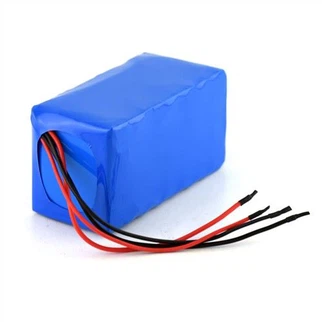
First, the cause of lithium ion battery fire
The essence of the ignition of lithium ion battery is that the heat in the battery fails to be released according to the design intention, which causes the fire after the ignition point of internal and external combustion objects. The important reasons for the fire are external short circuit, external high temperature and internal short circuit.
1, internal short circuit: because of the abuse of the battery as the overcharge before put in crystal, the impurities such as dust in the process of producing batteries, exacerbating generated pierced diaphragm, a micro short circuit, the electric energy that cause temperature rise of temperature of material chemistry and enlarged the short-circuit path, formed the bigger short-circuit current, the accumulation of each other and enhance each other's damage, leading to thermal runaway.
2. External short circuit: Take electric vehicles as an example. The probability of danger in actual vehicle operation is very low. First, the vehicle system is equipped with fuse wire and battery management system BMS, and second, the battery can withstand large current shock in a short time. In the extreme case, the short circuit point exceeds the vehicle fuse and the BMS fails at the same time. Long term external short circuit will generally lead to the burning of the connection weak points in the circuit, and rarely lead to the thermal runaway event of the battery. Now, more and more PACK companies have adopted the method of adding fuse wires in the loop, which can more effectively prevent the harm caused by external short circuit.
3, external high temperature: due to the characteristics of the structure of lithium ion battery, high temperature SEI film, electrolyte, EC will occur decomposition reaction, electrolyte decomposition will also react with the positive electrode, negative electrode, core diaphragm will melt decomposition, a variety of reactions resulting in a large amount of heat. The melting of the diaphragm causes an internal short circuit, and the release of electrical energy increases the production of heat. This accumulation of mutual enhancement of the destruction of the use of the consequences is to lead to the battery core explosion-proof film rupture, the electrolyte spray, combustion and fire.
Two, lithium ion battery fire extinguishing method
After analyzing the cause of battery fire, let's take a look at Tesla's recommended methods for extinguishing fire when a lithium-ion battery catches fire:
1. If a small fire occurs and the flame does not spread to the high voltage battery, carbon dioxide or ABC dry powder fire extinguisher can be used to extinguish the fire.
2, when thoroughly checking the fire, do not contact with any high voltage parts, always use insulating tools to check.
3, if the high voltage battery in the fire bending, twisting, damage, in short, is not the way to look, or suspected battery problems. Then the amount of water used to extinguish the fire should not be too small, and there should be enough water for fire fighting.
Battery fires may take up to 24 hours to fully extinguish. The use of a thermal imaging camera ensures that the high-voltage battery is completely cooled before the accident is over. Without a thermal camera, the battery must be monitored for reignition. Smoking indicates that the battery is still hot and should be monitored until at least one hour after the battery is no longer smoking.
GM's Volt's emergency rescue manual instructs you to put out fires in electric vehicles in such a way that if the battery reaches a high enough temperature to leak and release electrolytes, the electrolyte is definitely flammable. This requires a large amount of water to cool the battery and put out the fire. Since the DC and AC systems are not grounded, firefighters can safely use water as an important extinguishing agent without the risk of electric shock. ABC dry powder fire extinguishers will not extinguish battery flames. Firefighters should prevent direct internal contact in any high-voltage assembly during fire fighting or relief operations, which could potentially cause electric shock.
To sum up, a lithium-ion battery requires a lot of water to extinguish a fire, which takes a long time and patience. Cooling is crucial. Lithium-ion batteries are not explosive, and will not explode under normal circumstances.