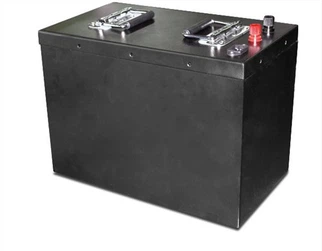
Lithium batteries have been commercialized in various applications for more than 20 years. So, why are they not widely used as batteries in data center UPS? In fact, the reason is that, like all other applications, lithium batteries cannot provide UPS suppliers with price, energy density, power, and power in UPS applications. A reasonable balance between safety and reliability. But in the past 10 years, improvements in lithium-ion chemistry and technology have provided UPS suppliers with viable solutions. These improvements are largely due to the development of the electric vehicle industry.
Comparison of valve-regulated lead-acid batteries and lithium iron phosphate batteries
The price advantage of lithium iron phosphate batteries will gradually become prominent, and energy storage will be an important potential market for lithium iron phosphate in the future. It is reported that compared with the ternary route, lithium iron phosphate has obvious advantages in terms of service life, safety, and fast charging and discharging, and is more suitable for the energy storage market. In the UPS uninterruptible power supply system, the backup battery pack is the last line of defense for the entire power supply system, and it is also the focus and difficulty of power supply maintenance. In the system interruption accident, the fault caused by the battery pack accounts for a larger proportion Therefore, people will be more cautious about the changes in backup battery technology.
1. Low mass-to-energy ratio, low volume-to-energy ratio, large battery weight and large floor space.
2. The charging and discharging efficiency is low, the charging and discharging efficiency is about 92%, and the charging and discharging efficiency will decrease after a period of use.
3. The valve-regulated lead-acid battery has a short life span, with a design life span of 5-8 years, and most practical use is 3 to 5 years.
4. The operating environment requires high temperature. When the temperature exceeds 25 degrees, the battery life will be reduced by half when the ambient temperature increases by 7 to 10 degrees.
5. The storage battery uses a large amount of lead, which is likely to cause serious pollution to the environment during mining, processing and use.
In order to solve the above problems, the applications of lithium iron phosphate batteries for high-power UPSs in the communications industry and some well-known brands are increasing. A new trend in the UPS market is the growing interest in lithium-ion batteries in data centers and UPS applications. Compared with traditional lead-acid batteries, lithium-ion batteries have a longer service life, smaller size and weight, the ability to operate in a wider range of environments, and can charge and discharge quickly with large currents, and have superior high temperature resistance. ﹣10℃~﹢65℃, it can still work normally; the total cost of ownership (TCO) is better.
Features of Lithium Iron Phosphate Battery
The main technical points of lithium iron phosphate batteries are as follows: nominal voltage 3.2V, general charging current 0.2~0.5C, maximum charging current 1~1.5C, stable performance when the charging voltage is below 3.65V; general discharge current is 0.5~1C , The maximum discharge current is 5~10C, the discharge termination voltage is 2.0V; the charging operating temperature range is 0~55℃, and the discharging operating temperature range is -20~60℃.
Lithium iron phosphate battery has the following advantages:
1 High output voltage: working voltage range of lithium iron phosphate battery: 2.5~3.6V, platform is about 3.2V;
2 Strong safety: Lithium iron phosphate cathode material has good electrochemical performance, the charging and discharging platform is very stable, the structure is stable during the charging and discharging process, and it can be over-discharged to zero volts. Even if the battery is damaged internally or externally, the battery will not burn or explode, and the safety is good;
3 Good high-temperature performance: when the external temperature is 65 ℃, the internal temperature is as high as 95 ℃, and the temperature can reach 160 ℃ when the battery is discharged. The structure of the battery is safe and intact;
4High efficiency output: standard discharge is 2~5C, continuous high current discharge can reach 10C, instant pulse discharge (10S) can reach 20C;
5 High cycle life: After 500 cycles, the discharge capacity is still greater than 95%;
6 Easy to use: fast charging;
7 Environmental protection: the entire production process is clean and non-toxic. All raw materials are non-toxic.
8 Non-rare resources: Lithium iron phosphate batteries use phosphoric acid, lithium, and iron sources as materials, and there are no strategic and rare resources.
Application of Lithium Iron Phosphate Battery in UPS Power Supply System
In the current more mature energy storage applications, lithium iron phosphate battery distributed energy storage power sources have long been widely used in communication base stations, user-side peak shaving and valley filling, off-grid power stations, microgrids, rail transit, UPS and even household energy storage. Wait for multiple scenes. It is estimated that by 2020, the cumulative installed capacity of my country's energy storage market will exceed 50GW, which is expected to bring a significant increase in the demand for lithium iron phosphate batteries.
5G is facing a rather "unfavorable" development factor-the power consumption of 5G base stations may be several times that of 4G base stations, and at the same time puts forward a great demand for expansion of the power system. Currently, lithium batteries are mainly used in 4G small base stations, and large energy storage base stations are still dominated by lead-acid batteries. Since the power of 5G equipment is greater than that of 4G, this correspondingly means that almost all of the operators’ current computer rooms must modify the power supply system to ensure power supply, including switching power supplies, batteries, and power cords that have to be replaced.
Due to pollution and performance, lead-acid batteries are gradually unable to meet the requirements of communication base stations and are gradually eliminated. But when choosing alternative energy sources, new problems have initially appeared. For example, energy storage lithium iron phosphate batteries are being used in large areas. In the fierce competition and technological development, operators are constantly pursuing low cost. Purchasing low-cost lithium batteries is the most direct and effective way to reduce costs.
After upgrading to 5G, the performance of the lithium iron phosphate battery in the base station system will greatly affect the stability of the network signal, which is related to the user's usage and experience, and operators have higher requirements for battery consistency and stability. In view of the characteristics of lithium iron phosphate batteries, when the UPS power supply system is set up, it is only necessary to adjust the charging voltage of the UPS to the battery pack to the voltage required by the lithium battery. Because even if the lithium battery is in a charging state for a long time, the battery performance is not easy to change due to its own IBMS balance protection function.
Example-Data center UPS battery capacity configuration:
The ambient temperature of the battery room air conditioner is set to 25°C, the UPS system capacity is 200kVA (396V/425A), and the battery discharge time is 0.5 hours. After calculation, one set of 396V/500Ah lead-acid battery or one set of 396V/200Ah iron-lithium battery is required. Considering the same load-bearing conditions of the machine room, the latter covers an area of 28% of the former, and the latter weighs 16% of the former. Utilizing the high-current discharge characteristics of lithium iron phosphate batteries, reducing the area and load-bearing requirements of the computer room, it is easier to achieve distributed power supply.
The lithium battery adopts a three-layer battery management system, from the battery cell to the battery cabinet, and the battery cabinet parallel system to ensure the reliability of the lithium battery layer by layer. Huawei's lithium battery management system has functions such as battery cell voltage and temperature detection, cell current sharing management, charge and discharge detection, SOC, SOH management, alarm management, and report analysis. Realize the timely identification of battery failures, early warning, and active isolation.
Secondly, lithium battery has the industry's unique active current sharing technology, which supports the mixing of new and old battery cabinets. The circulating current of lithium battery cabinets can be controlled below 2%, which significantly reduces costs.
In terms of hardware design, the lithium battery cabinet is equipped with a circuit breaker, and the battery management module is equipped with fuses and relays to ensure rapid action and protect the battery in the event of a fault.
In terms of operation and maintenance management, the lithium battery management system can be integrated into the UPS management system, and the battery management and UPS management system are a complete system. The lithium battery management system can upload battery information to the UPS system, and cooperate with the Huawei UPS and network management system to achieve intelligent battery management, reduce the frequency of detection, and make the lithium battery operating status checkable, manageable, and controllable at any time.
Concluding remarks
The reason for the low adoption rate of lithium-ion batteries is that the initial cost is high, and the safety is not assured. However, we believe that with the maturity of lithium-ion battery technology and the growth of manufacturing capacity, more suppliers have begun to enter the field of lithium iron phosphate battery UPS applications, and end users’ understanding of the full life cycle practice of data centers will be improved The deployment of lithium-ion batteries is subject to increasing planning and budgeting. The energy storage revolution in data centers is already underway.
In 2018, the Iron Tower Company stopped purchasing lead-acid battery base station power supplies and changed to a unified procurement of echelon lithium batteries. According to the plan of the Iron Tower Company, in 2019, it will continue to expand the scale of use of lithium batteries. It is expected to replace 150,000 tons of lead batteries and digest more than 50,000 tons of decommissioned power batteries. Although the field of base station power supply is the demand side of traditional lead-acid batteries, due to the change in national policy direction, the growth rate of this field will shift to the utilization of lithium elevators.