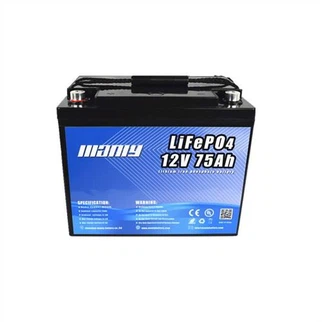
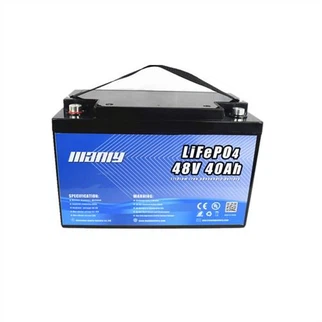
The 2019 Nobel Prize in Chemistry was awarded to American scientists John Goodenough and Stanley Whittingham and Japanese scientist Aki Yoshino for their dedication to the development of lithium-ion batteries. Lithium batteries, a lightweight, rechargeable and weak battery, have changed people's lives and provided the possibility of building a society with zero fossil fuel use.
But who would have thought that after Japan's first industrialization of lithium-ion batteries in 1991, but continues to shrink, but it is China's industry step by step to achieve the top of the international list. What has happened in the middle? Lithium-ion batteries have created a new rechargeable international for mankind, and the "Electric China" program built on lithium-ion batteries is helping us to break away from our dependence on fossil fuels.
However, now, lithium-ion batteries also face many real challenges, safety incidents occur from time to time, limited range, energy density is close to the upper limit, lithium-ion battery future where to go? In the face of solid-state batteries, sodium-ion batteries, hydrogen-oxygen fuel cells and other new battery power, who is the ultimate battery of the future?
In 2001, the car power lithium battery is not yet favored by us. Chen Liquan, who was elected as an academician of the Chinese Academy of Engineering, requested Wan Gang, who was then in charge of the serious special project of the 863 program for electric cars, to "expect to give lithium-ion batteries a chance." Ten years later, he successfully industrialized lithium battery material research, a cold discipline that had been marginalized, and dealt with the scientific, technical and engineering problems of lithium-ion battery scale production, completing the lithium-ion battery from "made in China" to "made in China". In 2007, Lizhuan Chen was awarded the Lifetime Achievement Award of the International Battery Materials Association for his research on all-solid-state lithium batteries, lithium-sulfur batteries, lithium-air batteries, and room-temperature sodium ion batteries, which laid the foundation for the development of next-generation power batteries and energy storage batteries.
Professor Stanley Whittingham, who actually just started out by studying superconducting materials. He did not do any work on superconducting materials, but he found that titanium sulfide material can be made into lithium and titanium sulfide batteries, that is, lithium for the negative electrode. The safety of this battery is relatively poor, and later because of a safety incident to a Japanese lady's face burned, and then the company stopped.
After John Goodenough synthesized a compound called lithium cobaltate, lithium cobaltate is a layered compound that can be used as a lithium source for lithium-ion batteries, and its structure is still stable, which is Goodenough's dedication. Aki Yoshino read Gurdinav's article in 1978 and thought of a way to use it to make a battery. Its negative electrode does not have to metal lithium, but with carbon fiber to do the negative electrode, made this kind of battery, this kind of battery later called lithium-ion batteries.
In fact, lithium-ion batteries have now changed the international, the biggest change is to our daily life brought a lot of convenient local. Nobel Prize in the statement said that from smart phones, laptops and other consumer electronics to electric vehicles and wind energy, solar energy and other large energy storage devices, lithium-ion batteries have now become an indispensable source of energy in our lives. I have been dealing with lithium batteries for about forty years, and today I would like to communicate with us on lithium batteries and "electric China".
1 China's lithium battery industry is how to achieve the top of the international list?
Why can China's lithium-ion battery output value of the international top? This is to start from the beginning.
China's lithium battery research is not late, almost synchronized with the international. 1976, before Christmas, the Academy of Sciences sent me to West Germany. At that time, Germany was not yet unified, East Germany and West Germany were separated. I went to the Max Planck Institute for Solid State Research in Stuttgart, West Germany, to study, and I soon found that the whole institute was studying the function of lithium nitride crystals, and I felt very strange, why were we so interested in lithium nitride? It was then that I learned that lithium nitride is an ion-conducting material, which is said to be a conductor called superion, and can be used as a battery for cars. I heard this sentence immediately after thinking in my head, I do not want to change the direction.
Their seminar is an open office, one day open to the community, they put this lithium nitride, a small button-like battery on the table, surrounded by a lead-acid battery. I took a look, a lead-acid battery is very heavy, a button battery is very light. I thought this thing is indeed very useful, so I immediately called the domestic institute statement, I said I want to change my career, from crystal growth to a new discipline, called solid state ionics. About a month later, the institute wrote back to me and agreed to change my career. After I returned to China, the Academy of Sciences was very supportive of this project to the Institute of Physics, saying that a laboratory should be built for this young man, so a solid state ionics laboratory was soon established. This was the first solid state ionics laboratory in China at that time, and also the smallest one in the Institute of Physics. My work is the lithium-ion conductor and lithium battery research.
In 2018, the global electric car battery companies market share ranking, the top 10 ranking is Ningde era, CATL, the second is Japan's Panasonic, the third is BYD, a total of 10. 2018, China has six lithium battery companies in the top 10 power battery international market share. Ningde era is 37.23%, firmly at the top of the list, Japan's Panasonic is only 21.54%, ranking second, but the difference of more than ten percentage points.
In 1991, Sony announced the industrialization of the company, the Institute of Physics followed up quickly. At that time, we were considering how to take the first step towards industrialization. We do research unit is to turn money into common sense, if the unit of funding is to turn skills into money. How to find ways to turn common sense into skills, that is, how to connect, we put forward a thought, we said we can find ways to let the research unit to go forward a few steps, let the funding unit to go forward a few steps, we are in the middle of the "bridge" convergence. So we found a funder, signed a research and development agreement for A-type lithium-ion batteries in 1993, the funder gave funding of 100,000 yuan, and more importantly, sent three people. These three people then had a lot of support for us, because at that time the laboratory I was a master's student, manpower is very short.
Soon in 1995, the first lithium battery was born from the Institute of Physics, Chinese Academy of Sciences. At that time, the cell phone called "Big Brother", perhaps a little older know, "Big Brother" is like a brick like a cell phone, then take a "Big Brother" is a symbol of status. The A-type lithium-ion battery is the "Big Brother" battery. The Chinese Academy of Sciences identified the future thought that the level reached the international advanced level, can go further down the road, which is how we were in the laboratory from common knowledge into skills, out of this step.
The Japanese first announced the industrialization in 1991, the market share is 100%, and then always down, and now still down. Even Sony is not doing lithium-ion batteries, it sold its lithium-ion batteries to another company. Koreans and our country is moving up, by 2014 our power battery, lithium market share has now surpassed Japan and South Korea, at the top of the international list, and is still going up.
Now there is a view that lithium batteries are created by the Japanese, China's skills in lithium batteries can not, but only in the application level is more advanced. The creation of lithium-ion batteries must not be Japanese, or how the Nobel Prize is given to two Americans and a Japanese. So that lithium-ion batteries are created by the Japanese this word is not completely right, you can say that lithium-ion batteries are first industrialized by the Japanese, this sentence is right.
Our lithium battery skills from the current state of development is good. In fact, it is a collaboration of academia, engineering and industry, a collaborative effort of research institutes and universities, attaching great importance to the close integration of original innovation, basic research and application research, and accelerating the industrialization process of research results.
Goodenough (John Goodenough) discovered the widespread use of lithium cobaltate and lithium iron phosphate cathode material, but these two materials have shortcomings. Lithium cobaltate can actually only take out 0.5 moles of lithium, and lithium iron phosphate is actually an insulator, both have shortcomings. We think of ways to find out its shortcomings, and then through a combination of theoretical calculations and experiments to modify and obtain a patent, this patent has played a very important role in the development of our lithium-ion batteries.
A few years ago, the Belgian Minmetals Company came to China to collect the common knowledge property rights fee for lithium-ion cathode materials, and it was said that a ton was charged 50,000. The profit of one ton of lithium cobalt-acid ternary material was perhaps less than 50,000, and they went to the Haidian Court of Common Sense to sue us, and later the enterprise of cathode material in China settled with them out of court, because we had the patent, so they never mentioned the issue of collecting royalty. It can be seen, not our original material, but we have done the work, we also requested our patent, for the protection of our own business is very advantageous.
The second example is lithium iron phosphate. It is an insulator, we have calculated theoretically, it is a one-dimensional ion conductor, if you say that the lithium position doped with chromium such large ions, then the lithium channel blocked, so it is not possible, can not be used. Later, someone came up with a doping of sodium in the iron position. When doping sodium at the iron level, the color became black, the conductivity also increased by several orders of magnitude, its ionic conductivity and electronic conductivity are quite good. So French and German scientists recognized this work, this is the only viable way to break the original foreign patent monopoly on lithium iron phosphate material. This is how we now have a large number of lithium battery companies in the appropriate use of lithium iron phosphate information, not affected by foreign common knowledge property rights.
From these two examples can be seen, although we did not do the original innovation, but we give it modified, re-invention, is also very important.
What I just said are two positive materials, so now I talk about the negative materials, which is our original innovation. Tsinghua University requested a patent for natural graphite as the anode of lithium-ion batteries a long time ago. Two years ago, it applied for the national creation award, this creation award is equivalent to confess that we use natural graphite to do lithium-ion battery anode is our common knowledge property rights. Graphite alone is not enough, the capacity of graphite is relatively low, 372 mAh per gram. In 1999, I did this work and applied for the first patent. So the first patent for silicon as anode in the world was requested by us, and this is also recognized by the Americans. However, it is still very difficult to use it. From a few hundred milligrams to a few hundred kilograms, it took 17 years, the 17 years we walked the road from articles into skills, and then into products, into the market.
Our raw materials are now basically localized, the amount of imports is now appropriate less, together with the vast majority of our equipment is also localized equipment, not to mention the skills of the staff, now basically our own skills training.
2 how to crack the lithium-ion batteries caused by "anxiety"?
Now there are two problems, one is the safety problem, one is the distance problem, safety problems and distance problems are related to the lithium-ion battery.
I think the electric car should be separated from the car and electricity, is to buy a car and buy a battery to separate. It is best to buy an electric car, I go to work every day, if from Tiananmen to Tsinghua or perhaps to the fifth ring road can be, perhaps it is 30 kilometers, so is not to buy a car can drive 30 kilometers on the line? It is not necessary to drive more than 100 kilometers, 200 kilometers, that is, the installation of 10 degrees of electricity is enough. Then the money of the car plus the money of the 10-degree battery must not exceed 100,000 yuan, about 50,000 to 60,000 I can buy a car. But I want to drive a long distance car how to do? Can I rent a battery when I drive a long-distance car? That is to say, to set up a special battery company.
The lithium-ion electric car safety incidents occur from time to time, although its safety incidents are not as many as those of fuel cars, but it is a new thing, once a lithium-ion battery car burned or perhaps exploded, the Internet immediately spread, and spread quickly. This lithium-ion battery electric car may be affected by some, production and sales will be affected by some. The distance problem refers to the lithium-ion battery energy density is not high, charging a charge is about travel is more than 100 kilometers, more than 200 kilometers.
In fact, I do not advocate fast charging, because the mechanism of the lithium-ion battery is now resolved it is a stabbing reaction, that is, you have to promise that the ion can have time to plug it in. And now we use the positive electrode material or negative electrode material or. The negative electrode material with graphite, graphite is a layer structure, layer structure only ions to that layer can be inserted. If it happens that the graphite and its ions are perpendicular, it can not enter, it has to turn a 90 degrees to enter. So you have to give it a time to turn 90 degrees, if you do not give it a time, direct fast charging, it can not turn over the graphite sheet will accumulate down, so the battery life is not good. Similarly, when discharging, if the discharge is particularly fast, the multiplier is too large, it is also a laminar structure. A positive level of information it back is the same, it is to find the right slit it can enter, if it can not find the words can not enter, also have to wait for the time it can go in. So I do not advocate fast charging, I am the most expected to change the battery. The appropriate multiplier charge is possible, but the special fast not, the form of power exchange is good, but it is very difficult to do, the standard is not good consistent. This must be consistent to consider the country, if the country does not introduce policies consistent consideration, it is very difficult to do.
I about a month ago, in Beijing played a cab, from Yuanmingyuan to Zhongguancun, I sat just the electric car. I asked him how many times a day he charged this car, and he said I don't charge it, I change it. I said, "Do you have a battery exchange in Beijing? He said there are, all Beijing cabs are electric. It means that he doesn't have to worry about the electricity now, you drive there, someone will help you to change the electricity, they still love to drive electric cabs. So in the future we deal with the rebate, I think a very important thing to keep the sales down, is whether we can go back to reconsider the form of electricity.
From 2009 onwards, China's car production and sales ranked first in the world for 11 years in a row. This is accompanied by a series of problems such as the sharp increase in oil consumption and deteriorating air quality. The unprecedented power crisis, so that the development and utilization of new power is on fire. For the car, no matter what kind of new power, is ultimately converted into electricity to drive the vehicle, and the battery as the power core of the storage of electricity, its function in the development of new power car plays an extremely important role. Can the lithium-ion battery completely cure the "car disease"? Can it help us build a power internet and crack the power crisis?
Welcome to visit our company website: www.manlybattery.com. If you have any interests in batteries, please feel free to contact us: info@manlybattery.com