Solar street light is a kind of street light using solar energy into electricity for lighting, integrating solar power technology and LED lighting technology two cutting-edge technology in one, truly "zero carbon zero emissions", the solar street light system is easy to install, without prior laying ground cable, as long as the sunny place can be efficient and fast simple installation It is the new direction of road lighting in the new era, and also the main development object of secondary roads and town road lighting under the 13th Five-Year Plan of the Party. Widely used in rural new rural construction, urban and rural roads, campus roads, factory roads, etc. Select the right and suitable solar street lights include the following elements.
First, the installation and arrangement of solar street lights.
Solar street light installation arrangement needs to be based on the width of the road and the proposed lighting requirements to choose the installation, layout, the conventional way are: single-side layout, bilateral symmetric layout, bilateral staggered layout three.
Second, the choice of the solar street light source.
As the global environment continues to deteriorate, the climate continues to warm the current situation, under the promotion of national policies, the most applied solar street light source is LED light source.
Third, the choice of lamps and lanterns.
The choice of lamps and lanterns mainly test filter reflectivity, illumination, maintenance factor, the quality of road lighting is generally available road brightness, uniformity, glare, which is measured by three indicators. Road lighting quality performance in.
1, the brightness level
Road average brightness according to the road level has different brightness requirements. General expressways and trunk roads need more than 2cd/m2 brightness requirements, secondary roads and secondary roads or neighborhood roads are relatively low.
2、Average illuminance
Average illuminance refers to the average of all illuminance on the road, is the unit of lighting intensity, generally expressed in LM.
3、Glare
Road lighting should strive to limit the uncomfortable glare in a certain range, generally expressed in G value, in general, G = 7 IV. System 4. Configuration calculation.
The formula for calculating the peak sunshine hours is, peak sunshine hours = A / (3.6X365)
IV. Determination of the series voltage.
The DC input voltage of the solar street light source is used as the system voltage, generally 12V or 24V. When the solar module voltage is 36V, the battery voltage is required to be no less than 2/3 of the module voltage, so the voltage of the battery, controller, and light source should be selected at 24V.
V. Choice of the controller.
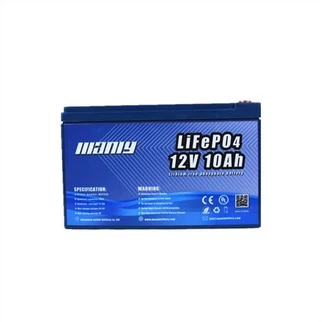
The controller is generally made of stainless steel, which is beautiful and durable. The charge/discharge controller is designed to take into account light control, time control, overcharge, and over-discharge protection and can realize secondary energy-saving control and half-power lighting in the specified time. The battery can be selected as a "maintenance-free lead-acid battery" most of which will be built into the control box with the charge/discharge controller.
Sixth, the solar panel capacity calculation.
For solar street lights, the overall system configuration formula: P = light source power X source working time/peak sunshine hours; where P is the power of the battery components, the unit is W; light source working time unit is H, peak sunshine hours unit is H.
Seven, battery capacity calculation.
Preferred according to the local rainy days to determine the choice of battery type and battery storage days, the southern rainy weather is more, choose to store the weather is generally 5-7 rainy days.
Battery capacity calculation formula: battery capacity = load power X daily working time X storage days ÷ depth of discharge ÷ system voltage
Where: battery capacity unit is AH; load power unit is W; daily working time unit is H; storage days unit is D; depth of discharge, generally take about 0.8, system voltage unit is V.
Eight, pole design.
Solar street light commonly used lamp pole design is a steel conical lamp pole, with beautiful, strong, durable, simple processing technology, high mechanical strength, easy to make a variety of shapes. The commonly used word light pole cross-section is, round, hexagonal, octagonal, etc., tapered to 1: 90, 1: 100, wall thickness according to the force of the pole, generally 3-5mm
Nine, tilt angle design:
In order to maximize the solar street light battery module in a year to receive solar radiation energy, we have to choose the right angle according to the local sunshine situation to maximize the irradiation time.
Ten, wind resistance: solar street light series, structural design is a very important issue is the design of wind resistance, wind design is mainly divided into, the battery module bracket wind resistance and wind resistance of the lamp pole two parts.