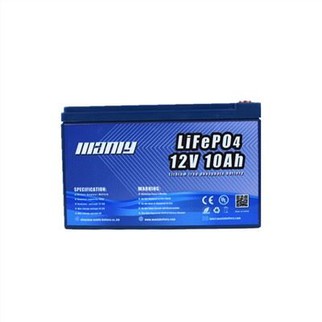
A lithium battery that passes the pinprick test does not mean that a power lithium battery is safe. With the reduction of new energy subsidies, lithium batteries are also regaining the attention of automotive companies. BYD has launched a new "blade battery" that has successfully passed the battery industry's most stringent "pinprick test," which shows that the blade battery has never "spontaneously combusted," and the safety is obvious. And the safety is obvious. According to reports, Ningde Times insiders say BYD's blade batteries are not necessarily 100% safe.
Lithium batteries pass the pin prick test is not the same as power lithium battery safety
More than 300 kinds of power lithium battery safety test methods, including "pin prick test" is recognized by the industry as the highest safety assurance. Its principle is "using a simulated bare battery is pierced by an external sharp object to cause thermal runaway" results.
BYD put the ternary lithium battery, lithium iron phosphate battery and its newest blade battery together in a comparison test of the "pin prick test". The results show that the ternary lithium battery in the test process of violent combustion, the surface temperature of more than 500 degrees Celsius. Lithium iron phosphate battery no open flame, no smoke, the surface temperature of 200-400 degrees Celsius. And the latest BYD blade type battery has no open flame and smoke, with a surface temperature of 30 to 60 degrees Celsius.
Lithium iron phosphate batteries are more likely to pass needling, not because of advanced technology, but because the material itself has good thermal stability and the ternary lithium battery has a high energy density. Needling does present challenges, but it is not impossible. In order to achieve true market safety, it needs to be ensured by safety systems at all levels, not by a single test. In other words, a battery that passes a pinpoint test is not necessarily 100% safe, and not performing a pinpoint test does not mean that the battery is unsafe.
Ningde Times already has the technology to pass the pinpoint test for high energy density ternary lithium batteries and has passed the pinpoint test at the TUV and Shenzhen TUV certification labs respectively Ningde Times still supports the elimination of the pinpoint test According to the new national standard, and hopes the industry will focus on safety issues at the whole system level. "In order to achieve true market safety, it needs to be ensured by the safety system at all levels, not by a single test.
In adapting battery cell and module testing, the new national standard focuses on strengthening battery system thermal safety, mechanical safety, electrical safety and functional safety requirements. In particular, the standard adds a thermal dispersion test for battery systems, which apparently requires that a battery system will not catch fire or explode within five minutes after thermal runaway using a single battery cell, thus preserving safe escape time for occupants.
Improvements to the pinprick program
1. Conductive agent and binder: After a short circuit of the pin, the conductive agent, binder and electrolyte react violently and release large amounts of heat. Currently, the DSC method is used. Selecting the type of conductive agent and binder according to the initial temperature of decomposition and the heat of reaction is an effective way to reduce high temperature heat generation.
2. Battery structure design: In the manufacture of power lithium batteries, the addition of appropriate positive electrodes should be considered. The gap between the negative electrodes can improve the ductility of the spacer, and at the same time, an explosion-proof valve should be added to it. A cover plate on the top of the cell to prevent explosion and large electrolyte leakage, and to increase the possibility of the cell passing through pinpricks.
3. Diaphragm: In the power lithium battery, the diaphragm is mainly used to separate the positive and negative electrodes of the battery to prevent a short circuit between the two pole contacts. Diaphragm closure temperature and diaphragm rupture temperature has a decisive impact on whether the battery can pass the pinprick project. To control the battery diaphragm to maintain a lower closed cell temperature and higher membrane rupture temperature, and the development of PE and PP composite film, while ceramic diaphragm is the development trend and direction of the diaphragm.
4. Electrolyte: The electrolyte used in power lithium batteries is a combination of conductive lithium salts and organic solvents. These organic solvents have a low flash point. The electrolyte in the power lithium battery is easy to burn when it comes in contact with air. The addition of flame retardant additives can improve the stability and safety of the battery itself, and is an effective way to improve the penetration rate of pinning.
Passing the needling is not equal to the safety of the power lithium battery, and not conducting the needling test is not equal to the safety of the battery: the safety of the power lithium battery is mainly expressed in the thermal safety, mechanical safety, electrical safety and functional safety of the system And that the needling single cell is not only the safety of the battery cell, it is also similar to the ignition test of gasoline and diesel flammability, completely ignoring the protective effect of the fuel tank. In practical terms, pinpricking of battery cells does not occur. A blunt prick and squeeze at the bottom of the battery pack is a more realistic test method.
Welcome to visit our company website: www.manlybattery.com. If you have any interests in batteries, please feel free to contact us: info@manlybattery.com