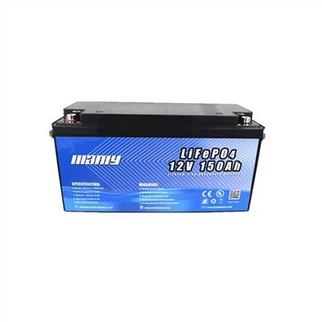
Lithium-ion battery overprotection principle, lithium-ion battery protection plate working principle. The safety of lithium-ion battery-powered equipment is the most concerned issue at present, so its protection is very important. Lithium ion battery protection plate can protect the lithium ion battery from large current discharge caused by over charge, over discharge or short circuit.
Lithium-ion battery overprotection principle
The protection circuit of lithium-ion battery is composed of the protection IC and two power MOSFET, in which the protection IC monitors the battery voltage and switches to the hanging power MOSFET to protect the battery in case of overcharging and discharging state. The protection IC has functions of over-charging protection, over-discharging protection and over-current/short-circuit protection.
1. Overcharge protection
The principle of overcharge protection IC is: when the external charger charges the lithium-ion battery, in order to prevent the rise of internal pressure caused by temperature rise, the charging state needs to be terminated. At this point, the protection IC needs to detect the battery voltage, and when it reaches 4.25V (assuming that the battery overcharge point is 4.25V), the overcharge protection will be activated, and the power MOSFET will be switched from on to off, so as to stop charging.
In addition, we must also pay attention to the noise caused by the overcharge detection error action, so as not to determine the overcharge protection. Therefore, the delay time should be set and the delay time should not be shorter than the duration of the noise.
2, Overdischarge protection
In the case of overdischarge, electrolyte decomposition leads to deterioration of the characteristics of lithium-ion batteries, resulting in a decrease in the number of charges. Using lithium-ion battery to protect IC can prevent excessive discharge and realize battery protection function.
Excessive discharge protection IC principle: In order to prevent the overdischarge state of the lithium ion battery, assume that the lithium ion battery is connected to the load, and when the voltage of the lithium ion battery is lower than the overdischarge voltage detection point (assumed to be 2.3V), the overdischarge protection will be activated, so that the power MOSFET will switch from on to off and stop the discharge, so as to prevent the overdischarge phenomenon of the lithium ion battery. And keep the battery in standby mode with low static current, which is only 0.1μA.
The working principle of lithium-ion battery protection plate
Lithium ion battery protection board principle as a safety protection device for lithium battery, not only in the normal operating current range of the equipment, can work reliably, but also when the battery is accidentally short circuit or overcurrent can act quickly, so that the battery is protected. When the principle of lithium-ion battery protection plate is normal, VDD is high level, VSS and VM are low level, DO and CO are high level. When any of the parameters of VDD, VSS and VM are changed, the level of DO or CO terminal will change.
The circuit and parameters of lithium-ion battery protection board are different according to the use of IC, voltage and so on. The protection board has two core components: a protection IC, which is used by accurate comparator to obtain reliable protection parameters; In addition, MOSFET series in the main charge and discharge circuit as a high-speed switch, the implementation of protection action.
The lithium-ion battery we use is actually composed of several small lithium-ion batteries in parallel. Inside the lithium-ion batteries are separated by several plastic-like panels between the gaps. These little plastic sheets are actually lithium-ion battery protection plates. The lithium-ion battery shield is not actually made of plastic.
Why can the lithium ion battery protection plate protect the lithium ion battery?
1. When the voltage of the lithium ion battery reaches 4.2V, if the battery continues to be charged, the positive electrode structure will partially collapse, resulting in a permanent loss of capacity. If the battery continues to be charged, the dendrite is likely to occur, which will puncture the diaphragm, leading to short circuit of the positive and negative electrodes of the battery core, thus causing combustion and explosion;
2. When the current of lithium ion battery is low to 2.4V, some materials will be damaged passively. If the battery continues to discharge, it will not only cause the loss of capacity, but also cause the loss of life. The general depth discharge to 2.75V will stop, and 3V to 2.75V only accounts for 3%, so generally achieve 3V protection;
3. Lithium ion is more active, if the temperature is too high, it will greatly reduce the life of the battery;
4. Current will also affect the cell, such as the discharge current is too large, the reaction time sequence of positive and negative electrode is chaotic, easy to lead to similar to the overcharge pressure, the occurrence of dendrite, resulting in scrap.
Based on the above four points, the protection plate should be charge and discharge voltage protection, current protection, temperature protection, etc.; Do the above protection plate will naturally be able to protect the lithium ion battery.