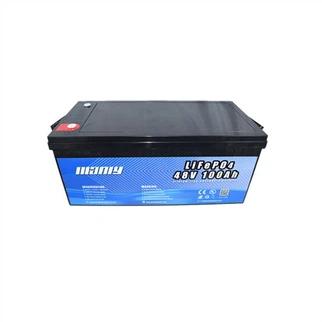
Lithium iron phosphate battery, ternary lithium battery, hydrogen fuel cell future trends will be how to develop? As an important core component of new energy vehicles, the power lithium battery holds the key lifeline. For a new energy vehicle, the battery is life, the performance of the battery largely determines the overall performance of the car. So the current market lithium iron phosphate battery, ternary lithium battery, hydrogen fuel cell which battery performance is the best? What is the future trend? On this issue to make an analysis.
A, lithium iron phosphate battery: nowadays, the "favor"
The so-called lithium iron phosphate battery, refers to the lithium iron phosphate as the cathode material lithium-ion batteries. In the early stages of the development of new energy vehicles, lithium iron phosphate battery because of its superior thermal stability, good safety, low development costs and other advantages, has become the first choice of major manufacturers.
However, with the continuous development of technology, lithium iron phosphate battery's high energy density, small size, long service life and light weight and other advantages in the case of the same range, lithium iron phosphate battery performance is more desirable.
Lithium iron phosphate battery pack.
● Energy density: In the same volume, the energy density of lithium batteries is 3 to 4 times that of lead-acid batteries, lithium battery packs are smaller and lighter.
● Long life: Lead-acid batteries require high ambient temperature, and their service life is no more than 5 years under severe ambient temperature. And lithium iron phosphate battery pack has a longer service life under the same conditions.
●Excellent high temperature performance: The thermal peak of LiFePO4 battery can reach 350~500℃.
●Fast charging: can be charged and discharged quickly with high current 2C, the battery can be fully charged within 40 minutes with 1.5C charging under the special charger, and the starting current can reach 2C.
●Safe and reliable: Safety comes from the stability of the cathode material and reliable safety design. Lithium iron phosphate has been strictly tested for safety and will not explode even in violent collisions.
Green: It is a green battery in compliance with European RoHS regulations. Lithium batteries do not contain lead, mercury, cadmium toxic substances.
No memory effect: LiFePO4 can be used as it is, no matter what state it is in, so there is no need to discharge it completely before charging.
● Good performance: Powerful and fast charging and discharging.
Second, ternary lithium batteries: the future of restlessness, may replace lithium iron phosphate batteries
Ternary lithium battery, refers to the lithium battery with lithium nickel cobalt manganate potassium ternary cathode material, compared to the previously introduced lithium iron phosphate, higher energy density, the price is appropriate, the overall performance is more excellent, and has become the type of battery used in most new energy vehicles. After all, who does not want to reduce costs in the case of ensuring power?
Tributary lithium batteries biggest drawback is that in the high temperature, if the environment is confined, under the action of high temperature, electrolyte will quickly burn, increasing the risk of spontaneous combustion or explosion of the battery. In addition, if improperly recycled, the positive electrode material in lithium batteries can cause heavy metal pollution.
With the development of technology, many manufacturers have developed excellent battery management systems, safety issues have been improved, and excellent performance has won the recognition of major automobile manufacturers.
Third, the hydrogen fuel cell: "potential shares" future mainstream battery
Hydrogen fuel cell has been regarded as the future direction of development of new energy vehicle battery, hydrogen fuel cell is the most basic principle of the inverse reaction of electrolysis of water. The biggest difference between it and rechargeable battery is that it does not need to be charged, only hydrogen needs to be added, and when there is no hydrogen, hydrogen will be flushed to the designated place, which is very convenient to use, and it does not need to spend a lot of time to charge like rechargeable battery.
With the shortage of energy resources, the country has started to make favorable policies to carry out macro-control, hoping to replace lithium batteries with clean energy with less pollution and lower cost. Hydrogen fuel cells are pollution-free, have a long service life, and emit no pollutants, making them very environmentally friendly. So hydrogen fuel cells are more environmentally friendly.
But the storage and transportation of hydrogen are a more demanding existence, and the slightest mistake can be dangerous. The key to the popularization of new energy vehicles is to establish a complete set of supporting facilities, which is a large investment, and all the current promotion of hydrogen fuel cells is not as fast as rechargeable batteries.
With so many used lithium batteries, the environmental ecology will bear a greater burden if they are not recycled and reused properly. In the future, more people will choose hydrogen fuel cells if they pay attention to environmental protection.
Fourth, the future development trend of new energy vehicles
1. Market factors are increasingly driving the development of new energy vehicles, and the new energy vehicle market is gradually changing from policy-driven to market-driven.
2. The production and sales of new energy vehicles will continue to grow rapidly, and the market scale will reach trillions. It is expected that the production and sales of new energy vehicles in China will exceed 1 million units in 2018 and reach 2 million units in 2020. It is expected that by 2030, China's annual sales of new energy passenger cars will exceed 13 million; new energy medium and large buses will become the main force of bus sales.
3. The "new four" trend of the automobile industry, namely electrification, networking, intelligence and sharing, has become the recognized future trend of the automobile industry. Without the "four" features, it is likely to be eliminated.
4. The competition in the new energy vehicle industry will become more and more intense, and the process of "washing away the sand" has already begun. Enterprises need three conditions to gain a foothold: core technology; marketable products; and capital support or financing ability.
Battery development is also the key to the development of new energy vehicles, with the rising sales of new energy vehicles in China, as well as the continuous updating of battery technology, regardless of the future of the three types of batteries who will be applied to the mainstream of electric vehicles, you manufacturers must strengthen their own technology, continuous research and development of new products, the formation of a set of battery recycling system. Seize the development trend of new energy vehicles, and strive to walk in the forefront of the wind.
If you have any demands in batteries, please feel free to contact info@manlybattery.com