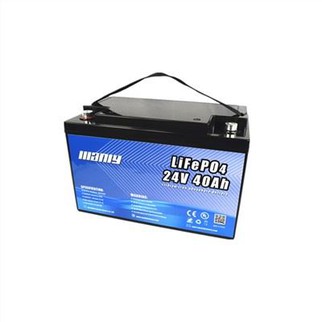
Unexpectedly, CATL won the title of No. 1 in the installed capacity of power batteries in the world again, and successfully won the "five consecutive championships".
On February 7, the latest statistics released by the South Korean market research agency SNE show that the global installed capacity of power batteries in 2021 will be 296.8 GWh, doubling year-on-year. Among them, the global installed capacity of power batteries in CATL reached 96.7 GWh, with a market share of 32.6%, an increase of 8 percentage points compared to 2020.
Due to the increasingly lively new energy vehicle market in China and the world. CATL has long since become the "sweet spot" in China's A-share market. In the past year, its market value has increased by 552.6 billion yuan throughout the year, making it the "most profitable stock" in A-shares.
During the same period, CATL’s revenue and net profit also rose sharply. The previous performance forecast released by CATL shows that the company's net profit in 2021 is expected to be in the range of 14 billion-16.5 billion yuan, a year-on-year increase of 150%-195%.
As the most powerful competitor of the CATL, the market share of LG New Energy, which has just completed its listing in South Korea, has dropped by 3 percentage points to 20.3%. In 2021, the installed capacity of LG's power batteries will be 60.2 GWh, still ranking second. .
However, LG New Energy is stepping up to catch up with the Ningde era. In this IPO, LG New Energy raised a total of about 68.3 billion yuan. It said that in addition to research and development of new products and the construction of smart factories to improve product quality and quality, the rest are all used for expansion, including cooperation with General Motors, Stellantis Group and Automakers such as Hyundai Motor have established joint ventures in different regions, and will invest 1.2 trillion won in China and 1.4 trillion won in Eastern Europe to increase production capacity.
It is understood that as of now, LG New Energy has battery production bases in China, South Korea, the United States, Poland, Indonesia and other places, and plans to increase global battery production capacity from 150GWh in 2021 to 430GWh in 2025. General Motors of the United States recently announced that it will establish a fourth battery factory in a joint venture with LG New Energy to meet the rapidly increasing demand for batteries in the North American market in the future.
If LG New Energy still has the strength to fight the Ningde era, the status of Japan's Panasonic is not as good as before. Although it still occupies 12.2% of the global market share with an installed capacity of 36.1 GWh (a drop of more than 6 percentage points compared to 2020), the gap with the CATL era has widened.
Due to the slow pace of Japanese car companies in new energy, Panasonic can only sell products to foreign car companies such as Tesla. The policy requires that Tesla will use more local power batteries in the factory.
Panasonic's future development focus may be on local companies. In 2021, the three major Japanese car companies have successively released their electrification strategies. These strategies will also bring a large number of power battery orders to Panasonic in the future.
In the list released by SNE, the status of China's second-tier enterprises is also rapidly improving. Among the other five companies that entered the top 10 in the list, Great Wall Motor's Hive Energy was particularly outstanding. Last year, it ranked 10th in the world with a growth rate of 430%.
In addition, the installed capacity growth rate of BYD, China Innovation Airlines and Guoxuan Hi-Tech also exceeded 100%, and the market share has increased. Only Envision Power's market share fell from 2.7% to 1.4%.
The leading advantages in production capacity and technology have helped CATL initially establish a moat under the general trend of global automobile new energy. However, in the midst of change, changes in national policies and the emergence of new technical routes will be challenges faced by all industry participants. Always staying vigilant in times of peace and investing heavily in R&D innovation will become the key to an enterprise's stability and long-term success.
At the end of 2022, China's new energy vehicle subsidies will be completely ended. At the same time, the new energy vehicle subsidies in Europe and the United States will continue to increase. From this perspective, there is still great uncertainty in the global power battery industry. It is not easy for the Ningde era to stabilize the industry dominance.