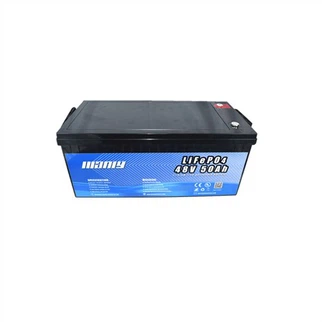
When it comes to buying new energy vehicles, most consumers may first think of the "policy concessions", although this is a bit embarrassing but really quite real reasons. In the domestic sales environment, new energy vehicles to open up the situation, but not only because of the "environmental protection" such a sense of mission is a long way to go. New energy vehicles in the price and maintenance costs of the advantages do attract most of the current stage is still the cost of car-oriented consumers love. The following is an introduction to the difference between lithium iron phosphate and ternary batteries. For reference only!
Lithium iron phosphate battery: refers to the lithium-ion battery with lithium iron phosphate as the cathode material. Its characteristics are not cobalt and other precious elements, low prices of raw materials and phosphorus, iron present in the earth's rich resource content, there will be no supply problems. Its working voltage is moderate (3.2V), high capacity per unit weight (170mAh/g), high discharge power, fast charging and long cycle life, and high stability in high temperature and high heat environment.
Advantages compared to the more common lithium cobaltate and lithium manganate on the market, lithium iron phosphate has at least the following five advantages: higher safety, longer service life, does not contain any heavy and rare metals (low cost of raw materials), support for fast charging, a wide range of operating temperatures.
Disadvantages lithium iron phosphate has some performance defects, such as low vibrational density and compaction density, resulting in a low energy density of lithium-ion batteries; high cost of material preparation and battery manufacturing costs, low battery yield, poor consistency; poor product consistency; intellectual property issues.
: Lithium battery using lithium nickel cobalt manganate (Li(NiCoMn)O2) ternary cathode material for the cathode material. According to Tsinghua University, Ouyang Minggao explained: the "ternary" material referred to in this survey refers to the cathode is ternary, the negative electrode is graphite in the usual sense of "". In the actual research and development applications, there is a positive electrode is ternary, the negative electrode is lithium titanate, often referred to as "lithium titanate", its performance is safer, longer life, does not belong to the common term "ternary materials."
Advantages ternary lithium battery high energy density, cycle performance is better than normal lithium cobaltate. At present, with the continuous improvement of the formula and structural improvement, the nominal voltage of the battery has reached 3.7V, and the capacity has reached or exceeded the level of lithium cobalt-acid batteries.
Disadvantages ternary material lithium battery power mainly has lithium nickel cobalt aluminum acid battery, lithium nickel cobalt manganese acid battery, etc., due to the high temperature structure of nickel cobalt aluminum instability, resulting in poor high temperature safety, and the pH value is too high easy to make the monomer flatulence, and then lead to danger, the current cost is higher.
In contrast, ternary does have better qualities than lithium iron phosphate batteries, yet why is its development is hindered? The key to the development of new energy vehicles, the same key that plagued the development of mobile digital products - the battery. How to ensure that battery technology can meet the growing needs of consumers in a safe situation, not only automotive technology-related industry personnel, or scientific researchers in the pursuit of the whole field
However, it is possible that some consumers' feet will temporarily stop being curious about new energy vehicles for some reason, which is because more or less all new energy vehicles will be a variety of incidents of spontaneous combustion palpitations. And this is exactly why the author is writing this article today. Must know not to understand the fundamental of new energy vehicles - the advantages and disadvantages of energy modules, and do not understand the use of the process requires attention, in fact, and buy a time bomb on the side is not different.
Lithium iron phosphate and ternary batteries: lithium iron phosphate
Lithium iron phosphate electrode material is currently the safest lithium-ion battery cathode material, coupled with its cycle life of more than 2000 times, the standard charge (5 hours rate) use, can reach 2000 times the cyclic characteristics, coupled with the price technical threshold and technology decline due to industrial maturity, making many manufacturers for a variety of factors will be used lithium iron phosphate battery. It can be said that the rise of new energy vehicles, and lithium iron phosphate batteries have an inseparable relationship.
However, lithium iron phosphate batteries have a fatal shortcoming, that is, poor low-temperature performance, even if it is nanosized and carbon cladding does not solve this problem. Research shows that a battery with a capacity of 3500mAh, if working in the -10 ℃ environment, after less than 100 cycles of charging and discharging, the power will decay sharply to 500mAh, basically scrapped. This is indeed not a good thing for our country's vast territory and the comprehensive national condition that low temperature in winter is indeed more.
In addition, the preparation cost of materials and the manufacturing cost of batteries are high, the finished rate of batteries is low and the consistency is poor, which is also an important reason why the range of many pure electric vehicles does not reach the nominal value. Therefore, we can see a number of domestic new energy vehicles (whether pure or hybrid electric), or some of the cheaper new energy vehicles, will choose lithium iron phosphate for different reasons. It can be said that the use of lithium iron phosphate batteries, for the mass production of new energy vehicles on the ground as well as the promotion, have an indelible role in the foundation.
In contrast, ternary lithium polymer batteries do have better qualities than lithium iron phosphate batteries, yet why is its development is hindered?
Lithium iron phosphate and ternary batteries: ternary lithium polymer batteries
Ternary polymer lithium battery refers to the positive electrode material using lithium nickel cobalt manganate (Li (NiCoMn) O2) ternary cathode material lithium battery, ternary composite cathode material precursor products, is based on nickel salt, cobalt salt, manganese salt as raw materials, the ratio of nickel cobalt manganese inside can be adjusted according to actual needs. Ternary lithium batteries have greater energy density, but safety is often doubted.
The reason for this is that even though both materials will decompose when they reach a certain temperature, ternary lithium materials will decompose at a much lower 200 degrees or so, while lithium iron phosphate materials are at about 800 degrees. And ternary lithium materials are more violent chemical reaction, will release oxygen molecules, in the role of high temperature electrolyte rapid combustion, a chain reaction. To put it simply, lithium ternary materials are more likely to catch fire than lithium iron phosphate materials. However, it should be noted that we are referring to the material, not the finished battery has become.
Because lithium ternary materials have such a safety risk, so manufacturers are also trying to curb the direction of accidents. According to the ternary lithium material is easy to pyrolysis characteristics, manufacturers in the overcharge protection (OVP), over discharge protection (UVP), over temperature protection (OTP), over current protection (OCP) these links will put a lot of effort. So the spontaneous combustion incident should be considered more manufacturers in these aspects of the implementation of the function in place, rather than simply choking.
So what is the use of these two kinds of batteries now? Let's focus on a set of data. In November last year, the installed capacity of electric buses with lithium iron phosphate batteries accounted for 64.9%, while the installed capacity of ternary lithium batteries was only 27.6%. On the contrary, in the pure electric passenger car market, ternary lithium batteries accounted for more than 76% of the installed capacity in November last year.
It can be seen that the ternary lithium battery itself has the advantage of greater energy density and should be born as a new energy storage device for future vehicles. And now the occurrence of related safety incidents, when the popularity of new energy vehicles is still in its infancy, can be called a good thing. Many new energy vehicle-related companies have relaxed their technical requirements and mass-produced energy components that cannot withstand repeated use for long periods of time in order to be able to accomplish the dual goals of capturing the market and gaining policy support. The environment in which automobiles work is harsh, and the use of these components for long periods of time inevitably increases the cause of safety accidents.
Therefore, we can consider the announcement by Zhang Xiangmu, director of the equipment department of the Ministry of Industry and Information Technology at the China Electric Vehicle 100 to evaluate the safety performance of ternary lithium battery buses as an intention of the relevant state departments to define a standard from the policy level to promote the generation of industry standards. Both for consumers and manufacturers, it has quite positive significance in the future. Therefore there is no need to see the ternary lithium battery safety accident news on the Internet because of one-sided, the material is subject to danger, the key is how to firmly control.
Lithium iron phosphate batteries and ternary batteries: different types of new energy vehicles
After talking about the battery, I think for new energy vehicles, but also need to briefly introduce you to the role of the battery in the vehicle. After all, consumers who buy pure electric vehicles still account for a minority, more friends are concerned about hybrid vehicles. And hybrid cars can be strictly divided into three kinds: ordinary hybrid cars, plug-in hybrid cars and hybrid cars.
The battery capacity of the above three types of cars is arranged from small to large, which is exactly ordinary hybrid cars < plug-in hybrid cars ≤ hybrid cars. The battery of a regular hybrid car is not rechargeable, and the battery is used for starting and rapid acceleration; the battery of a plug-in hybrid car is increased in capacity and rechargeable based on the battery of a regular hybrid car, which has better acceleration and fuel-saving ability; and the engine of an extended program hybrid car is used to drive the motor to generate electricity, which is more inclined to a pure electric car.
These three hybrid car models have their advantages and disadvantages, at this stage of the main force is also dominated by ordinary hybrid and plug-in hybrid. It is because of the qualities of the three hybrid vehicles have for battery life and working environment in common, so no matter what mode of hybrid vehicles are purchased, consumers should pay attention to the relevant parameters, such as battery materials, use of the environment and the best working conditions. At the same time, manufacturers should also be in the design process to strictly control the quality of the battery and related safety settings to ensure the use of safe and efficient.
The introduction of lithium iron phosphate and ternary batteries is over here. In my opinion, the key to the development of new energy vehicles, the same key that plagued the development of mobile digital products - the battery. How to ensure that battery technology can meet the growing needs of consumers in a safe situation, not only automotive technology-related industry personnel, or scientific researchers in the pursuit of the whole field.
Welcome to visit our company website: www.manlybattery.com. If you have any interests in batteries, please feel free to contact us: info@manlybattery.com