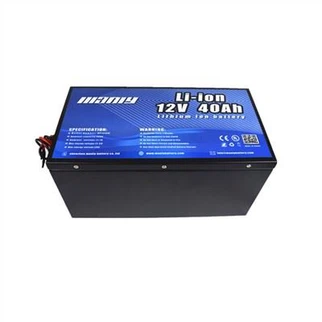
Due to the huge stock of lead batteries, the market prospect of "lead to lithium" in the field of electric bicycles is attractive, but the road to substitution is not smooth. Cross-border lithium battery companies want to profit from the electric bicycle market, the difficulty can be imagined, in terms of costs, channels, product standards, etc., are facing challenges.
First, ATL's subsidiary, Xinengan Li-ion battery and Yadi reached cooperation; followed by Ningde Time and Hello Travel, Ant Financial set up a joint venture company Ningde Zhixiang, focusing on two-wheeled new energy product development, innovation promotion, energy network construction; at the same time, BYD and electric bicycle head enterprises to explore cooperation, active layout ...... The battle for the market is about to start. The competition of lithium battery giants is extending from the field of electric vehicles to the field of electric bicycles.
Li-ion battery industry pattern has reversed greatly
Such a change in the competition of lithium batteries is not something that happens overnight. Entering 2019, market competition in the power battery industry has further intensified, and industry reshuffling has accelerated. Under the pressure of subsidies retreating by more than 50%, OEMs have put forward stricter requirements for battery price reduction. At the same time, the new subsidy policy puts forward higher requirements for new energy vehicles and power batteries in terms of comprehensive performance, which means that host plants and battery plants have to further upgrade their products.
In order to reduce costs and enhance market competitiveness, host plants will consider battery companies in terms of product quality, product price, supply capacity and corporate capital, but not many battery companies are able to meet these requirements. This also means that most battery companies need to adjust their market strategies in 2019 and find the right product market positioning as soon as possible.
With the entry of high-end lithium battery giants such as ATL and Ningde Time, the electric bicycle market is now in full swing. Traditional lead-acid battery manufacturers, lithium battery companies that have long been cultivating electric light vehicles, and entrants from the field of new energy vehicle power batteries across the border, the three forces together stirred up the "two-wheeled vehicle jianghu". In the industry's view, the entry of lithium battery giant, will likely overturn the traditional bicycle battery competition pattern. Even within the lithium battery, there is also fierce competition between different technical lines.
From this year's market situation, the market pricing of major brands of lithium batteries has seen a certain degree of downward adjustment. With many product advantages such as greater energy density, cleaner and more environmentally friendly, and more lightweight, the pace of lithium batteries replacing lead batteries has significantly accelerated. It is expected that China's lithium electric bicycle will exceed 10 million units in 2020, and the penetration rate will exceed 50% by 2021, achieving a major reversal of the industrial pattern.
Several companies started a new layout
Electric bicycle new national standard for power battery safety requirements, as well as its own low-cost characteristics, and let the lithium iron phosphate battery electric bicycle power battery market has become one of the most powerful competitors.
Some companies have taken the lead in layout. For example, Zhuo Neng has been engaged in the research and development of electric bicycle power battery since 2013. The relevant layout in the field of electric bicycle batteries will help promote the development of the electric bicycle industry. Companies are generally divided into two directions, one is to adhere to the power battery market, through product technology upgrades and capacity expansion, improve product competitiveness and reduce costs, optimize customer structure and strategic cooperation with high-quality customers; the other is to reduce or abandon the power business, adjust the product structure to develop small power, energy storage, electric bicycles, low-speed vehicles and other non-subsidy-dependent market segments, the implementation of differentiated competitive strategy.
The strict quality requirements for power batteries in the new national standard will also allow electric bicycle power batteries to get rid of the "low-end products" label, and the electric bicycle power market has become another "blue ocean" for battery companies to lay out high-end production capacity.