From September 10 to 12, the world Robot Conference 2021 was held in Beijing. In the Internet of all things today, robots have quietly infiltrated into all walks of life. With the new round of scientific and technological revolution and industrial transformation accelerating, the robot industry is facing a window period of upgrading and leapfrog development.
China has become the backbone of the world robot industry
Looking back at the past five years, earth-shaking changes have taken place in the global robot industry, and China's robot industry has also taken a big step forward, said Xin Guobin, vice minister of the Ministry of Industry and Information Technology, in his opening speech. China has become the backbone to support the development of the world robot industry.
Wang Yaonan, an academician with the Chinese Academy of Engineering, pointed out that on the one hand, the transformation and upgrading of the manufacturing industry and the improvement of technology have boosted the development of the robot industry. On the other hand, when human beings have reached a certain stage of development, aging, difficult recruitment and other problems need to be solved by robots, especially the shortage of low-end, processing scenes or complex scenes, which will force the acceleration of the development of the robot industry.
In terms of industrial scale, the scale of China's robot industry has exceeded 100 billion yuan in 2020. Among them, China's industrial robot market is booming, ranking first in the world for eight consecutive years. It will account for 44% of the global total in 2020. From 2016 to 2020, the output of industrial robots in China increased rapidly from 72,000 sets to 212,000 sets, with an average annual growth rate of 31 percent, according to the National Bureau of Statistics. With the continuous release of intelligent demand in medical care, pension, education and other industries, service robots and special robots contain huge development potential. In 2020, the operating revenue of enterprises manufacturing service robots and special robots above designated size in China reached 52.9 billion yuan, up 41 percent year-on-year.
It can be seen that more and more industries and enterprises are optimistic about the development prospects of robots and actively participate in the wave of innovation and development of the robot industry. Traditional leading robot enterprises are accelerating their expansion to the upstream and downstream of the industrial chain. For example, ABB acquired Astor, one of the largest mobile robot enterprises in Europe, and developed automatic tractor, whose solutions cover production, logistics, consumption and other fields. New-type robot enterprises continue to inject new strength into the industry by virtue of leading technology advantages. A number of innovative enterprises at home and abroad, such as Andy Robot, Rochus and Aobo, continue to bring forth new products and models and apply them to more segmented fields and scenarios. Technology enterprises cross the boundary layout, become a new force in the robot industry. Google, Amazon, Xiaomi and other enterprises have stepped into the robot industry and continuously increased r&d investment in robotics related technologies and products.
At the same time, the basic capabilities of China's robot industry are constantly improving. On the one hand, breakthroughs have been made in key technologies and core components. The industrialization capacity of key sectors such as precision gear reducer and high-performance servo drive continued to improve, and some of its innovative achievements reached international advanced levels. On the other hand, positive progress was made in building a generic technology support system. A series of achievements have been made in the research of common technologies such as high-precision on-line calibration of robots, firmware diagnosis and health evaluation, reliability and quality assurance, and overall performance test and evaluation. In some areas, robot performance testing ability has reached the international advanced level.
In addition, reporters learned from the conference, the Ministry of Industry and Information Technology is taking the lead in formulating the "14th Five-Year" robot industry development plan. Relevant departments and participants will work together to build China into a global hub for robotics innovation, a hub for high-end manufacturing and a new highland for integrated applications.
Industrial Robots move towards "human-machine Integration"
Benefiting from the dual drive of policy and market, China's industrial robot industry continues to advance in the fast lane, with rapid development momentum and a wide range of products landing. In the robot Expo held at the same time of the conference, the reporter in the industrial robot exhibition area not only saw the multi-joint robot, cooperative robot, DETAL robot, ScarA robot and so on, but also saw the core parts including controller, reducer, servo motor, sensor and so on. And some popular industry application integration solutions, logistics robots, AGV, unmanned warehousing and so on.
Among them, siasong high-end service digital intelligent factory left the reporter the most profound impression. According to shenyang siasun robot project manager Hou Bin, this "condensed version of the" digital factory is completely based on the actual situation of the user scene such as zhongke dawn to build, deployment of collaboration siasun robot, mobile robots, such as composite robot possess perception system, and from the hardware and software to the system implements the independent research and development. This digital intelligent factory can achieve "rapid replication" of a certain station, production line or even the whole factory according to user needs. At present, it is widely used in new energy, semiconductor, nuclear industry, 3C and other fields.
In addition to the accelerated pace of high-end, industrial robots are also moving towards collaboration. In the eyes of Qu Daokui, founder and president of Siasong Robot Automation Co., LTD., robots are developing from the past system of "working in the cage" to the direction of "human-machine integration", and cooperative robots have become a very important new branch, trend and direction of industrial robots.
"Collaborative robot human-machine integration, safe and easy to use, sensitive and accurate, flexible and general characteristics, just make up for the shortcomings and shortcomings of industrial robots, but collaborative robots also have their own weaknesses and shortcomings, such as once the load is large, running fast, safety can not be guaranteed. So the relationship between collaborative robots and industrial robots is not a substitute relationship, it's a very complementary relationship."
It is reported that China's collaborative robot load weight, precision, ease of use and other aspects of some technical indicators have reached the international advanced level. Thanks to the improved performance of the whole machine, key enterprises have initially achieved mass production of 10,000 industrial robots. As a new generation of robots, collaboration robots are likely to play an increasing role, according to FRR's assessment of future trends.
In the new stage of "human-machine integration", the ability of natural perception and learning is crucial for industrial robots. Zhang Jiafan, manager of China Research Center of ABB Robotics and Discrete Automation Division, pointed out that intelligent robots with perceptual understanding, skill learning, skill safety and other functions will lead intelligent manufacturing in new scenarios.
Service robots enter 'golden Decade'
While industrial robots continue to advance and refresh historical achievements, service robots are also standing on the air outlet of take-off. Service robots have bucked the trend since the outbreak of COVID-19, with an estimated year-on-year growth of 20.7% in 2020, according to statistics from the International Federation of Robotics.
Along with the market demand, the commercial robot, domestic robot, medical robot, xiaosha robots, robot distribution, endowment assistive robot etc all kinds of different types of service robots rapidly penetrate into our life or work scenario, play a guiding, receiving, shipping, government services, health care, emotional care, household cleaning, entertainment, etc. Various roles. At the expo, JD Logistics brought the latest generation of six-joint mechanical arm, which can accurately judge and grasp tens of thousands of categories of products, greatly improving the selection efficiency and accuracy, to ensure that goods can be accurately and quickly sent to people's hands. Ching Zhi Turing demonstrated a portable throat swab sampling robot. The user can complete the throat swab sampling easily and quickly in the way of self-detection, according to the voice prompt and video teaching of the robot. Baihong series lower limb exoskeleton robot can provide users with hip power, which can be widely used in material handling, express delivery, fire fighting and disaster relief, military equipment, elderly assistance, medical rehabilitation and many other fields. In addition to the basic functions of traditional humanoid robots, the Panda robot can also display traditional Chinese skills such as writing, painting and tai chi.
Emerging technologies are also fueling the explosion of the service robot market. At present, household robots and educational robots are the most mature ones driven by high frequency and demand, while medical robots and endowment robots are the most rapidly driven by demand. "Service robots are more about human-machine interaction, and the development of multi-sensor fusion and intelligent bionic technology has promoted the continuous improvement of robot capabilities." Chief executive of the robot to Harbin Institute of Technology group co., LTD., hong-bo wang said, "all kinds of sensors to help service robots more awareness and understanding of human intention, also can help us to do more, especially the emergence of the bionic robot help humans better shape the shape of the robot, more in line with our expectations."
"This year marks the beginning of the golden decade of service robot development." Tan Min, chief brand officer of Youbi.com, said, "Contactless services can become a necessity partly because of the epidemic and partly because of the possibility of co-existence between people and viruses. When contactless service is not a medical treatment, but a life necessity, service robots will become our need."
The autonomous learning ability of special robots has been greatly improved
Special robot is a kind of robot which has been developed rapidly and widely used in professional field in recent years. For example, in the field of construction, more and more sites gradually intelligent, gradually to human-machine collaboration, less humanized, unmanned direction change. Li Tiejun, vice president of Hebei University of Technology, said construction robots are making labor shortages a thing of the past.
In the field of security inspection and explosive disposal, there are a large number of artificial intelligence and special robots providing services, whether in the inspection and security of urban communities, or in the certificate handling, data investigation and even risk elimination of public security related services.
In the field of agriculture, from arable land to breeding, to fertilization, to irrigation, to spraying, to harvesting, to drying, to storage, to sales, basically all links can be realized by intelligent equipment or special robots to provide comprehensive cooperation services. According to Pang Chunlin, secretary general of the Vehicle-borne information Service Industry Application Alliance, unmanned operation in the whole agricultural process is becoming a reality in large areas such as northeast and North China.
"Now, the ability of autonomous learning has made a big breakthrough," said Li Qiao, business director of Boya. "The shape and movement posture of bionic robots are more similar, such as fishtail swing and flapping wing motion propulsion."
Take the intelligent bionic golden arowana robot exhibited by Boya Road as an example. It can swim freely in the water like real fish and avoid obstacles by itself, almost achieving the effect of being completely authentic. Equipped with vision sensors, sonar sensors and pressure sensors, the new-generation underwater bionic robot is more intelligent and can better integrate into the surrounding ecological environment, identify and avoid reefs and creatures, adjust the depth of diving and formulate return routes, li said.
Jingdong logistics research at X special robot department head Yao Xiujun said that artificial intelligence technology is a watershed, artificial intelligence technology is combined with robots, robot is automation more to solve the problem, through the assembly line and automatic means to solve the problem of product standardization, including capacity problems and issues under various scenarios. The combination of artificial intelligence and robot technology really leads robots into the 2.0 era, namely the intelligent era.
"In the past, we mainly relied on knowledge, algorithms and computing power to make ARTIFICIAL intelligence. In the data-driven era, we will rely on data, algorithms and computing power." "Said Zhang Bo, an academician at the Chinese Academy of Sciences and director of the Institute of Artificial Intelligence at Tsinghua University. In the future, the development of edge computing, quantum computing, electronic computing, 5G and brain computer technology will bring more possibilities to the robot industry.
The key and core technologies of robotics need further breakthroughs
From the simplest human-machine interaction to human-machine collaboration, as well as human-machine integration, coexistence and symbiosis, the forms, functions and capabilities of robots have far exceeded our initial cognition and imagination of the robot world.
As artificial intelligence, big data, 5 g, intelligent sensing the depth of the rapid development of technology and application, such as intelligent robot development is from a single perception, perception to the domain from feeling smart smart update to the cognition, from single machine intelligence to the cluster intelligence evolution, from the operation of the fence to the man-machine collaboration by leaps, presents the new characteristics of the multidimensional upgrade.
At the same time, robot technology is widely used in production equipment and living tools, so that it has the ability of global perception, intelligent decision-making, accurate execution, roboticized intelligent equipment has been everywhere. On the whole, The strength of China's robot industry continues to increase, basic capabilities continue to improve, product quality is increasingly optimized, and integrated applications deepen and expand, showing a good momentum of development on the whole.
However, challenges remain. China's robot industry is still in the early stage of development, many key core technologies still need to be further breakthroughs, high-end supply is still insufficient, and the industry application level needs to be further improved. In the next step, we should actively open up and cooperate with each other to enhance industrial innovation capacity, consolidate the foundation of industrial development, increase the supply of high-end products, expand the depth and breadth of applications, and join hands with robots around the world to share development opportunities and jointly promote sustainable development.
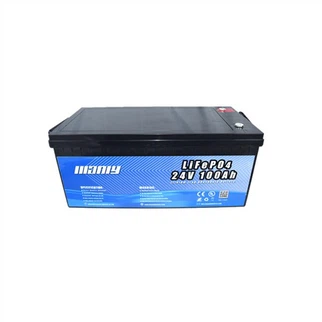
Manly Battery which located in Shenzhen,China. A leading battery manufacturer mainly offering rechargeable Lithium batteries,any query pls feel free to contact info@manlybatteries.com