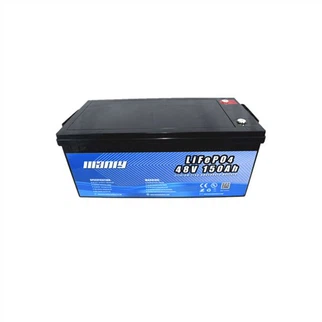
Power battery is one of the most core components of new energy vehicles. It not only affects the range of new energy vehicles through energy storage capacity, but also determines the service life of the vehicle through the cost, and even has a profound impact on the safety performance and acceleration performance of the vehicle. It can be said that the good or bad of the power battery is extremely important to the development of new energy vehicles.
What are the advantages and disadvantages of NiMH batteries?
The basic function of power battery is energy storage. In the battery market, in addition to the familiar lead-acid batteries and lithium-ion batteries, there are also nickel-cadmium batteries and nickel-hydrogen batteries, among which nickel-hydrogen batteries are looked at by Toyota and Honda for energy storage in oil-electric hybrid cars, while new energy vehicles choose lithium-ion batteries as power batteries.
Compared with nickel-chromium batteries, NiMH batteries have the advantages of low memory effect, good environmental performance and long service life, and the storage capacity is about 30% higher than that of NiCd batteries. However, the cost of NiMH batteries is much more expensive than NiCd batteries.
Compared with lithium-ion batteries, the only advantage of NiMH batteries is that they are relatively cheap, but in terms of performance, they are much lower than lithium-ion batteries.
As mentioned earlier, the power battery has an important impact on the range, cost, service life and safety performance of new energy vehicles, especially the range as the main embodiment of the technical level of new energy vehicles, fundamentally speaking, is determined by the power battery.
The complex environment of new energy vehicles and the high requirements for power output determine that the power battery needs a higher voltage platform. The voltage of NiMH battery is only 1.2V, while the voltage of Li-ion battery can reach 3.7-4.2V. Li-ion battery has a higher voltage platform.
At present, lithium-ion batteries in the life cycle of the charge cycle can be more than 1000 times (ternary lithium batteries), lithium iron phosphate batteries can be more than 2000 times. While the number of charge cycles of NiMH batteries is only about 500 times, the service life is much lower than lithium-ion batteries.
Due to the active nature of lithium ion, so the charging speed is faster. A lithium-ion battery can be fully charged in about 3 hours, while the NiMH battery charging speed is much slower.
In terms of energy density, lithium-ion batteries are even more dominant. At present, the energy density of lithium-ion batteries can reach 300Wh/kg, while the highest energy density of NiMH batteries is only 140Wh/kg. using NiMH batteries as power batteries, new energy vehicles will have a very short driving range. However, the lower energy density makes the safety of NiMH batteries better than that of Li-ion batteries.
The self-discharge rate of NiMH batteries is much higher than that of Li-ion batteries, up to 25%-35% per month, while Li-ion batteries are only 2%-5%.
The low energy density, short service life and memory effect characteristics of NiMH batteries are the fundamental reasons why it is excluded from the new energy vehicle power battery. And the energy storage requirements are not very high oil-electric hybrid vehicles, the choice of nickel-hydrogen batteries as a power battery, the fundamental reason is the cost of construction. However, with the lithium-ion battery cost declining year by year, Honda hybrid cars have given up the use of nickel-hydrogen batteries. At present, NiMH batteries are basically used in emergency lights, remote controls, toys, etc., and the use of energy storage without special requirements is declining year by year.
Translated with www.DeepL.com/Translator (free version)