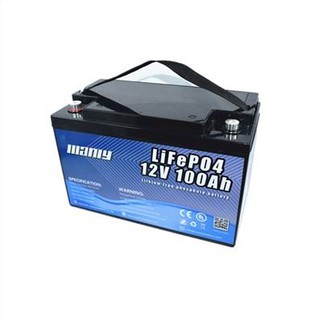
In the early 1990s, a new type of battery, lithium battery, appeared, which set off a new revolution in autonomous power supply. It happened in Japan in 1991, and the company that first introduced a new type of battery to the world was Sony. But progress did not stand still, and different types of lithium batteries soon appeared. They vary in size, enclosure, capacity, operating and maximum amperage, voltage, discharge and overcharge, explosion hazards, and the consequences of chemical reactions and vapors that can harm the human body. Among all species, one that has begun to stand out today - LIFEPO4 BATTERY. About it, the future will be the latest generation with the most usage, and a competitor to all other lithium-ion analogs.
create history
Lithium iron phosphate (LiFePO4, LiFe, LFP, IFR) was discovered by John Goodenough in 1996 as the cathode of LIFEPO4 BATTERY. It is significantly different from conventional lithium cobaltate, being less toxic and more heat resistant. But at the same time it also has an obvious disadvantage - the small charging capacity. So at that time the technology was not developed nor attracted anyone until 2003 when the company A 123 Systems became interested in it, under the leadership of Prof. Jiang Yeming, he worked on the manufacture of batteries capable of self-contained under certain conditions Replicate the structure of the colloidal solution. But all research came to a standstill, and a laboratory team led by the professor took on John Goodenough's development and continued to investigate further.
How battery energy storage works
They have a similar structure to other lithium batteries:
Negatively charged electrode (anode) - is made on the basis of copper foil covered with a layer of graphite.
Positively Charged Element (Cathode) - Consists of Aluminium Foil and LIFEPO4 BATTERY Layer.
Electrolyte - Designed to fill the space between the cathode and anode, allowing positive lithium ions to pass through, but not negatively charged electrons. Typically, liquid electrolytes are based on lithium salts.
A separator or separator is a porous polyethylene sheet that absorbs and retains the electrolyte well and also separates the cathode from the anode. Avoid irreversible chemical reactions in the event of plate shorts or the growth of formed lithium metal dendrites.
The main difference from Li-ion batteries is the LIFEPO4 BATTERY positive electrode. The battery has a roll-up device consisting of 3 strips: the anode, electrolyte separator, and cathode, twisted into layers. All copper and aluminum layers are each connected to form a single contact with positive on the top and negative on the bottom. When the battery begins to discharge due to a load, lithium ions flow from the positive electrode to the negative electrode through the separator, releasing the accumulated charge and triggering an oxidation reaction. When charging, lithium ions pass through the separator from anode to cathode and accumulate charge while undergoing a recovery process.
Types and Forms of Lithium Metal Phosphate Batteries
Depending on the shape of the housing and the location of the contacts, they are divided into 4 types:
square battery
Encapsulated in a closed aluminum housing with top contacts and pressure relief valve. They can contain two or more parts internally in the form of a package.